Buying a home has always been a central pillar of the American Dream, but in recent years, high interest rates and soaring inflation have made that dream feel distant for many. However, the United States is vast, and while coastal hubs like New York and San Francisco dominate headlines for their expense, there are thriving pockets of the country where homeownership remains surprisingly accessible. As of late 2025, shifting market dynamics have highlighted “refuge markets”—cities, primarily in the Midwest and South, where your dollar stretches significantly further.
At Top 10 America, we believe that “cheap” shouldn’t mean “undesirable.” Our team has analyzed the latest housing data to find metropolitan areas that offer not just low price tags, but legitimate community value, history, and potential. We have looked beyond the raw numbers to understand the living experience in these affordable hubs, from the revitalized industrial corridors of the Rust Belt to the soulful music capitals of the South.
The following ranking is based on median home listing prices and sales data projected through the end of 2025 and into 2026. Whether you are a first-time homebuyer, a real estate investor, or a remote worker looking to escape the rent trap, these are the markets where homeownership is still within reach.
Overview: Top 10 Cheapest Places to Buy a House in the USA
| Rank | City / Metro Area | Location/State | Est. Median Home Price |
|---|---|---|---|
| 10 | Birmingham | Alabama | $293,500 |
| 9 | Louisville | Kentucky | $270,000 |
| 8 | Memphis | Tennessee | $271,000 |
| 7 | St. Louis | Missouri | $262,750 |
| 6 | Oklahoma City | Oklahoma | $260,000 |
| 5 | Rochester | New York | $249,900 |
| 4 | Pittsburgh | Pennsylvania | $228,000 |
| 3 | Cleveland | Ohio | $220,000 |
| 2 | Toledo | Ohio | $205,725 |
| 1 | Detroit | Michigan | $192,000 |
Top 10. Birmingham
Located in north-central Alabama, Birmingham sits at the foothills of the Appalachian Mountains. Once known primarily as an industrial powerhouse for iron and steel production, the “Magic City” has transformed into a medical and banking hub. It serves as a cultural anchor for the state, offering a blend of deep history and modern Southern hospitality that attracts families and young professionals alike.
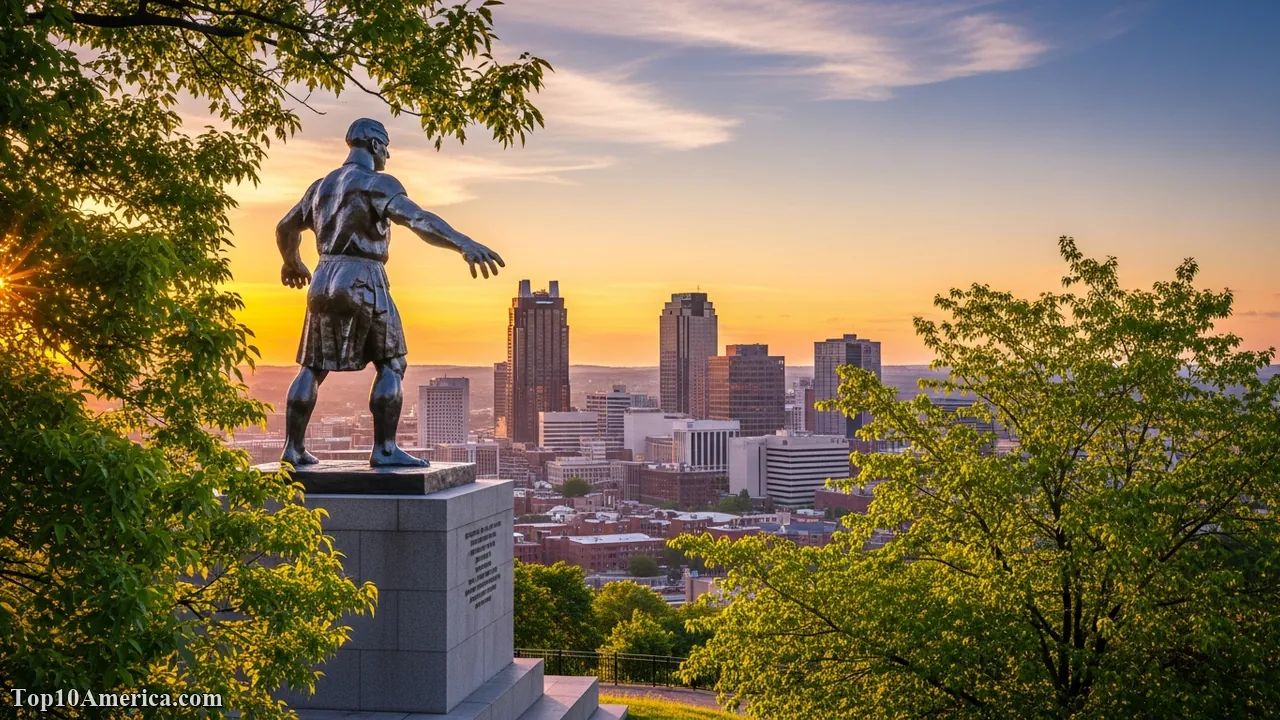
From Top 10 America’s perspective, Birmingham offers an incredible entry point into the housing market without sacrificing urban amenities. While prices have risen slightly over the last decade, they remain well below the national average. The city provides a distinct value proposition: you can purchase historic craftsman bungalows or renovated downtown lofts for a fraction of what similar properties cost in Atlanta or Nashville.
A fascinating insider detail is the city’s robust green space. Locals love the Red Mountain Park, which is actually larger than New York’s Central Park. It’s a symbol of the city’s reclamation; what was once an iron ore mining site is now a lush, green adventure destination, perfectly mirroring the city’s economic shift.
Key Highlights
- Affordability: Median home price hovers near $293,000.
- Nickname: “The Magic City” due to its rapid growth in the early 20th century.
- Economy: Major hub for medical research (UAB) and banking.
Top 9. Louisville
Sitting on the banks of the Ohio River, Louisville is the largest city in Kentucky and serves as the gateway between the Midwest and the South. Famous for the Kentucky Derby, bourbon, and baseball bats, the city boasts a distinct cultural identity. It features beautiful Victorian architecture, particularly in neighborhoods like Old Louisville, which has the largest collection of Victorian homes in the US.
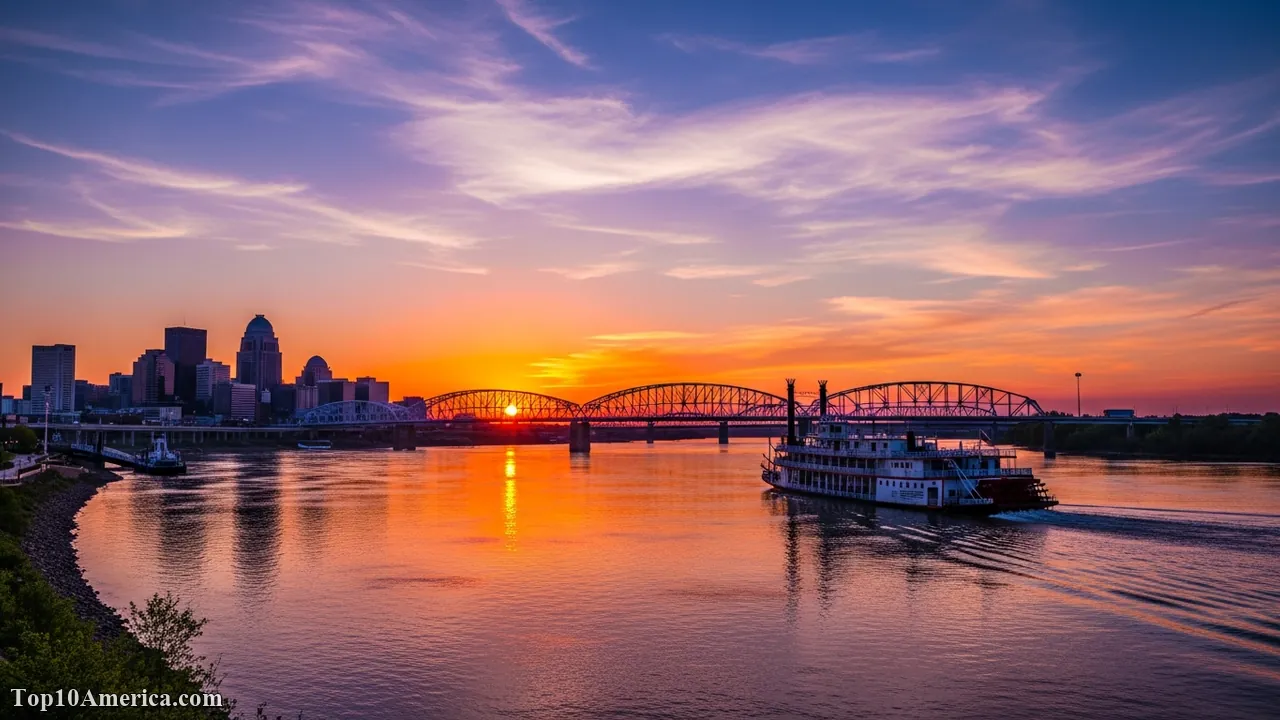
Financial data indicates that Louisville remains one of the most stable affordable markets in the country. We suggest this market is ideal for buyers who want a “big city” feel—professional sports, museums, and a world-class food scene—on a small-town budget. The cost of living is consistently lower than the national average, allowing residents to enjoy the city’s famous bourbon bars and restaurants with more financial freedom.
Did you know that 95% of the world’s bourbon is produced in Kentucky, and Louisville is the urban trailhead of the “Bourbon Trail”? For residents, this means access to an unmatched culinary and spirit culture that acts as a major driver for local tourism and jobs.
Key Highlights
- Culture: Home to the Kentucky Derby at Churchill Downs.
- Market Stability: Consistent appreciation without volatile spikes.
- Architecture: renowned for preserved Victorian districts.
Top 8. Memphis
Perched on the Mississippi River in southwest Tennessee, Memphis is a city with a soul that few others can match. As the birthplace of Rock ‘n’ Roll and the home of the Blues, its cultural footprint is enormous. Beyond the neon lights of Beale Street, Memphis is a logistics super-hub, home to FedEx’s global headquarters, which provides a steady stream of employment and economic activity.
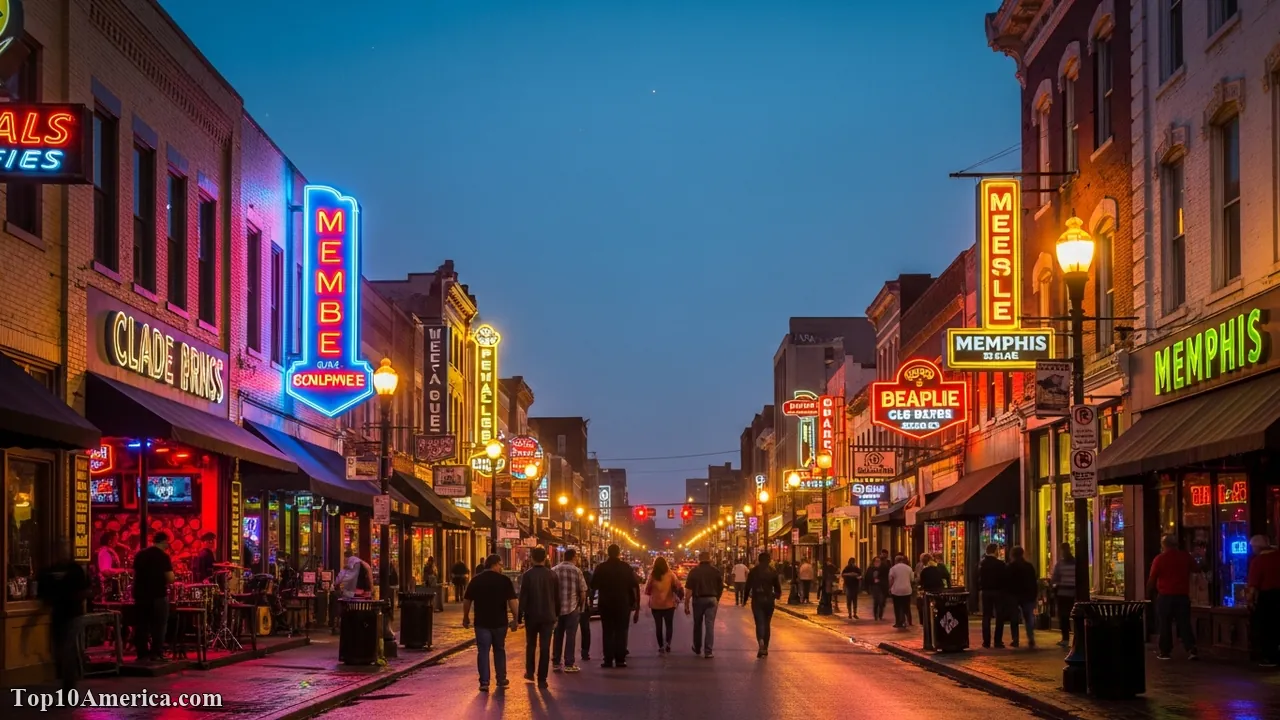
We view Memphis as a top contender for investors and first-time buyers due to its high inventory of single-family homes at accessible price points. While some neighborhoods face challenges, many suburbs and revitalizing urban cores offer substantial square footage for the price. It is a city where you can still find a three-bedroom home with a yard for under $280,000, a rarity in 2025.
Locals know that the best BBQ isn’t always at the most famous tourist spots. The city is a pilgrimage site for foodies, and the cost of dining out here is as affordable as the housing. Living here means you are immersed in a music history that shaped the world, from Sun Studio to Graceland.
Key Highlights
- Music Legacy: Home to Graceland and Beale Street.
- Business: Global headquarters for FedEx.
- Tax Benefit: Tennessee has no state income tax on wages.
Top 7. St. Louis
Known as the “Gateway to the West,” St. Louis, Missouri, is defined by its iconic Gateway Arch and its historic role as a major port on the Mississippi River. The city offers diverse neighborhoods, from the brick-lined streets of Soulard to the trendy corridors of the Central West End. It is a city of distinct architectural beauty, with a housing stock that includes stunning red-brick duplexes and gingerbread bungalows.
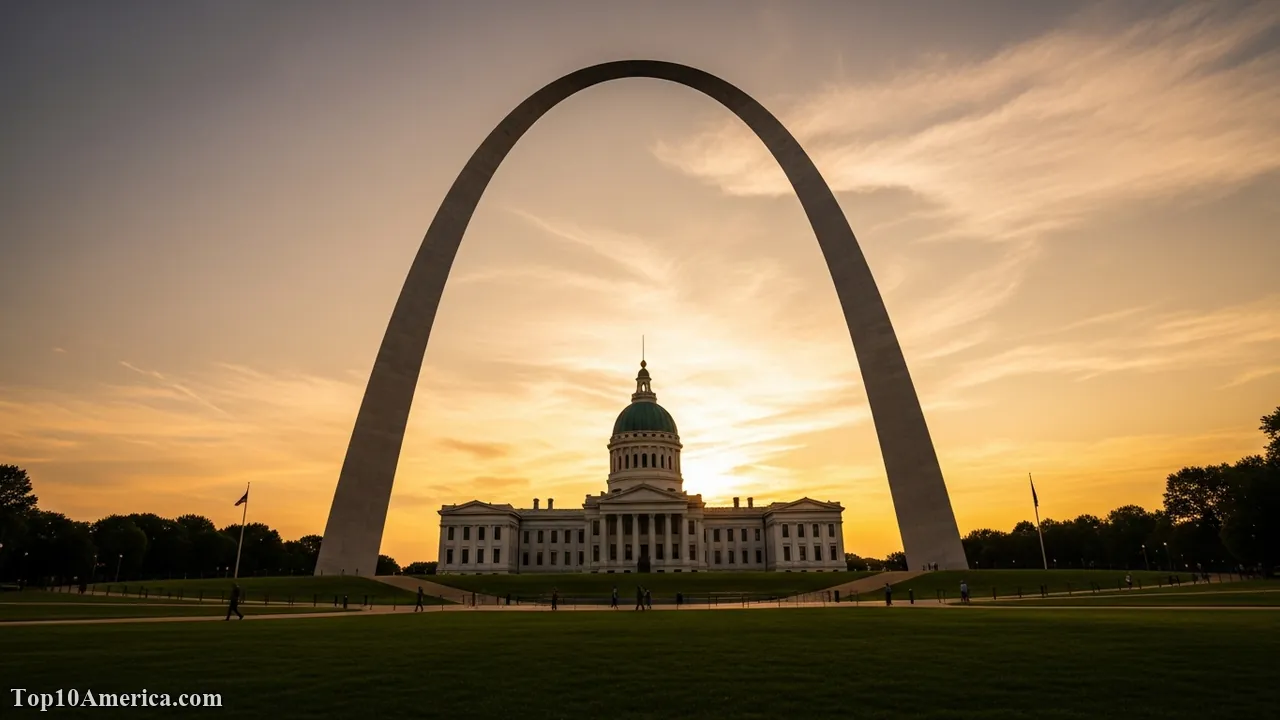
Top 10 America ranks St. Louis highly because of its “free” culture. Many of the city’s top attractions, including the massive Forest Park, the Zoo, the Art Museum, and the Science Center, are completely free to the public. This lowers the overall cost of entertainment for families, compounding the savings gained from cheap housing costs.
An insider tip for prospective buyers: Look at the “tower grove” neighborhoods. These areas have seen significant appreciation but remain affordable compared to coastal cities. The sense of community here is strong, anchored by one of the best botanical gardens in the world.
Key Highlights
- Attractions: Home to the “Saint Louis Zoo” and “Art Museum” (both free).
- History: Famous for the 630-foot Gateway Arch.
- Value: Median prices sit comfortably in the mid-$200ks.
Top 6. Oklahoma City
The capital of Oklahoma, Oklahoma City (OKC), is a sprawling metropolis that sits atop one of the world’s largest oil fields. However, the city has successfully diversified its economy into aviation, energy, and bioscience. It is a place of wide-open spaces and modern urban planning, known for its friendly residents and “big league” amenities, including the NBA’s Oklahoma City Thunder.
Data shows that OKC is one of the most recession-resistant housing markets in the US. We suggest looking here if you prioritize newer construction; unlike the older Rust Belt cities on this list, OKC offers many new development subdivisions at affordable price points. You get modern energy efficiency and layouts without the million-dollar price tag found in other Western cities.
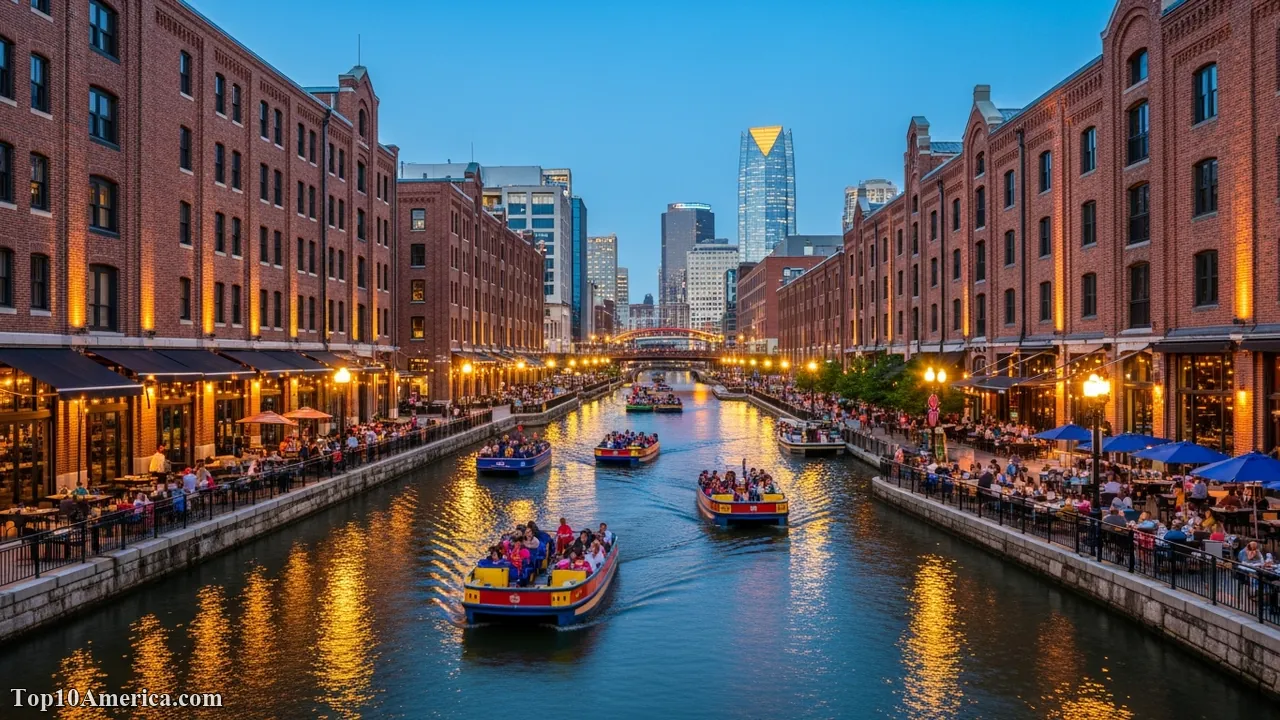
A unique feature of OKC is the “Bricktown” entertainment district. Formerly an abandoned warehouse district, it is now a thriving canal-lined neighborhood filled with restaurants and piano bars. It is a prime example of how the city uses affordable space to create high-quality leisure zones.
Key Highlights
- Growth: Consistently ranked among the fastest-growing large cities in the US.
- Economy: Strong sectors in energy, aviation, and government.
- Space: Large lot sizes are common compared to denser eastern cities.
Top 5. Rochester
Located on the southern shore of Lake Ontario in Upstate New York, Rochester is a cultural gem often overlooked by those focused on NYC. Historically known as the home of Kodak and Xerox, it has transitioned into a center for higher education and healthcare, anchored by the University of Rochester. The city is famous for its festivals, particularly the Lilac Festival.
It is shocking to many that a city in New York State appears on a “cheapest” list, but facts show Rochester offers incredible value. While the NYC metro area is prohibitively expensive, Rochester provides historic homes with hardwood floors and intricate woodwork for under $250,000. It is an intellectual hub with a high quality of life, perfect for remote workers who want four distinct seasons.
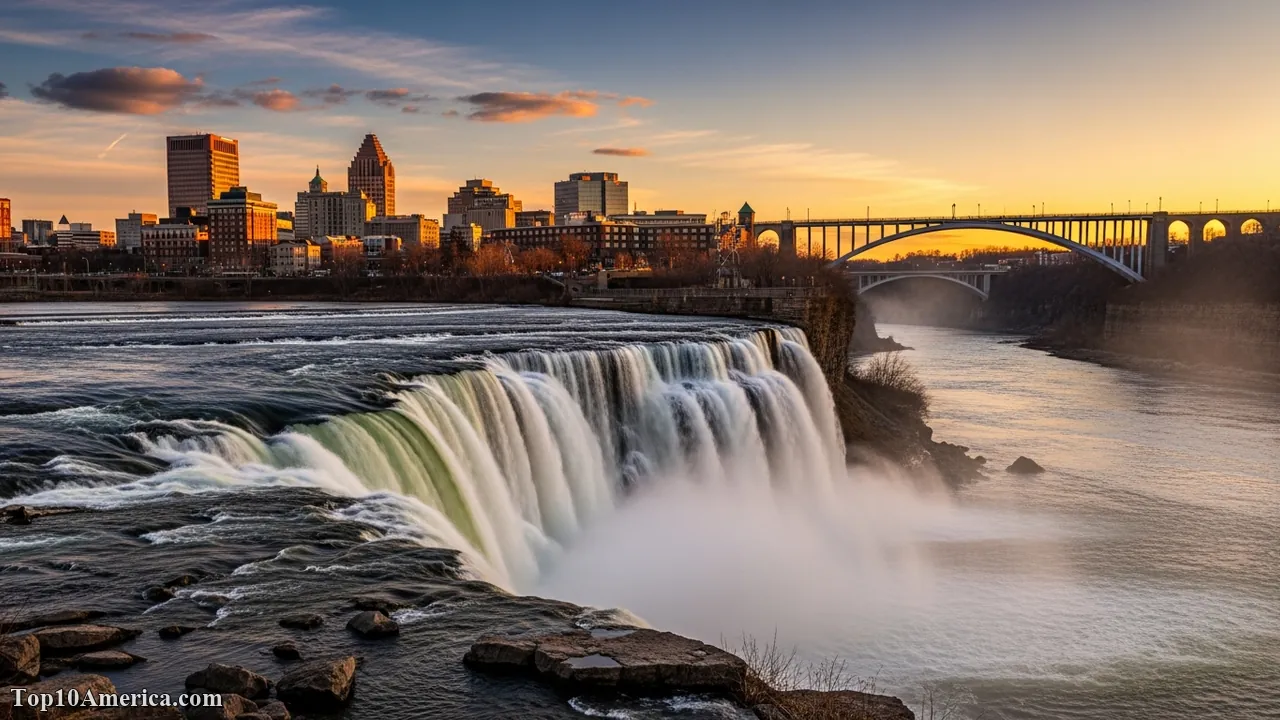
A “did you know” fact: Rochester is home to the High Falls, a 96-foot waterfall situated right in the middle of downtown. It is one of the few cities in America with such a massive natural waterfall within its urban core, providing a stunning backdrop to city living.
Key Highlights
- Education: Home to RIT and the University of Rochester.
- Geography: Gateway to the Finger Lakes wine region.
- Market: Highly competitive but very low absolute price point.
Top 4. Pittsburgh
Once the “Steel City” that built America, Pittsburgh, Pennsylvania, has reinvented itself as a hub for technology, robotics, and healthcare. The city is visually striking, defined by its 446 bridges and steep hillsides at the confluence of three rivers. It possesses a grit and authenticity that appeals to a younger generation looking for character over cookie-cutter suburbs.
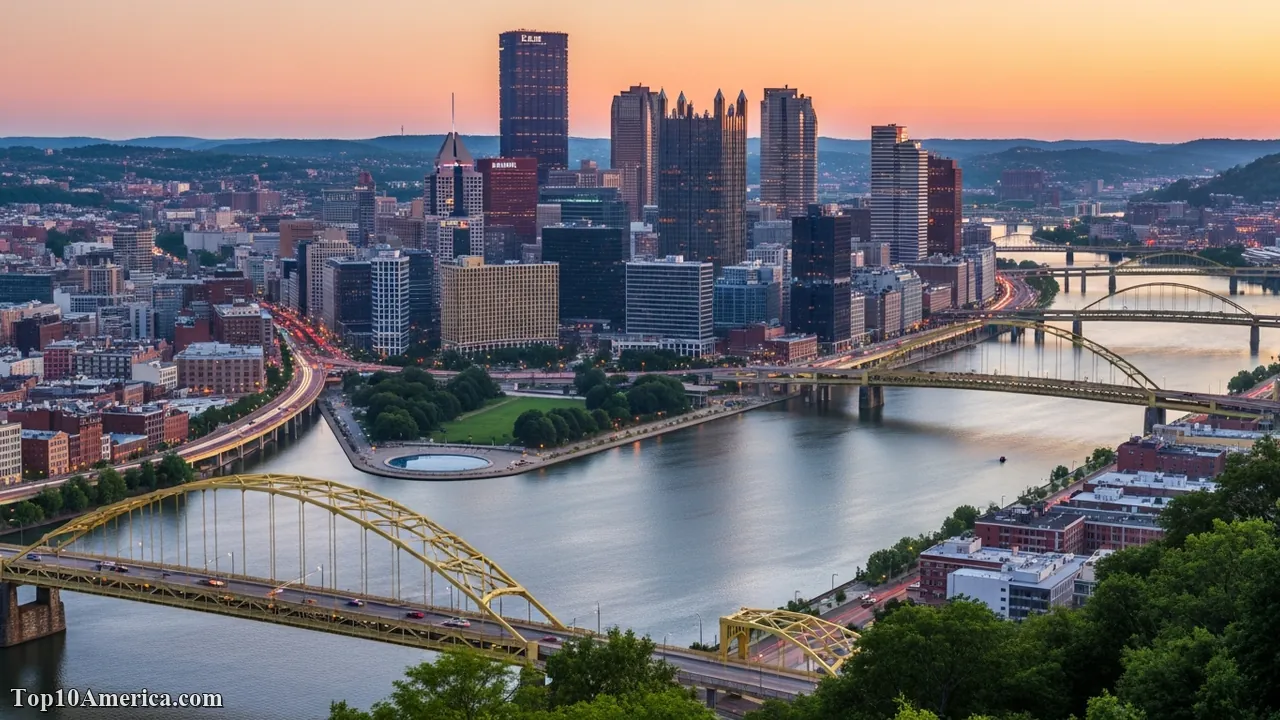
We celebrate Pittsburgh for its “eds and meds” economy which provides stability for homeowners. The housing stock is incredibly varied; you can find solid brick row houses and large hillside family homes for roughly $228,000. The city’s unique topography creates distinct “pocket” neighborhoods, each with its own walkable main street and personality.
Locals will tell you about the “Pittsburgh Potty”—a quirky historical feature found in the basements of many older homes. On a more serious note, the city is consistently rated as one of the most “livable” cities in the US, balancing affordability with a rich cultural scene including the Andy Warhol Museum.
Key Highlights
- Transformation: Shifted from steel to a major tech/robotics hub (Google, Uber).
- Topography: Known as the “City of Bridges.”
- Community: High rate of homeownership creates stable neighborhoods.
Top 3. Cleveland
Located on the shores of Lake Erie, Cleveland, Ohio, is a powerhouse of culture and medical innovation. It is home to the world-renowned Cleveland Clinic and the Rock & Roll Hall of Fame. The city has a rich industrial past, and like its Rust Belt neighbors, it boasts an infrastructure built for a much larger population, meaning traffic is light and amenities are abundant.
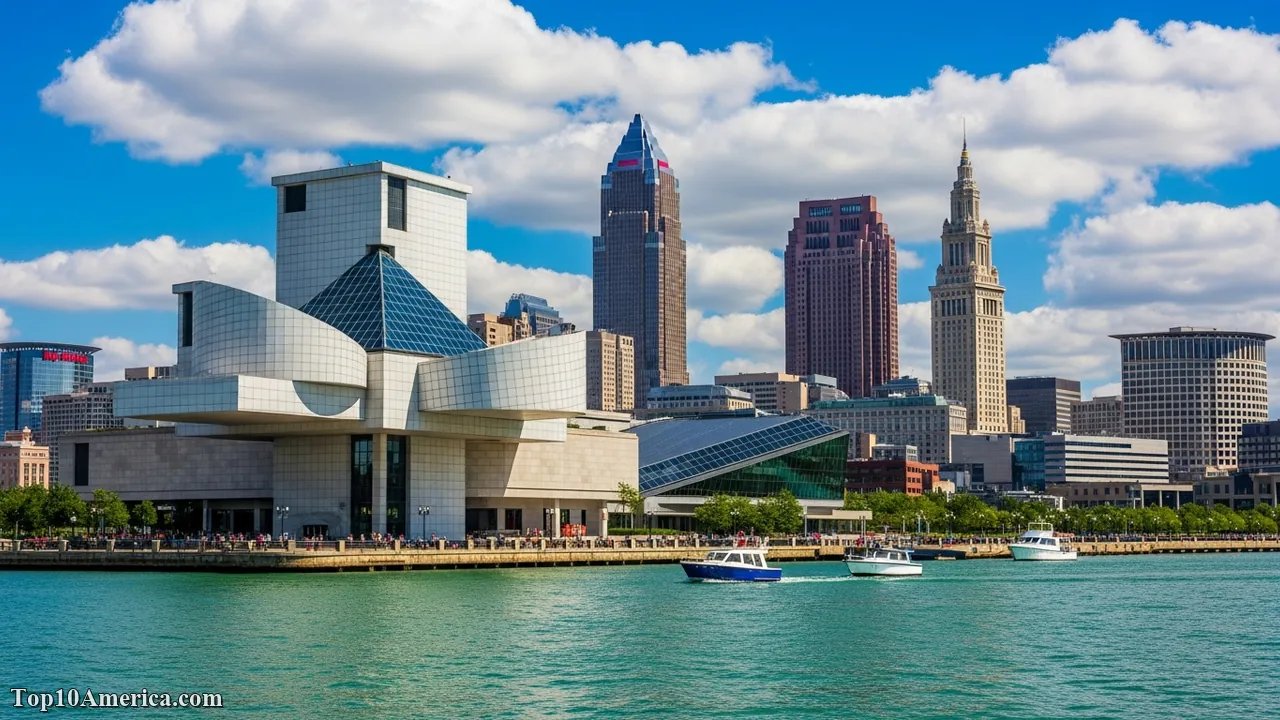
Top 10 America highlights Cleveland for its sheer “bang for your buck.” With a median home price around $220,000, you can access a world-class orchestra, major league sports (Guardians, Browns, Cavs), and the second-largest theater district in the US outside of Lincoln Center. The discrepancy between the low cost of housing and the high quality of cultural amenities is arguably the widest in the nation.
The “Emerald Necklace” is a point of local pride—a ring of park reservations encircling the city. It offers miles of hiking, biking, and nature trails, ensuring that even in an urban environment, nature is never more than a few minutes away.
Key Highlights
- Healthcare: Home to the top-ranked Cleveland Clinic.
- Culture: Rock & Roll Hall of Fame and Playhouse Square.
- Value: High amenity density relative to housing cost.
Top 2. Toledo
Just an hour west of Cleveland lies Toledo, Ohio, the “Glass City.” Sitting at the western tip of Lake Erie, Toledo has a strong manufacturing heritage, particularly in glass and automotive assembly (Jeep is a major employer). The city offers a smaller, more intimate feel than Detroit or Cleveland but retains the industrial work ethic and low costs.
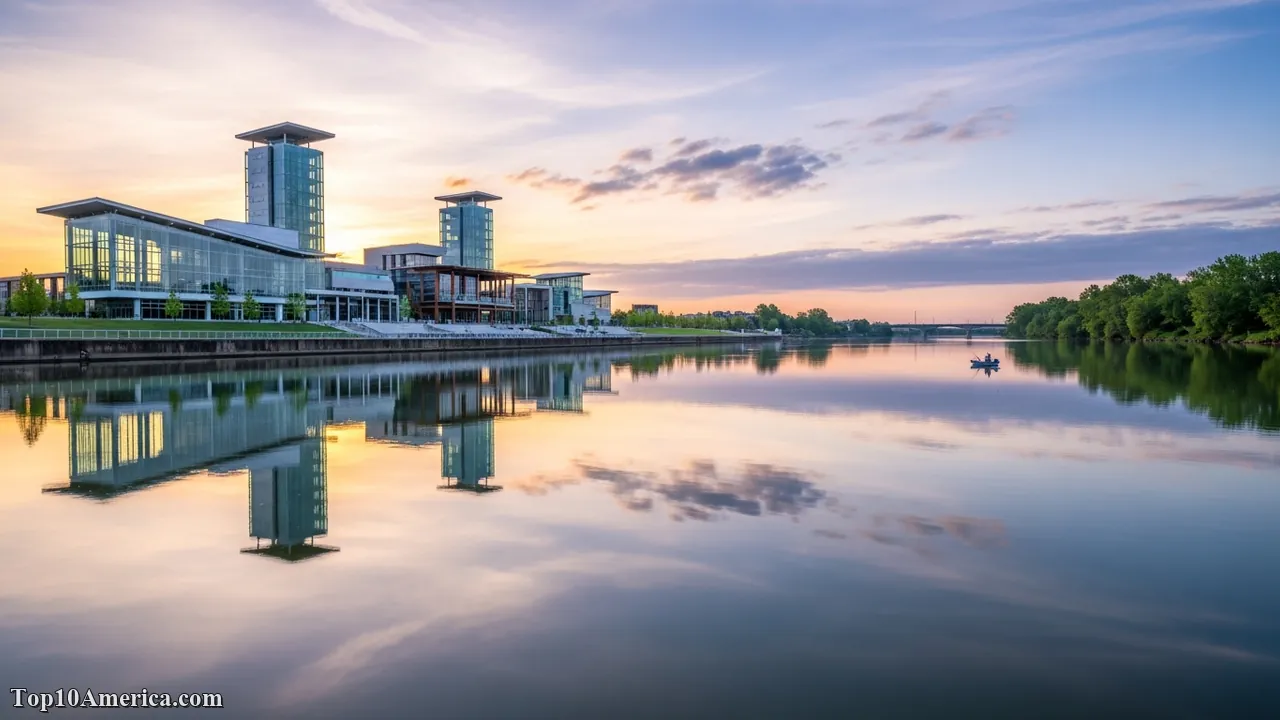
Data consistently ranks Toledo as one of the absolute best values in the USA. With median prices hovering near $205,000, it is a haven for buyers who are priced out of almost every other market. We suggest Toledo for families; the metro area has an acclaimed zoo, a fantastic art museum, and an extensive metropark system that is often rated best in the country.
Toledo is currently undergoing a riverfront renaissance. The “Glass City Metropark” and renewed downtown invest in the quality of life for residents. It’s a city that knows what it is—hardworking, unpretentious, and incredibly affordable.
Key Highlights
- Industry: Known as the “Glass City” and home of the Jeep Wrangler.
- Parks: Metroparks Toledo was named the #1 park system in the US (2020).
- Location: Easy access to Detroit and Ann Arbor.
Top 1. Detroit
Taking the top spot is Detroit, Michigan. The Motor City is a place of legendary history, immense struggle, and inspiring resilience. As the automotive capital of the world, it shaped the 20th century. Today, it stands as the most affordable major housing market in the United States, offering opportunities for ownership that are simply impossible elsewhere.
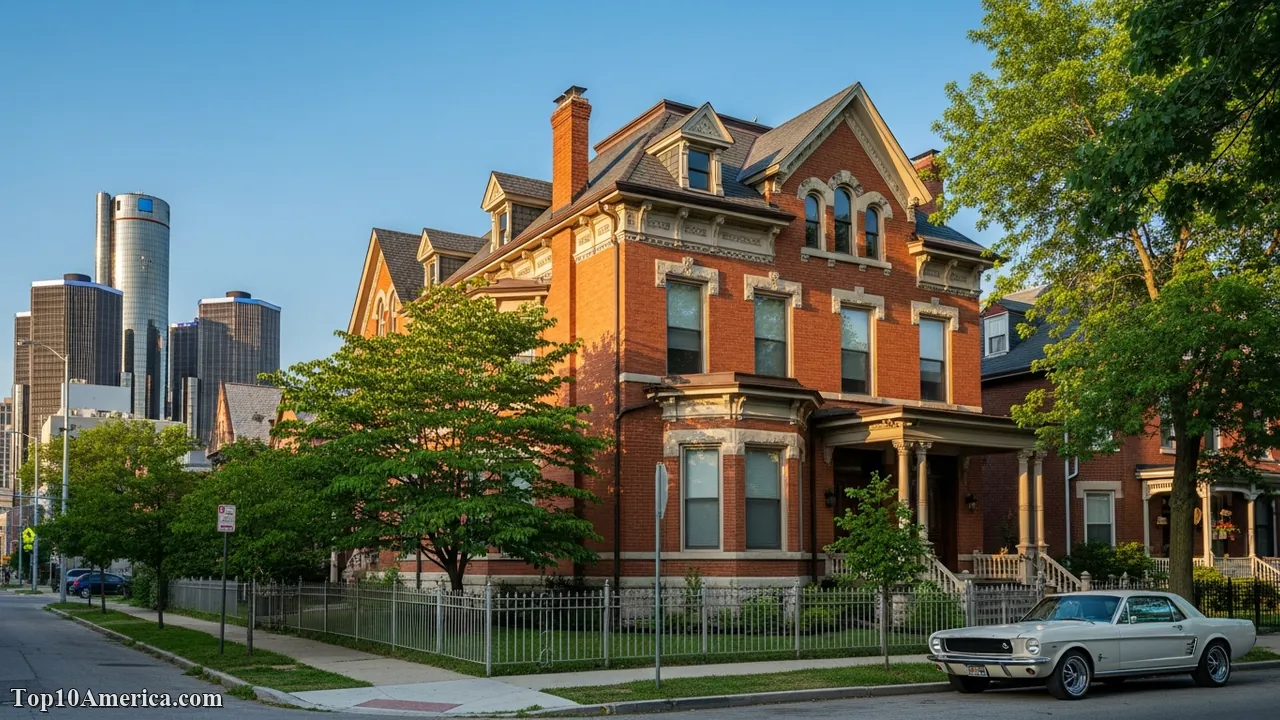
Top 10 America ranks Detroit #1 not just for the low price (median ~$192,000), but for the potential. The city is in the midst of a visible comeback. While challenges remain, vacant lots are becoming urban farms, and historic mansions in neighborhoods like Boston-Edison are being restored to their former glory. For the adventurous buyer or the community-minded investor, Detroit is the ultimate frontier of value.
A crucial insider perspective: Detroit is huge. The experience varies wildly from block to block. However, the energy is undeniable. From the bustling Eastern Market (one of the oldest in the nation) to the Art Deco masterpieces downtown, Detroit offers a richness of character that money can’t buy—even though here, it doesn’t take much money to buy in.
Key Highlights
- The Stat: The lowest median home price of any major US metro ($192k).
- Iconic: The global center of the automotive industry.
- Trend: A top destination for young artists and entrepreneurs seeking low overhead.
Conclusion
The narrative of American housing is changing. While the coasts remain expensive, the “Heartland” offers a path to debt-free living and homeownership that is increasingly rare. From the musical streets of Memphis to the lakeside resilience of Cleveland and Detroit, these cities prove that affordability does not require sacrificing culture or community.
At Top 10 America, we encourage you to look beyond the headlines. These cities are not just “cheap places”; they are historic American communities ready for their next chapter.