Thanksgiving is perhaps the most quintessentially American holiday. It is a time when the nation pauses to reflect on gratitude, family, and the harvest. However, behind the turkey and the football lies a complex history filled with political maneuvering, surprising culinary origins, and cultural shifts that have defined the United States for centuries. At Top 10 America, we believe that knowing the history of our traditions deepens the appreciation of the feast.
As of late 2025, Thanksgiving remains a pillar of American culture, evolving from a solemn 17th-century harvest celebration into a massive commercial and social event. While most Americans know the story of the Pilgrims, few are aware of the “Franksgiving” controversy or the connection between the holiday and the invention of the TV dinner. We have dug into the archives to separate myth from history.
In this list, Top 10 America explores the hidden stories behind the holiday. From the historic streets of Massachusetts to the boardrooms of Nebraska, we have curated the definitive ranking of facts that explain the meaning behind the greatness of this November tradition.
Overview: Top 10 Facts About Thanksgiving in the USA
| Rank | Fact / Topic | Historical Context | Location / Origin |
|---|---|---|---|
| 10 | Minnesota leads turkey production | Agricultural dominance | Minnesota |
| 9 | Jingle Bells was a Thanksgiving song | Original composition (1857) | Medford, Massachusetts |
| 8 | Lions Football Tradition | Started in 1934 | Detroit, Michigan |
| 7 | Invention of the TV Dinner | Result of turkey surplus (1953) | Omaha, Nebraska |
| 6 | Sarah Josepha Hale’s Campaign | The “Mother of Thanksgiving” | Newport, New Hampshire |
| 5 | Macy’s First Parade Animals | Zoo animals instead of balloons | New York, New York |
| 4 | Benjamin Franklin’s Turkey View | Letter regarding the Eagle | Philadelphia, Pennsylvania |
| 3 | The “Franksgiving” Fiasco | FDR changed the date (1939) | Washington, D.C. |
| 2 | The First Menu was Turkey-Free | Venison and fowl, no pie | Plymouth, Massachusetts |
| 1 | Lincoln’s Official Proclamation | Unifying the nation (1863) | Washington, D.C. |
Top 10. Minnesota Raises the Most Turkeys
While the Thanksgiving story begins in New England, the modern reality of the holiday is centered in the Midwest. Specifically, the state of Minnesota consistently ranks as the top turkey-producing state in the nation. Agriculture experts note that the Land of 10,000 Lakes raises approximately 40 to 45 million turkeys annually, ensuring that the centerpiece of the American table is available nationwide.
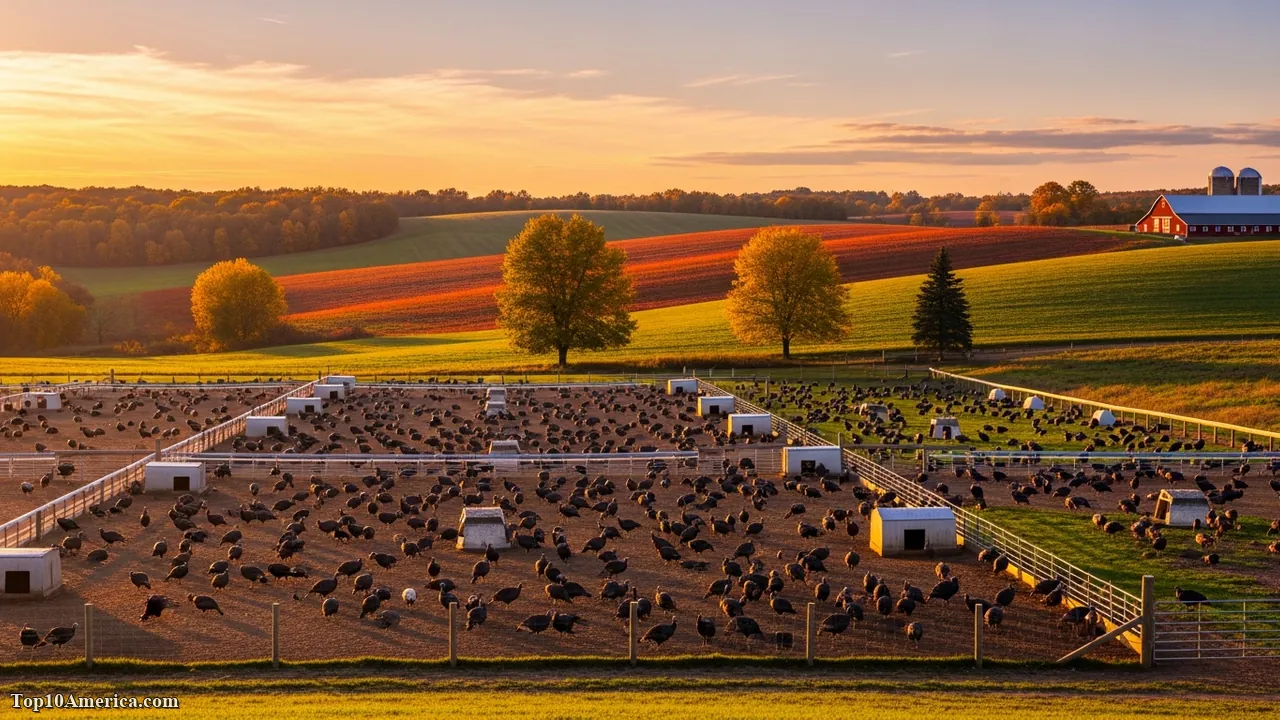
At Top 10 America, we find this fact crucial because it highlights the agricultural power of the United States. While we associate the bird with historical Plymouth, the logistics of feeding over 300 million Americans is a modern industrial marvel rooted in the Midwest. Historical data shows that without the farming infrastructure of states like Minnesota and North Carolina, the affordable Thanksgiving turkey would be an impossibility.
It is fascinating to note that the average American consumes roughly 16 pounds of turkey per year, with a massive spike occurring in November. If you are enjoying a bird this year, there is a very high statistical probability it originated from a farm in the upper Midwest.
Key Highlights
- Production Stat: Minnesota produces approx. 40+ million birds annually.
- National Ranking: consistently ranked #1 in turkey production.
- Consumption: Americans eat 46 million turkeys each Thanksgiving.
Top 9. “Jingle Bells” Was Originally a Thanksgiving Song
One of the most famous Christmas carols in the world, “Jingle Bells,” was actually composed with Thanksgiving in mind. Written by James Lord Pierpont in 1857, the song was originally titled “The One Horse Open Sleigh.” Historical markers in Medford, Massachusetts, claim the song was written there at the Simpson Tavern, inspired by the popular sleigh races of the 19th century.
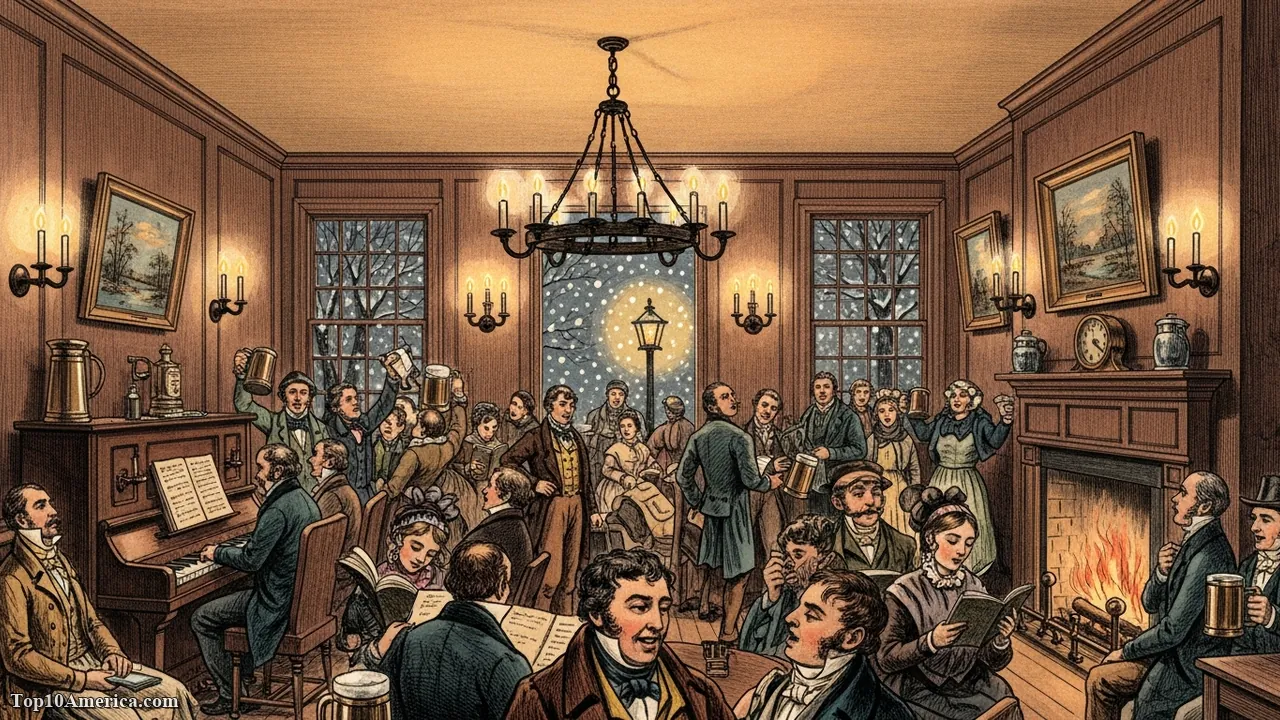
Our analysis suggests that the cultural shift of this song from Thanksgiving to Christmas demonstrates how holiday traditions in the USA are fluid. The lyrics, which mention drag-racing sleighs and crashing into snow banks, are secular and rowdy—fitting for the harvest parties of the 1850s rather than a silent holy night. It wasn’t until decades later that the song became exclusively associated with December 25th.
A fun detail for trivia lovers: The song was so popular that it became the first song ever broadcast from space. In 1965, astronauts aboard Gemini 6 smuggled a harmonica and bells on board to play the tune for Mission Control, cementing its place in American history.
Key Highlights
- Original Title: “The One Horse Open Sleigh”.
- Composer: James Lord Pierpont (1857).
- Location Claim: Written in Medford, Massachusetts (also claimed by Savannah, GA).
Top 8. The Detroit Lions Have Played Since 1934
Football is now as synonymous with Thanksgiving as pumpkin pie, and this tradition can be traced directly to Detroit, Michigan. In 1934, the new owner of the Detroit Lions, G.A. Richards, wanted to build a fanbase in a baseball-obsessed city. He scheduled a game against the Chicago Bears on Thanksgiving Day, gambling that the holiday crowd would turn out. The risk paid off, and the stadium sold out.
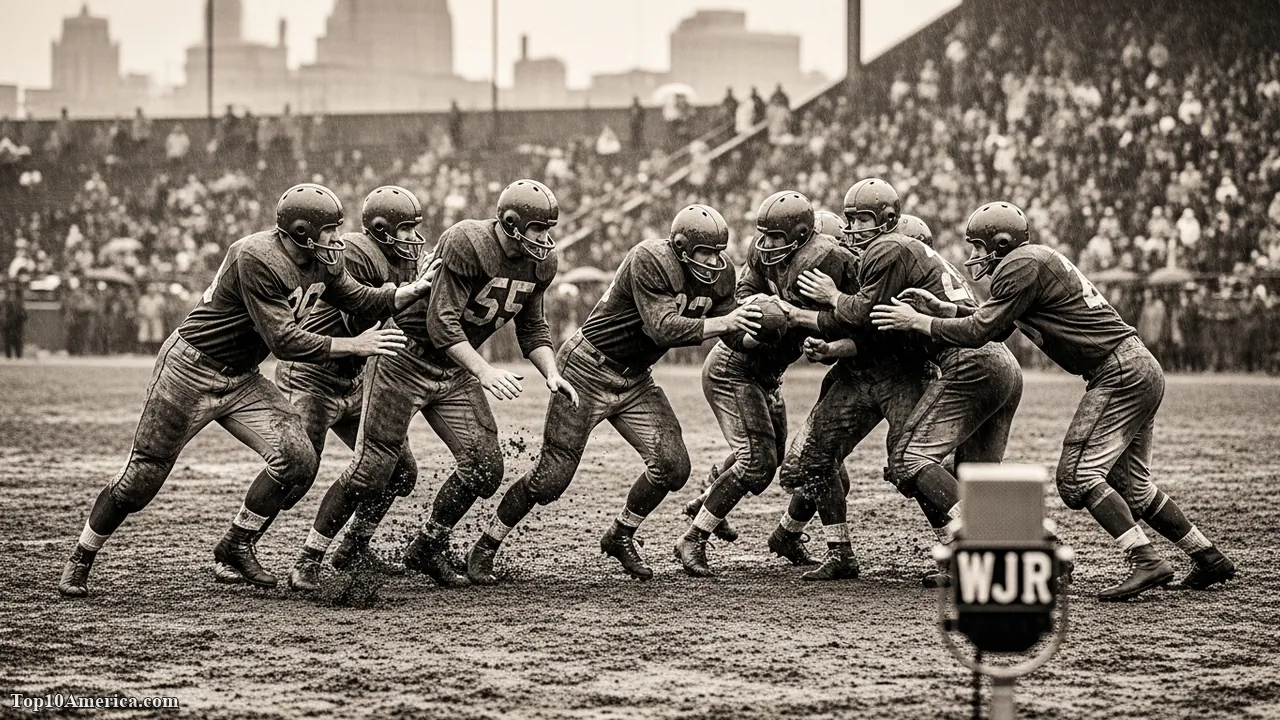
We include this in our ranking because it represents the unique American fusion of sports and holidays. Unlike other nations where holidays are strictly for rest or religion, the USA integrates entertainment spectacles. Because Richards owned a radio station affiliated with NBC, he arranged for the game to be broadcast nationally, instantly creating a coast-to-coast tradition that remains unbroken (except for WWII pause).
Today, no matter how the team is performing in the standings, the Lions always host the early game on Thanksgiving. It serves as a distinct cultural anchor for the city of Detroit and football fans across the country.
Key Highlights
- Inaugural Game: Detroit Lions vs. Chicago Bears (1934).
- Broadcasting: First national radio broadcast by NBC.
- Attendance: The first game sold out 26,000 seats in Detroit.
Top 7. TV Dinners Were Invented Due to a Turkey Surplus
The quintessential convenience food, the TV dinner, owes its existence to a Thanksgiving miscalculation. In 1953, the Swanson company, headquartered in Omaha, Nebraska, overestimated the demand for Thanksgiving turkeys and found themselves with 260 tons of frozen leftover birds. To avoid spoilage, salesman Gerry Thomas suggested packaging the turkey with sides in aluminum trays, inspired by airline meals.
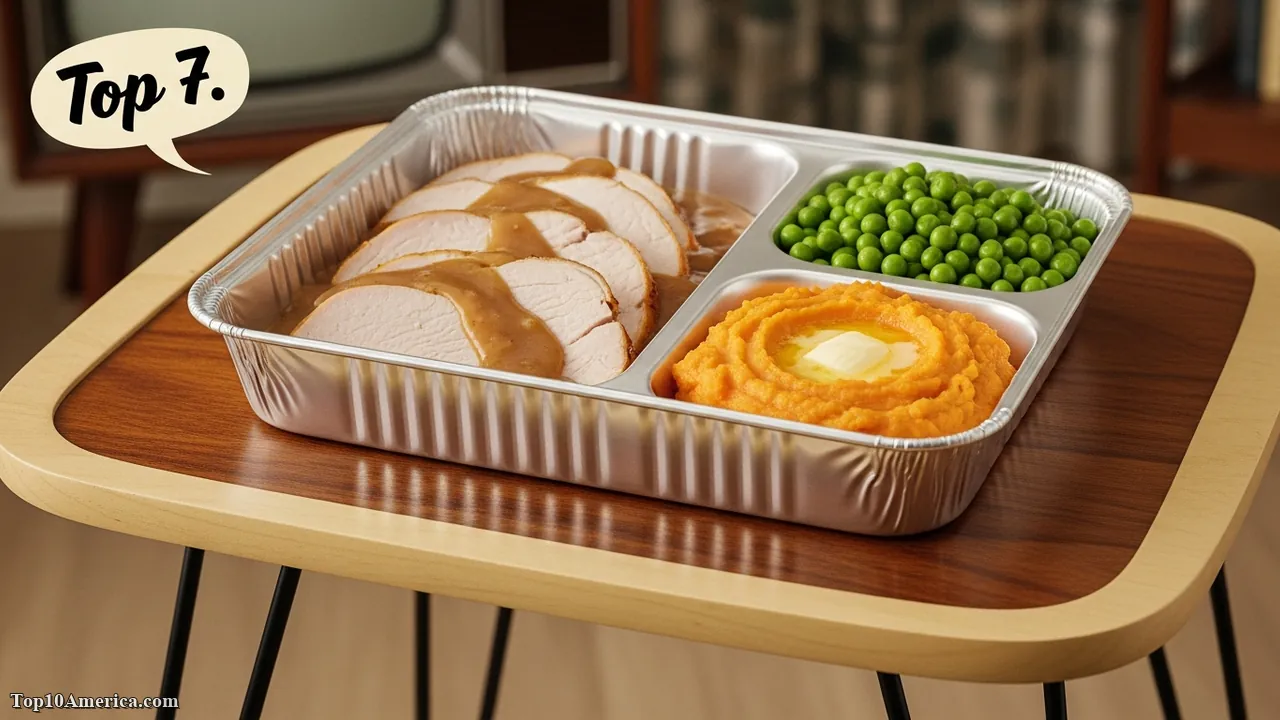
This fact is significant because it marks a turning point in American dining habits. The “TV Dinner” was born, forever changing how families in the USA ate, moving from the dining room table to the living room in front of the television. Top 10 America views this as a prime example of American ingenuity—turning a massive logistical failure into a multi-billion dollar industry.
The very first Swanson TV dinner featured turkey, cornbread dressing, peas, and sweet potatoes. It sold for 98 cents, and in the first full year of production, Swanson sold 10 million units, far exceeding their expectations.
Key Highlights
- Year of Invention: 1953.
- Company: C.A. Swanson & Sons (Omaha, NE).
- Volume: 260 tons of surplus turkey utilized.
- Price: Original cost was $0.98.
Top 6. Sarah Josepha Hale: The “Mother of Thanksgiving”
While Lincoln made it official, the relentless campaign to create the holiday came from Sarah Josepha Hale, a prominent writer and editor from Newport, New Hampshire. Best known for writing “Mary Had a Little Lamb,” Hale spent 36 years lobbying state and federal officials to create a unified national day of thanks. She believed it would help heal the growing sectional divides in the country.
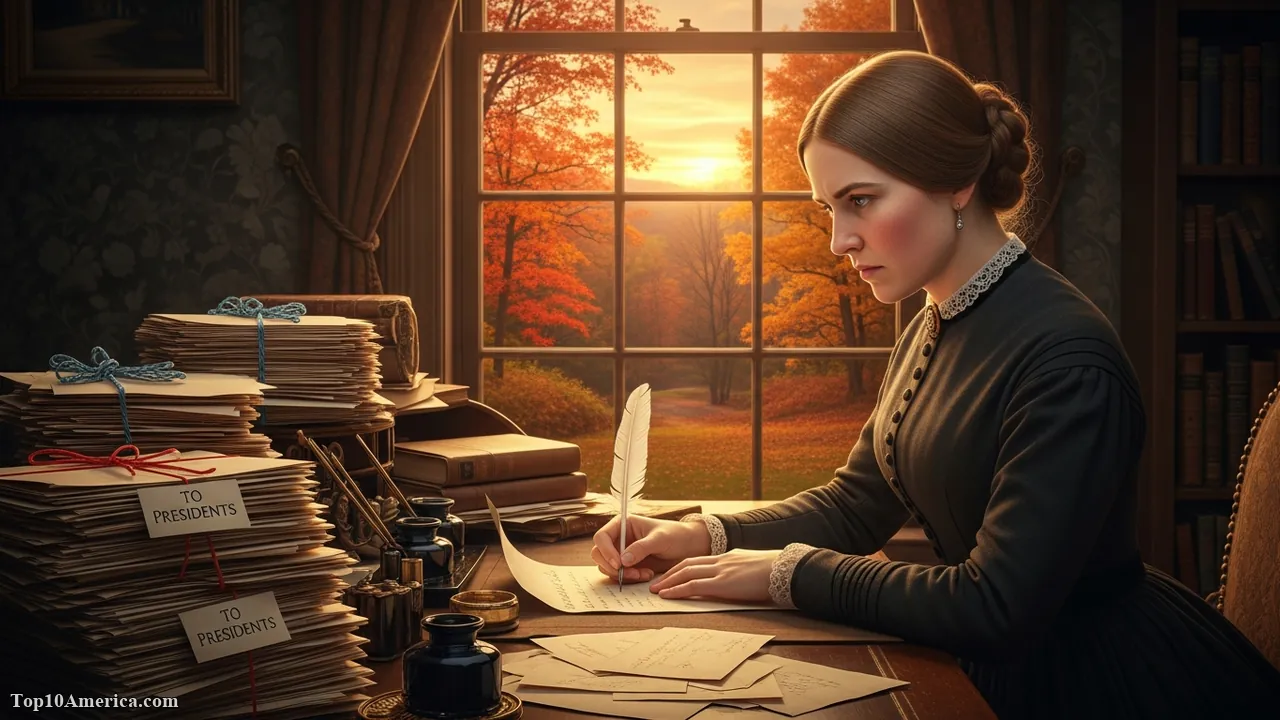
We rank this high because it showcases the power of civic engagement in American history. Hale wrote letters to five different presidents (Taylor, Fillmore, Pierce, Buchanan, and Lincoln). Her persistence finally paid off in 1863 when Lincoln agreed with her vision that a national holiday could help “bind up the nation’s wounds” during the Civil War.
Without this New England editor’s determination, Thanksgiving might have remained a sporadic regional observance in the Northeast rather than the federal holiday we celebrate today across all 50 states.
Key Highlights
- Campaign Duration: 36 years (1827–1863).
- Occupation: Editor of Godey’s Lady’s Book.
- Result: Convinced Lincoln to proclaim the national holiday.
Top 5. The First Macy’s Parade Featured Zoo Animals
The Macy’s Thanksgiving Day Parade is a televised icon, but its origins in New York City were quite different from the balloon-filled spectacle we know today. The inaugural parade in 1924 was actually called the “Macy’s Christmas Parade” and was designed to encourage holiday shopping at the flagship store in Herald Square. Instead of giant balloons, the parade featured live animals borrowed from the Central Park Zoo.
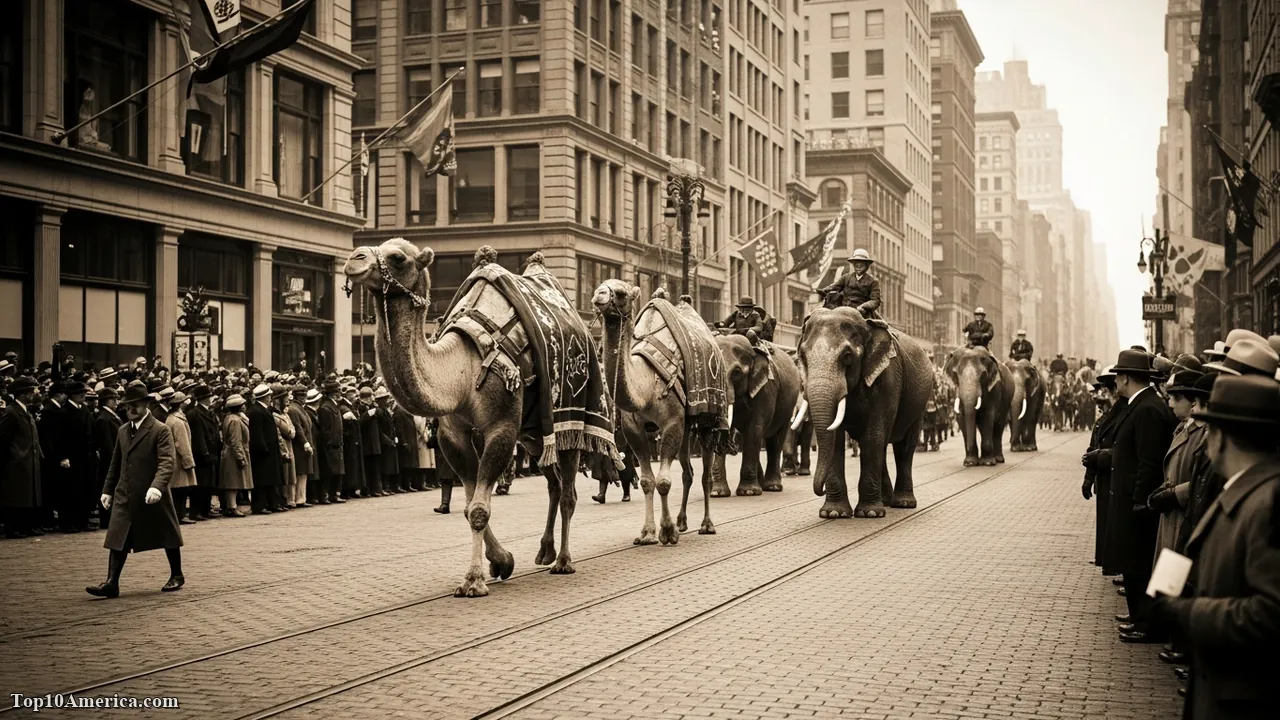
In Top 10 America’s view, the evolution of this parade mirrors the evolution of American entertainment. The live bears, elephants, and monkeys terrified some children, leading Macy’s to replace them with the now-famous giant helium balloons in 1927 (the first being Felix the Cat). This shift from dangerous reality to whimsical fantasy set the standard for American parades.
A unique insider detail: In the early years, the balloons were released into the sky at the end of the parade. If you found one and returned it to Macy’s, you received a reward. This practice was discontinued for safety reasons after a balloon got tangles in an airplane’s propeller.
Key Highlights
- First Parade: 1924 in New York City.
- Original Attractions: Elephants, bears, camels from Central Park Zoo.
- First Balloon: Felix the Cat (debuted 1927).
Top 4. Ben Franklin Preferred the Turkey to the Eagle
A persistent legend in American history is that Benjamin Franklin proposed the turkey as the national bird. While he did not officially propose it for the Great Seal, he did write a famous letter to his daughter in Philadelphia, Pennsylvania, in 1784, criticizing the choice of the Bald Eagle. He described the eagle as a bird of “bad moral character” because it stole food from other birds.
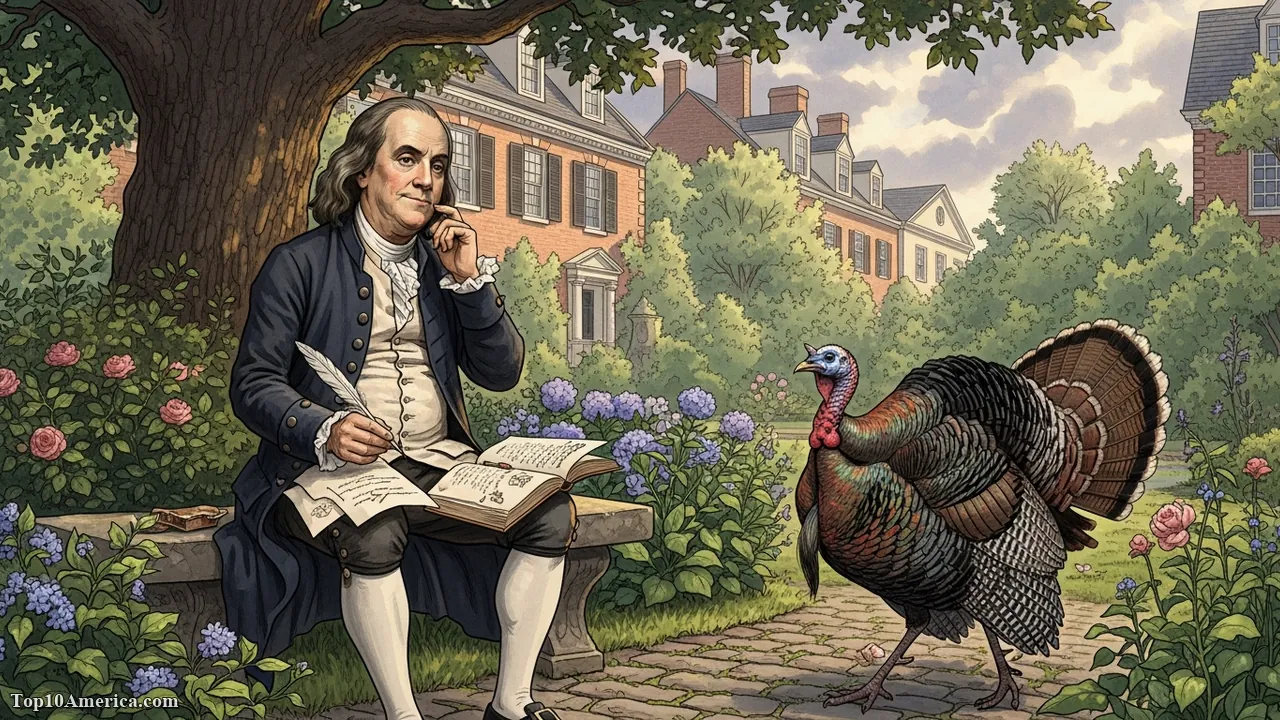
This fact highlights the Founding Fathers’ distinct personalities and humor. Franklin praised the turkey as a “much more respectable bird” and a “true original native of America.” He noted that while the turkey was a little vain and silly, it was a bird of courage that would not hesitate to attack a British Grenadier who invaded its farm yard.
We include this because it reframes how we see the main course of our dinner. It isn’t just food; in the eyes of one of America’s greatest statesmen, the turkey represented a distinct kind of American bravery and nativity that the eagle lacked.
Key Highlights
- Source: Letter to Sarah Bachelor (1784).
- Context: Critique of the Great Seal’s eagle design.
- Franklin’s View: Called the turkey a “Bird of Courage.”
Top 3. The “Franksgiving” Fiasco of 1939
In 1939, the United States had two Thanksgivings. President Franklin D. Roosevelt, attempting to boost retail sales during the tail end of the Great Depression, moved the holiday one week earlier than tradition dictated. This decision caused a national uproar, with 22 states celebrating the new date, 23 staying with the old date, and several states, like Texas and Colorado, celebrating both.
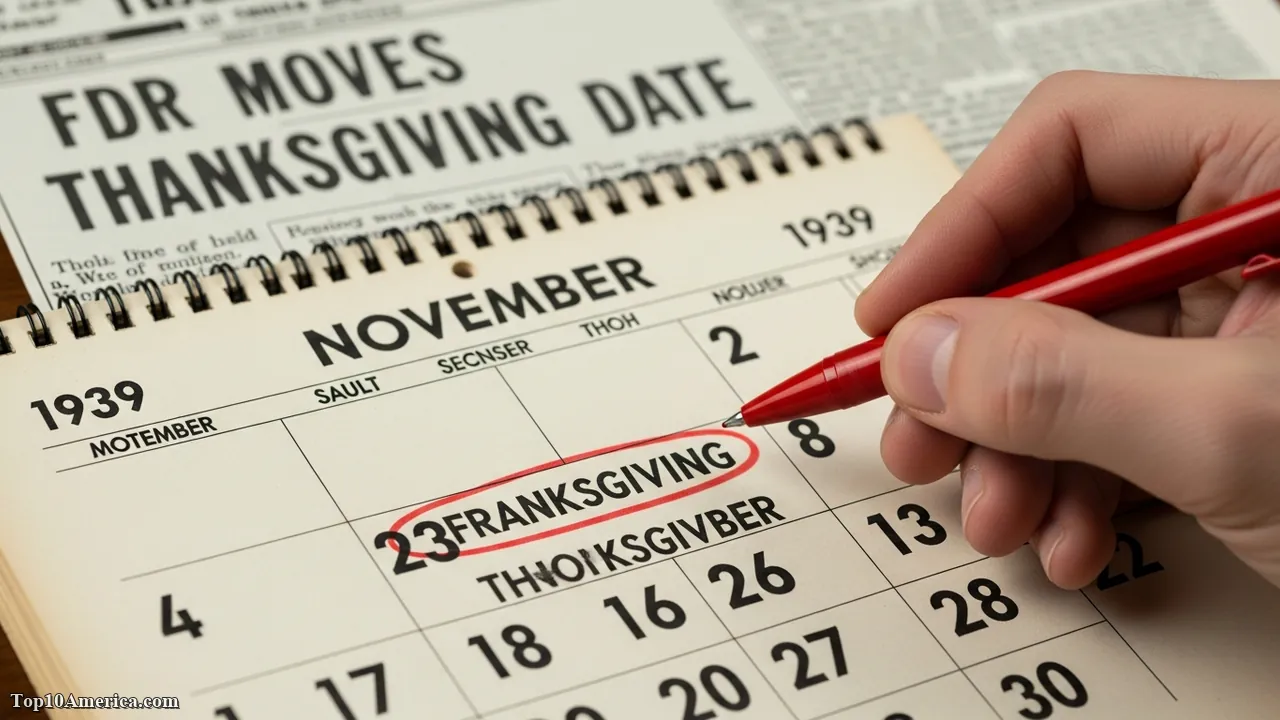
At Top 10 America, we find this political blunder fascinating because it shows the tension between federal authority and state tradition. Opponents mockingly called the new date “Franksgiving.” The confusion was so significant that it disrupted college football schedules and family travel plans across the country.
Congress eventually stepped in. In 1941, they passed a law permanently establishing Thanksgiving as the fourth Thursday in November, stripping the President of the power to change the date whimsically, ensuring the stability we enjoy today.
Key Highlights
- Year: 1939.
- Reason: To extend the Christmas shopping season.
- Outcome: Public outrage led to the 1941 Federal Law fixed date.
Top 2. The First Menu Had No Pie or Turkey
The iconic image of the 1621 feast in Plymouth, Massachusetts, is largely a Victorian invention. Historical records, specifically a letter by Edward Winslow, indicate that the Wampanoag and the Pilgrims did not have turkey as the centerpiece. They ate venison (five deer brought by the Wampanoag), alongside wildfowl like ducks and geese, shellfish, and corn.
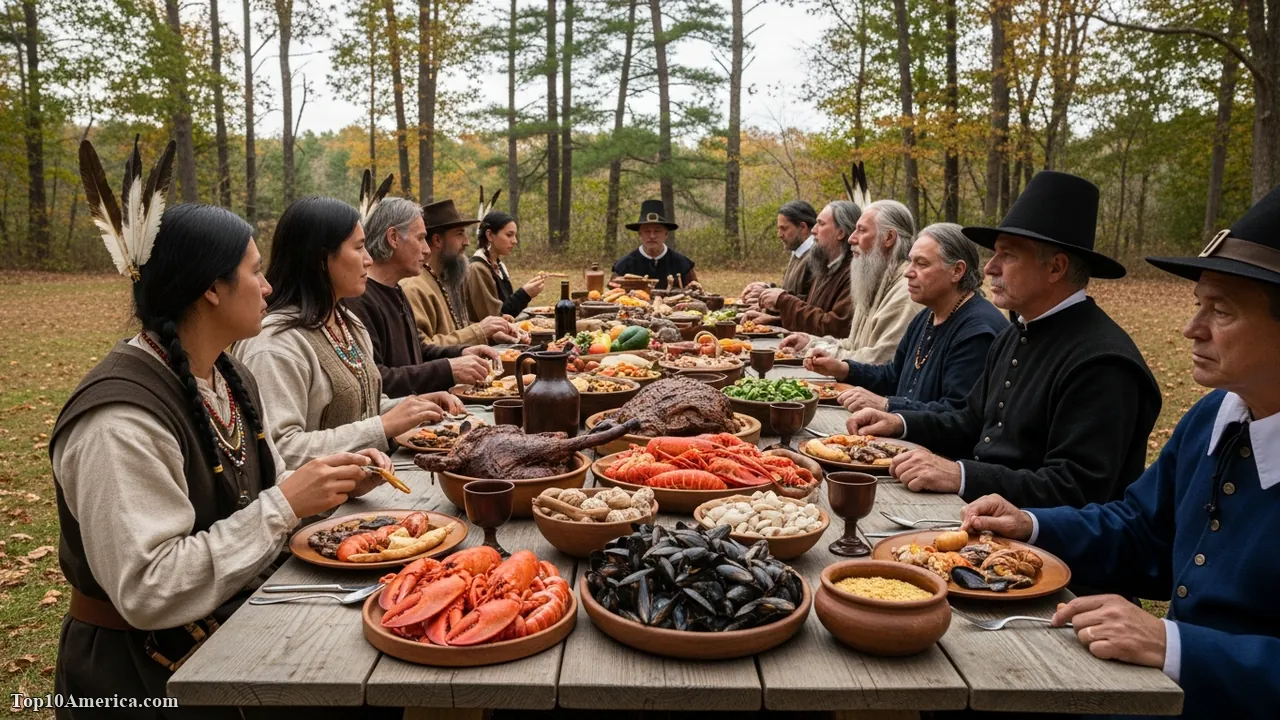
We emphasize this fact to correct the historical record. There was absolutely no pumpkin pie, as the settlers lacked butter and wheat flour for crusts, and they had no ovens for baking. Cranberry sauce was also absent, as sugar was a rare luxury they did not possess. The meal was a savory, meat-heavy affair that likely lasted for three days.
This reality checks the modern commercial version of the holiday against the rugged survivalist nature of the original event. It was less about a perfectly set table and more about a political alliance and survival in a harsh New World environment.
Key Highlights
- Date: Autumn 1621.
- Location: Plymouth Colony, Massachusetts.
- Menu: Venison, waterfowl, corn, shellfish (No pie/cakes).
Top 1. Lincoln’s Proclamation Unified the Holiday
While the Pilgrims provided the inspiration, Abraham Lincoln provided the unification. Before 1863, Thanksgiving was celebrated on different days in different states, mostly in the North. In the midst of the Civil War, from the White House in Washington, D.C., Lincoln issued a proclamation setting the last Thursday of November “as a day of Thanksgiving and Praise.”
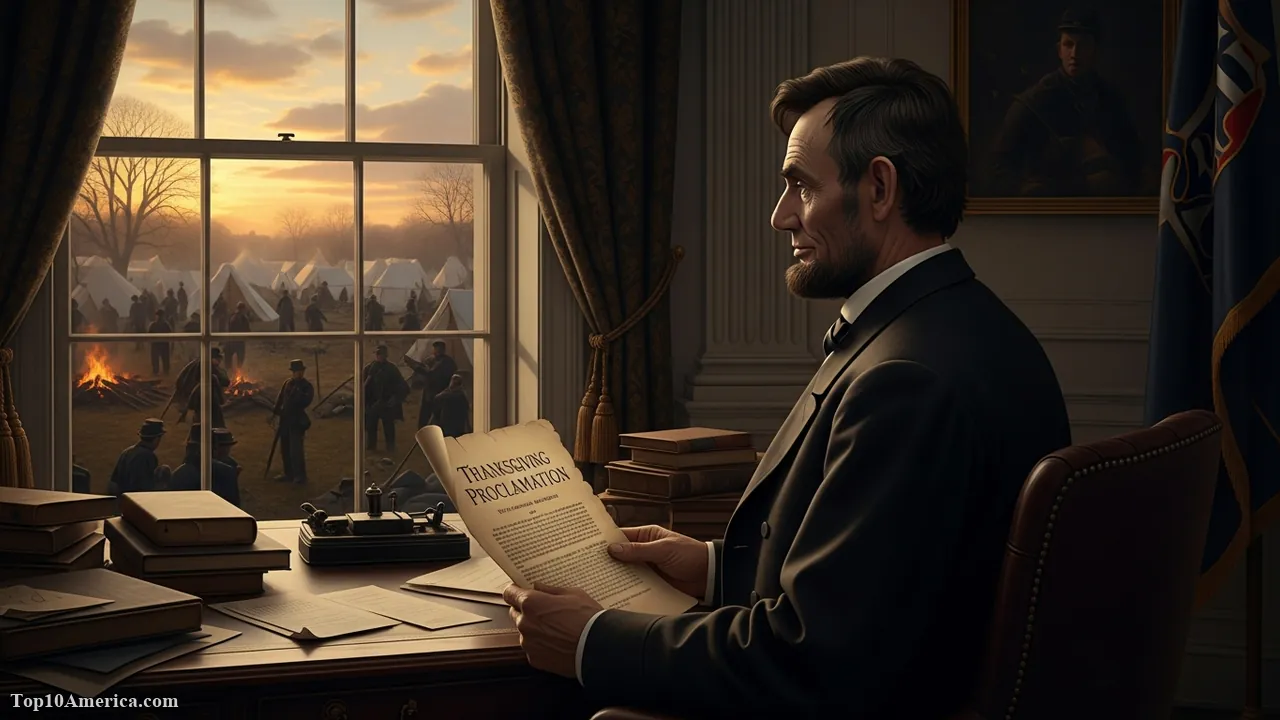
Top 10 America ranks this as the number one fact because it defines the true purpose of the holiday. Lincoln used the day as a political tool to foster a sense of shared American identity during the nation’s most divisive period. He asked Americans to pray for “peace, harmony, tranquility and Union,” effectively nationalizing the holiday.
Every Thanksgiving celebration since then is a direct descendant of this wartime decision. It transformed a regional New England custom into the singular American holiday that transcends religion and politics, binding the states together once a year around a shared table.
Key Highlights
- Date of Proclamation: October 3, 1863.
- Context: The height of the American Civil War.
- Significance: Established the first annual national Thanksgiving.
Conclusion
Thanksgiving is more than just a feast; it is a tapestry of American history woven with threads of politics, commerce, and survival. From the rocky shores of Massachusetts where the Wampanoag and Pilgrims shared venison, to the frozen food aisles of Nebraska where the TV dinner was born, these facts reveal the depth of the holiday. At Top 10 America, we believe that understanding these origins—like Lincoln’s unifying vision or Sarah Josepha Hale’s persistence—adds a richer flavor to the celebration.
As you gather around the table this year, perhaps you can share the story of the “Franksgiving” fiasco or the truth about Jingle Bells.