The United States has long been defined by its status as a melting pot, a nation where cultures from every corner of the globe converge to create something entirely new. In Top 10 America’s view, diversity is more than just a demographic statistic; it is the heartbeat of a community, influencing everything from the culinary landscape to the festivals that fill the streets. As of late 2025, the shift toward a more multicultural society has only accelerated, with census data revealing that our neighborhoods are becoming richer in language, heritage, and tradition than ever before.
When our team analyzed the landscape to find the most diverse cities, we looked beyond simple population numbers. We examined socioeconomic diversity, cultural variety, linguistic spread, and the “lived experience” of inclusivity. While massive metropolises often claim the spotlight, the data reveals a surprising trend: some of the most harmoniously integrated communities are mid-sized cities that sit in the shadow of larger giants. These are places where the American Dream is being rewritten in dozens of languages simultaneously.
At Top 10 America, we believe that living in a diverse city offers a unique advantage—the ability to travel the world without leaving your zip code. Whether you are looking for a vibrant cultural scene, a dynamic economy fueled by global talent, or simply a neighborhood where everyone is welcome, these ten cities represent the future of the American community. From the tech hubs of California to the bustling suburbs of Maryland, here is our reasoned analytical perspective on where diversity thrives best.
Overview: Top 10 Most Diverse Cities to Live in America
| Rank | City | Location/State | Primary Diversity Strength |
|---|---|---|---|
| 1 | Gaithersburg | Maryland | Socioeconomic & Ethnic Balance |
| 2 | Jersey City | New Jersey | Linguistic & Cultural Variety |
| 3 | Houston | Texas | Massive Scale Integration |
| 4 | Silver Spring | Maryland | Educational & Economic Diversity |
| 5 | New York City | New York | Global “Melting Pot” Status |
| 6 | Arlington | Texas | Suburban Cultural Density |
| 7 | Los Angeles | California | Creative & Ethnic Diversity |
| 8 | Germantown | Maryland | Racial & Ethnic Plurality |
| 9 | Dallas | Texas | Business & Religious Diversity |
| 10 | San Jose | California | Tech-Driven Global Talent |
Top 10. San Jose
Located in the heart of Silicon Valley, San Jose, California, stands as a testament to the power of global innovation. This city is not just a tech hub; it is a magnet for brilliant minds from every continent, creating a demographic tapestry that is as smart as it is colorful. The city’s diversity is driven heavily by the technology sector, which attracts talent from India, China, Vietnam, and Mexico, resulting in neighborhoods that are vibrant mixtures of Asian and Latino cultures.
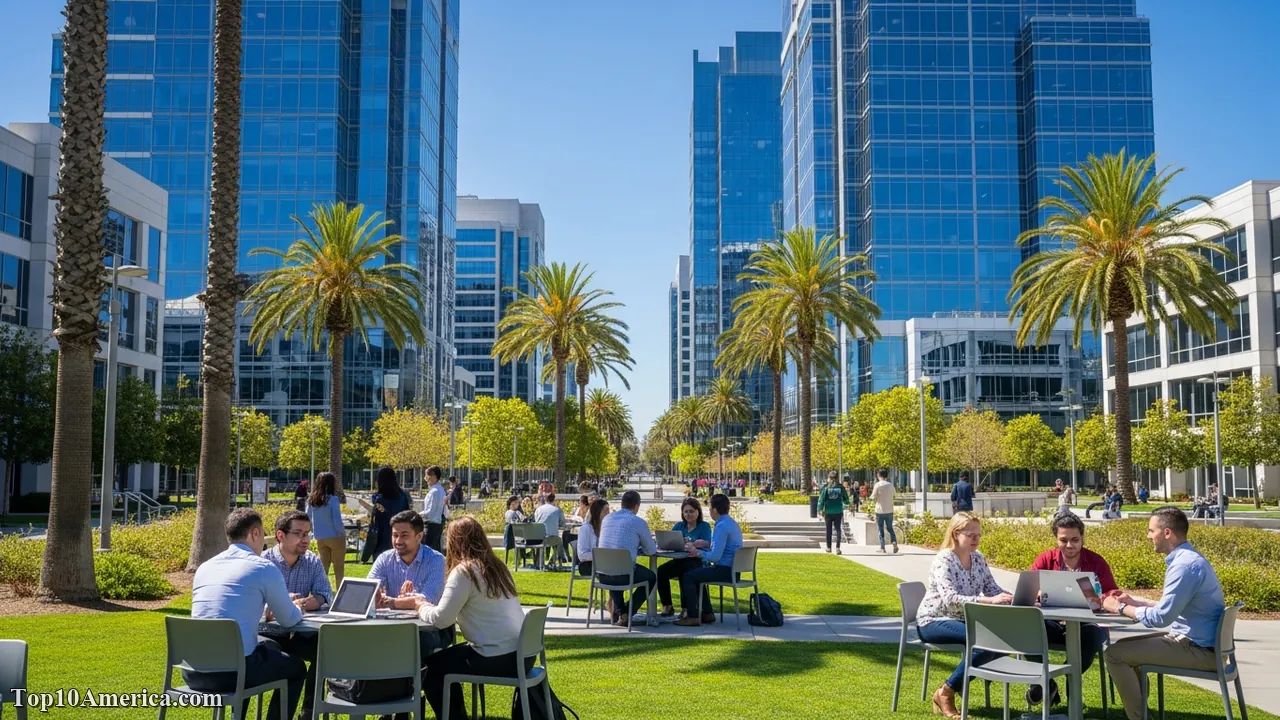
In Top 10 America’s view, San Jose offers a unique “future-forward” diversity. Unlike older industrial cities where diversity was driven by labor migration, here it is driven by the knowledge economy. We see this reflected in the city’s incredible linguistic diversity; it is commonplace to hear coding languages discussed in coffee shops alongside Tagalog, Spanish, and Vietnamese. The integration here feels purposeful and professional, creating a cosmopolitan atmosphere where meritocracy often bridges cultural gaps.
A fascinating insider detail is the city’s culinary scene, which locals argue is among the most underrated in the state. You can find authentic phở, street tacos, and high-end fusion cuisine all on the same block. Statistics often show that over half of the households in San Jose speak a language other than English at home, solidifying its status as a true global village within the California coastline.
Key Highlights
- Global Hub: Home to one of the largest Vietnamese populations outside of Vietnam.
- Language Stats: Over 50% of residents speak a language other than English at home.
- Economy: Diversity is strongly linked to the high-tech workforce of Silicon Valley.
Top 9. Dallas
Often overshadowed by its southern neighbor Houston, Dallas, Texas, has quietly transformed into a powerhouse of diversity. Situated in North Texas, this sprawling metropolis is a major corporate headquarters hub, which has facilitated a massive influx of residents from around the world. The city’s diversity is characterized by a strong mix of African American, Hispanic, and increasingly Asian communities, all coexisting within a rapidly modernizing urban core.
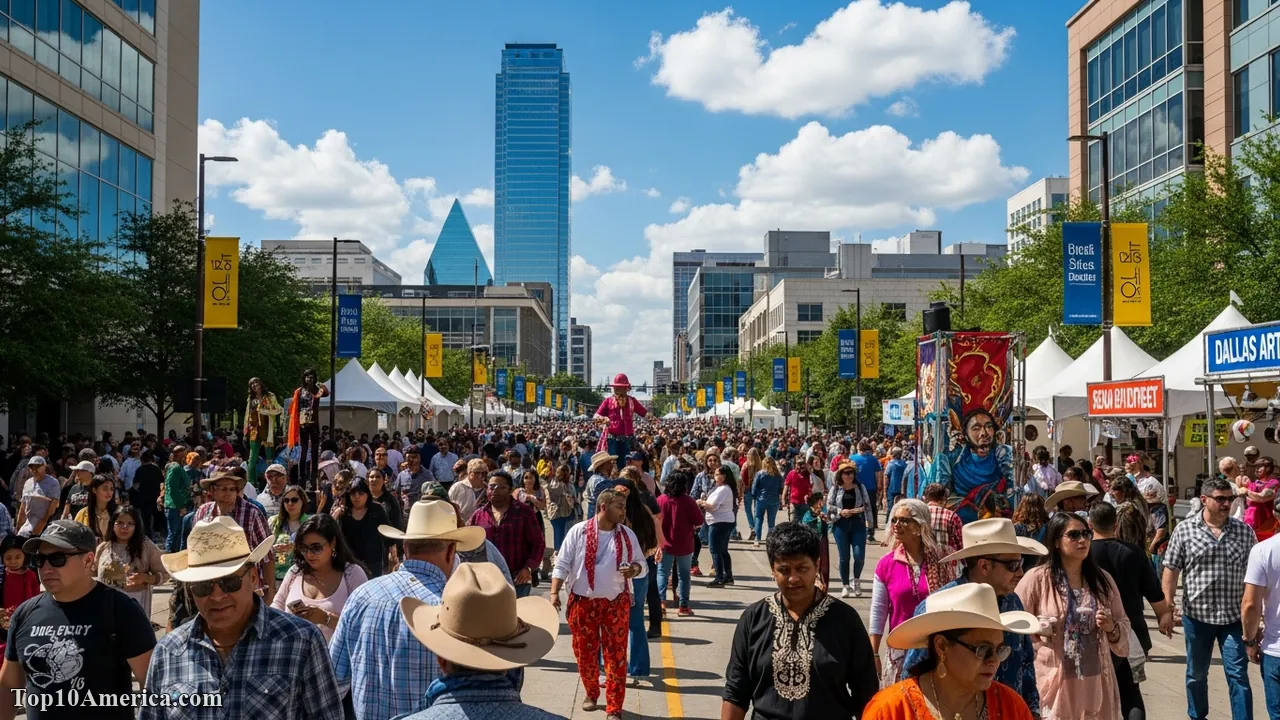
We selected Dallas because it excels in “religious and cultural diversity.” Top 10 America recognizes that diversity isn’t just about race; it’s about faith and lifestyle. Dallas boasts one of the most diverse religious landscapes in the country, with thriving communities of Christians, Muslims, Hindus, and Jews. This spiritual variety translates into a calendar packed with cultural festivals, from Diwali celebrations in the arts district to massive Juneteenth parades.
Locals love the “Big D” for its ability to blend this cultural variety with typically Texan hospitality. A distinct feature of Dallas is its distinct neighborhood pockets, such as the historic Deep Ellum or the vibrant Oak Lawn, each offering a different slice of the demographic pie. It is a city where cowboy culture meets cosmopolitan reality.
Key Highlights
- Religious Diversity: Ranks consistently high for the variety of religious organizations and places of worship.
- Growth: One of the fastest-growing metro areas in the USA for foreign-born residents.
- Business: A top destination for minority-owned businesses and entrepreneurs.
Top 8. Germantown
Located in Maryland‘s Montgomery County, just outside the nation’s capital, Germantown is a prime example of the “diverse suburb” phenomenon. Unlike the chaotic energy of a major city, Germantown offers a quieter, family-oriented environment where diversity is simply a fact of daily life. It consistently ranks in the top tier of verified studies for ethnic diversity, often surpassing major cities ten times its size.
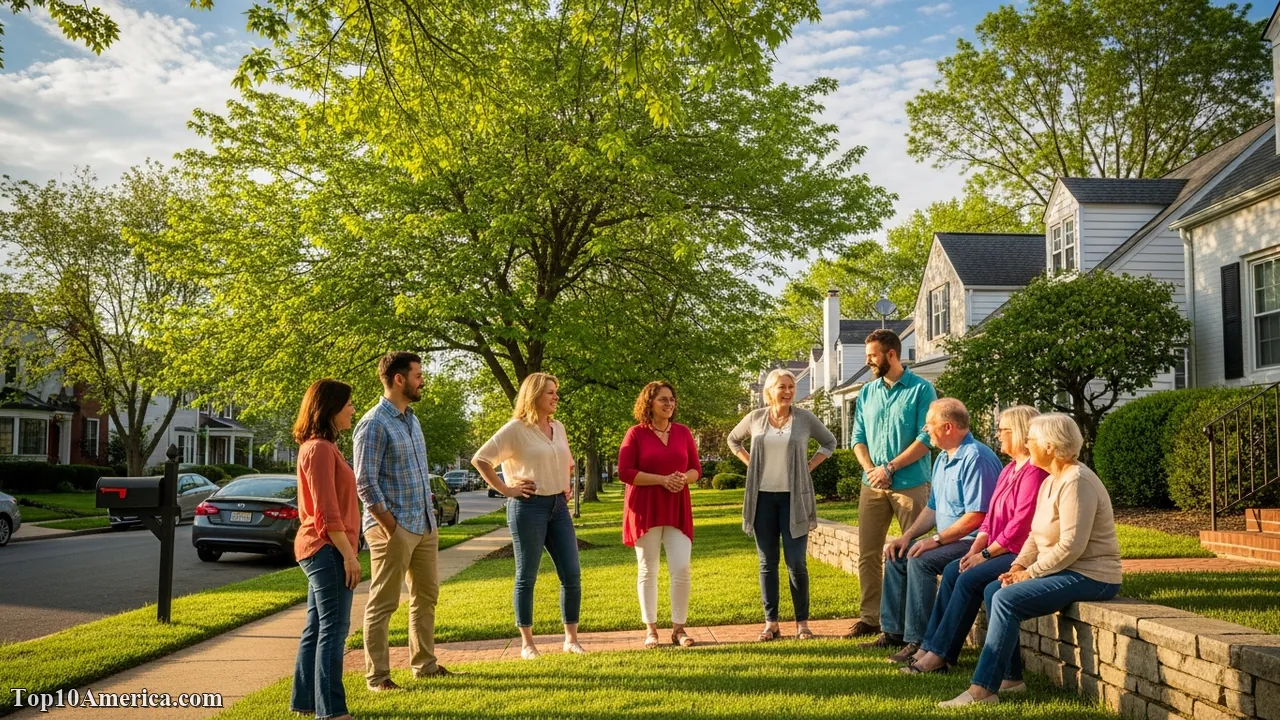
Facts show that Germantown’s high ranking is due to its incredible “evenness” of population distribution. There is no single dominant majority here. In Top 10 America’s analysis, this is what makes Germantown special; it is a place where minorities are the majority, yet no single group overwhelms the others. This creates a balanced community dynamic where cross-cultural interaction is inevitable and normalized in schools and grocery stores.
An interesting aspect of Germantown is its name, which harkens back to European immigrants of the 19th century, contrasting sharply with its modern reality. Today, it is a hub for Salvadoran, Indian, Chinese, and African American families. It is the perfect representation of how the face of the American suburb has changed in the 21st century.
Key Highlights
- Statistical Feat: Frequently ranks in the top 3 for “Ethno-Racial Diversity” on major indices.
- Demographics: No single ethnic group makes up more than 40% of the population.
- Vibe: suburban, residential atmosphere with high diversity density.
Top 7. Los Angeles
The sprawl of Los Angeles, California, is legendary, and so is its status as a creative melting pot. From Koreatown to Boyle Heights, and from Little Ethiopia to Historic Filipinotown, L.A. is a collection of distinct cultural villages stitched together by freeways. It is the entertainment capital of the world, drawing dreamers from every nation who wish to see their stories told on screen.
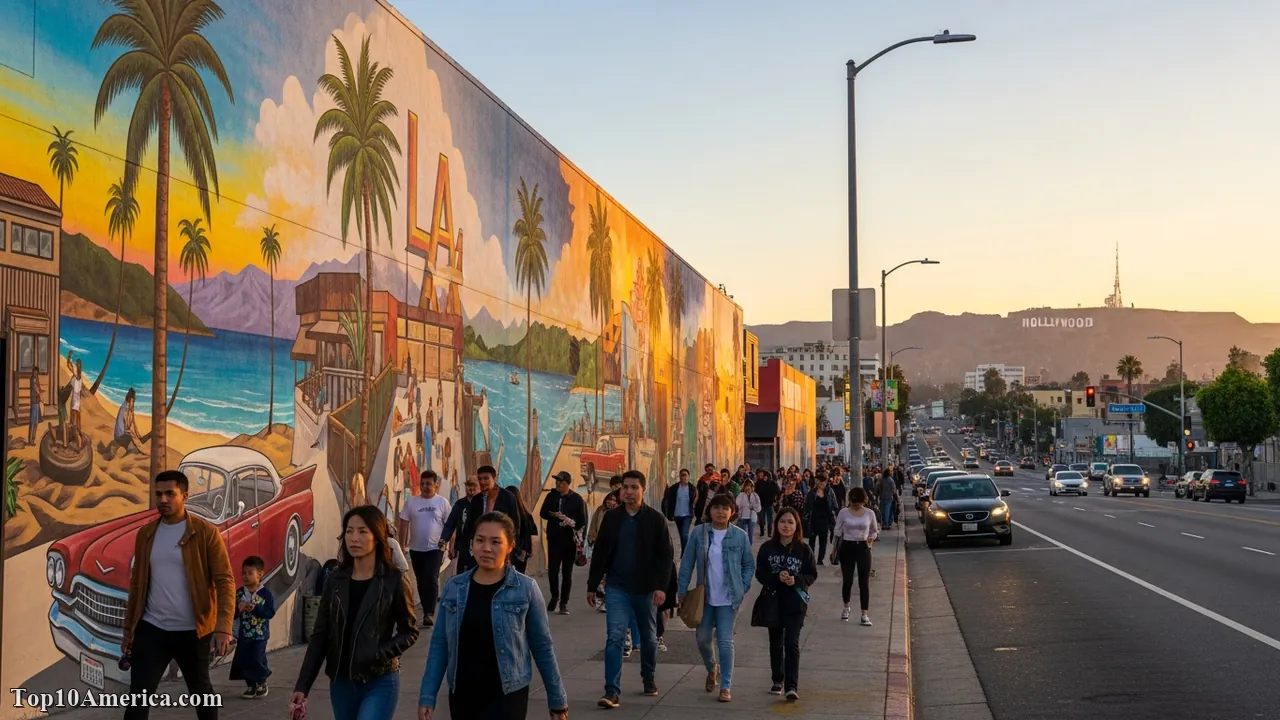
We suggest that Los Angeles defines “creative diversity.” The fusion of cultures here birthed new genres of music, art, and food that define the modern American experience. Top 10 America celebrates L.A. not just for the numbers, but for the visibility of its diversity. It is arguably the city where cultural heritage is most proudly displayed, with murals, festivals, and public art serving as constant reminders of the city’s polyphonic roots.
A “did you know” fact about Los Angeles is its incredible linguistic depth; the Los Angeles Unified School District identifies nearly 100 different languages spoken by its students. While traffic might be a universal complaint, the ability to travel from a vibrant Mexican marketplace to a tranquil Japanese garden in the same afternoon is a luxury unique to Angelenos.
Key Highlights
- Neighborhoods: Famous for officially designated cultural districts (Little Tokyo, Thai Town, etc.).
- Language: Home to the largest Spanish-speaking population in the US outside of Puerto Rico.
- Industry: The entertainment industry actively recruits global talent, fueling diversity.
Top 6. Arlington
Situated directly between Dallas and Fort Worth, Arlington, Texas, is often famous for being the home of the Dallas Cowboys, but its true strength lies in its people. This city has quietly become one of the most diverse large cities in the South. It offers a more affordable cost of living compared to coastal hubs, which has made it an attractive destination for new immigrants and families relocating from across the country.
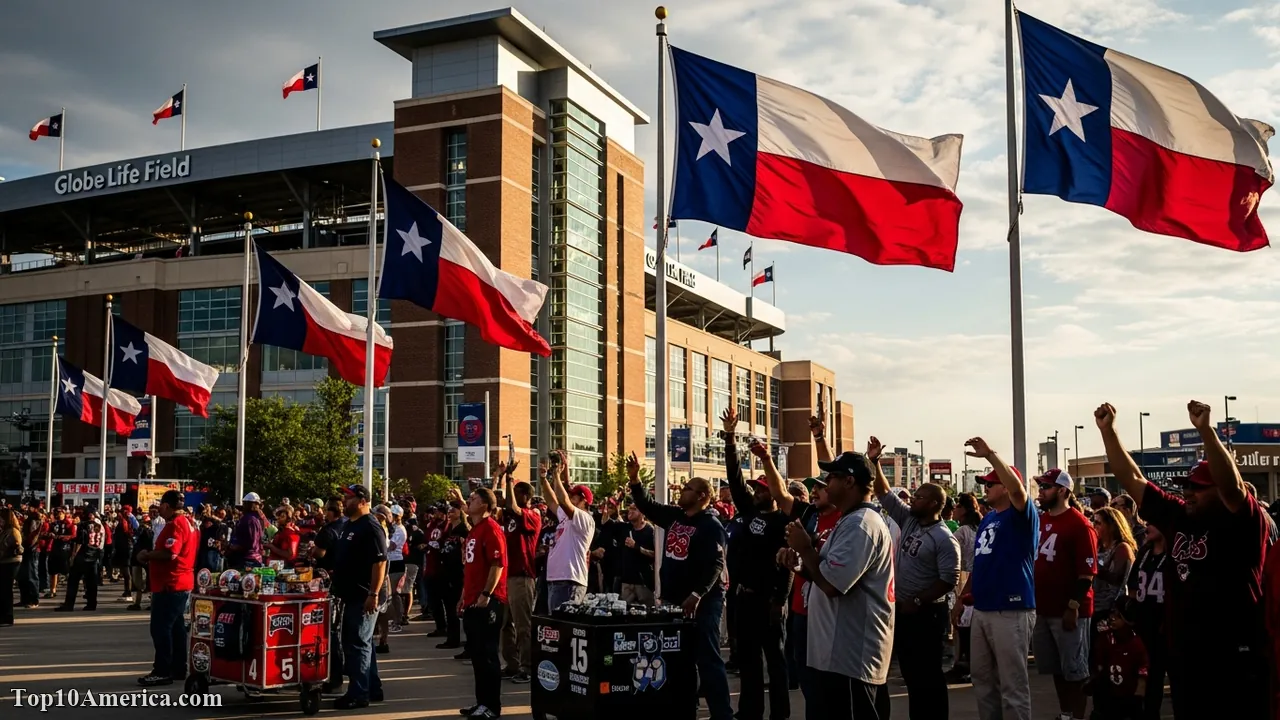
In our view, Arlington represents “working-class diversity.” It is a city where the American Dream is pursued with grit and determination by people from Vietnam, Mexico, Nigeria, and beyond. Top 10 America highlights Arlington because it proves that you don’t need to be a coastal elite city to be inclusive. The diversity here is felt in the public schools and the small business sector, where mom-and-pop shops reflect a global clientele.
Insider reports often praise the University of Texas at Arlington for driving this trend. As one of the most diverse university campuses in the nation, it acts as a funnel, bringing young, diverse talent into the city who then choose to stay and build their lives there. It is a youthful, energetic diversity that is reshaping the identity of North Texas.
Key Highlights
- Education: UT Arlington is designated as a Hispanic-Serving Institution and Asian American Native American Pacific Islander-Serving Institution.
- Economy: A major hub for the automotive and aerospace industries, attracting a varied workforce.
- Location: strategic position in the DFW metroplex facilitates constant demographic flow.
Top 5. New York City
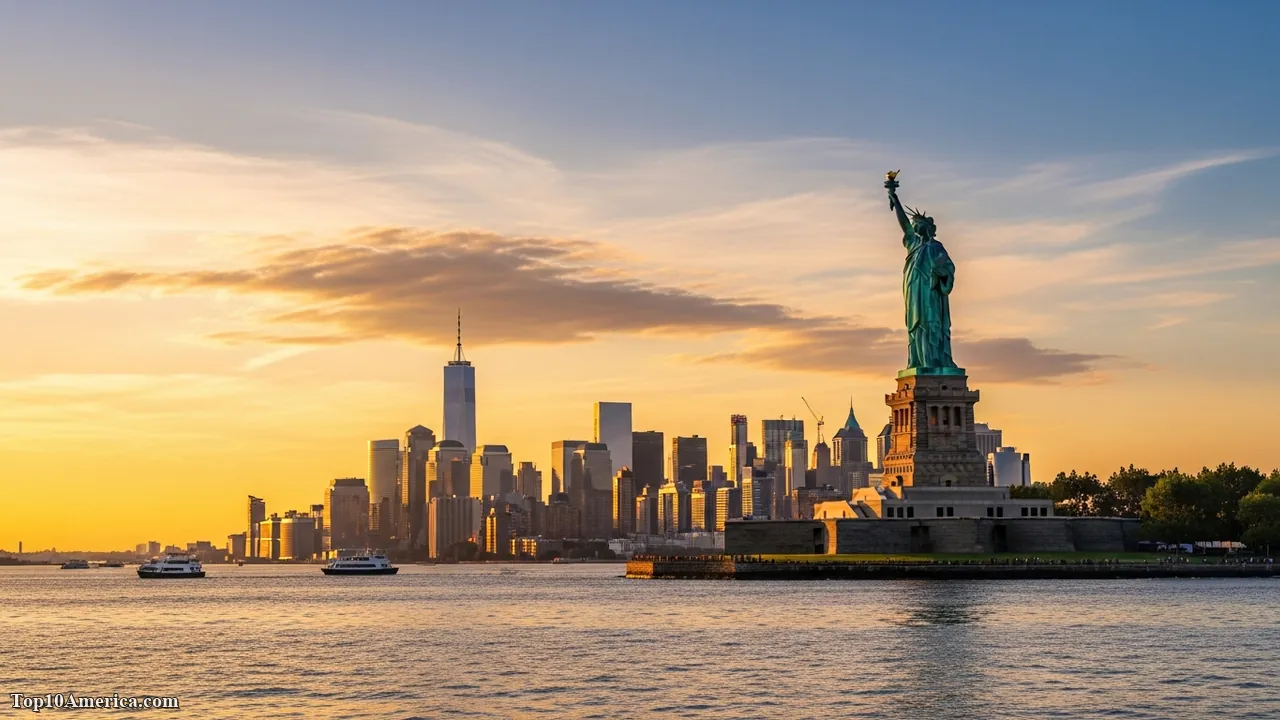
No list of diverse cities would be complete without the “Big Apple.” New York City, New York, is the archetype of the immigrant city, the historic gateway to the United States. With over 8 million residents, it operates on a scale that is unmatched by any other city in North America. Queens, in particular, is frequently cited as the most ethnically diverse urban area on the planet.
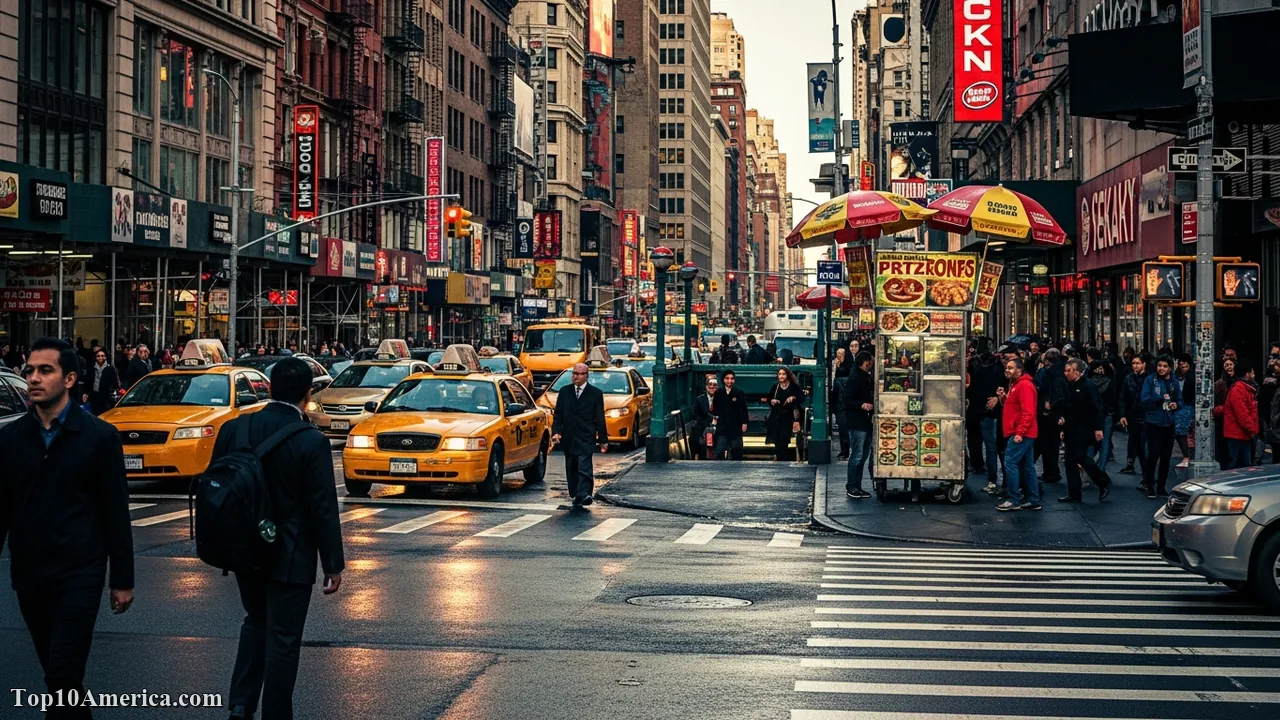
Top 10 America ranks NYC here because of its “density of difference.” In New York, diversity is not just present; it is compressed. You experience it on the subway ride to work, where you might hear five languages in a single car. We believe the city’s true power lies in its unparalleled linguistic diversity—estimates suggest that as many as 800 languages are spoken throughout the five boroughs, many of which are endangered elsewhere in the world.
A classic New York reflection is that you can eat your way around the world without ever leaving the subway system. From the dim sum parlors of Manhattan’s Chinatown to the curry houses of Jackson Heights and the Russian enclaves of Brighton Beach, the city offers an endless, authentic education in global culture. It remains the ultimate testing ground for the American experiment.
Key Highlights
- Record Holder: Queens is recognized by Guinness World Records as the most ethnically diverse urban area.
- Languages: Up to 800 languages are spoken, making it the linguistic capital of the world.
- History: Home to Ellis Island, the symbolic entry point for American diversity.
Top 4. Silver Spring
Just north of Washington D.C., Silver Spring, Maryland, is a vibrant urbanized community that consistently lands at the top of diversity rankings. It is an arts and entertainment hub for Montgomery County and attracts a highly educated, international population. The proximity to the federal government and international NGOs means that Silver Spring is home to diplomats, policy experts, and professionals from every corner of the globe.
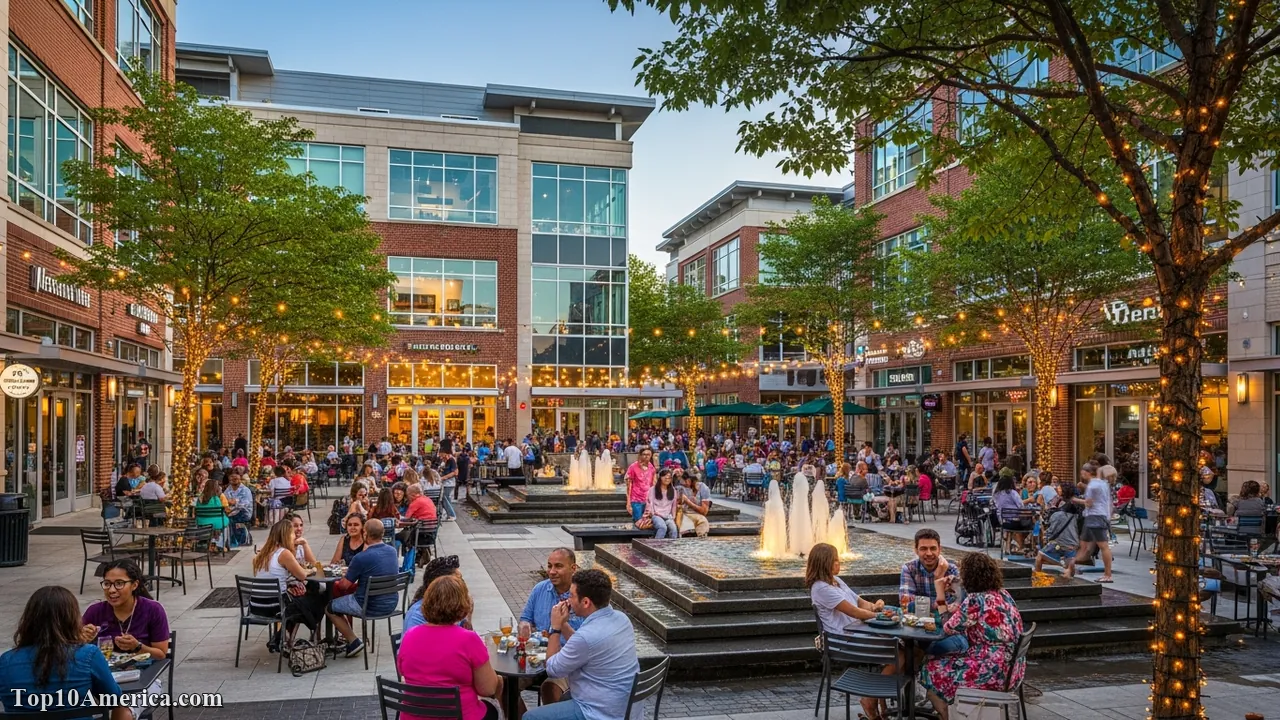
Our team distinguishes Silver Spring for its “socioeconomic diversity.” Unlike some cities where diversity is stratified by income, Silver Spring sees a unique blend where high-income professionals and working-class families live in closer proximity. Top 10 America suggests that this creates a more integrated community feel, where public spaces like the revamped downtown plaza serve as true communal gathering spots for people of all backgrounds.
Locals love the AFI Silver Theatre and Cultural Center, which hosts film festivals from Africa, Europe, and Latin America, reflecting the sophisticated tastes of the populace. It is a place where cultural exchange is considered a form of recreation, and where the Ethiopian dining scene is arguably the best in the country outside of Addis Ababa.
Key Highlights
- Ranking: Consistently appears in the top 5 of WalletHub’s “Most Diverse Cities” reports.
- Culture: Hosts major cultural events like the Silver Spring Jazz Festival.
- Demographics: large Ethiopian and West African communities define the local character.
Top 3. Houston
Houston, Texas, is the sleeping giant of American diversity. As the fourth-largest city in the US, it has quietly become the most diverse major metropolis in the nation, surpassing even New York and Los Angeles in several recent indices. Driven by a booming energy sector, a massive port, and affordable housing, Houston has attracted a demographic mix that is incredibly balanced.
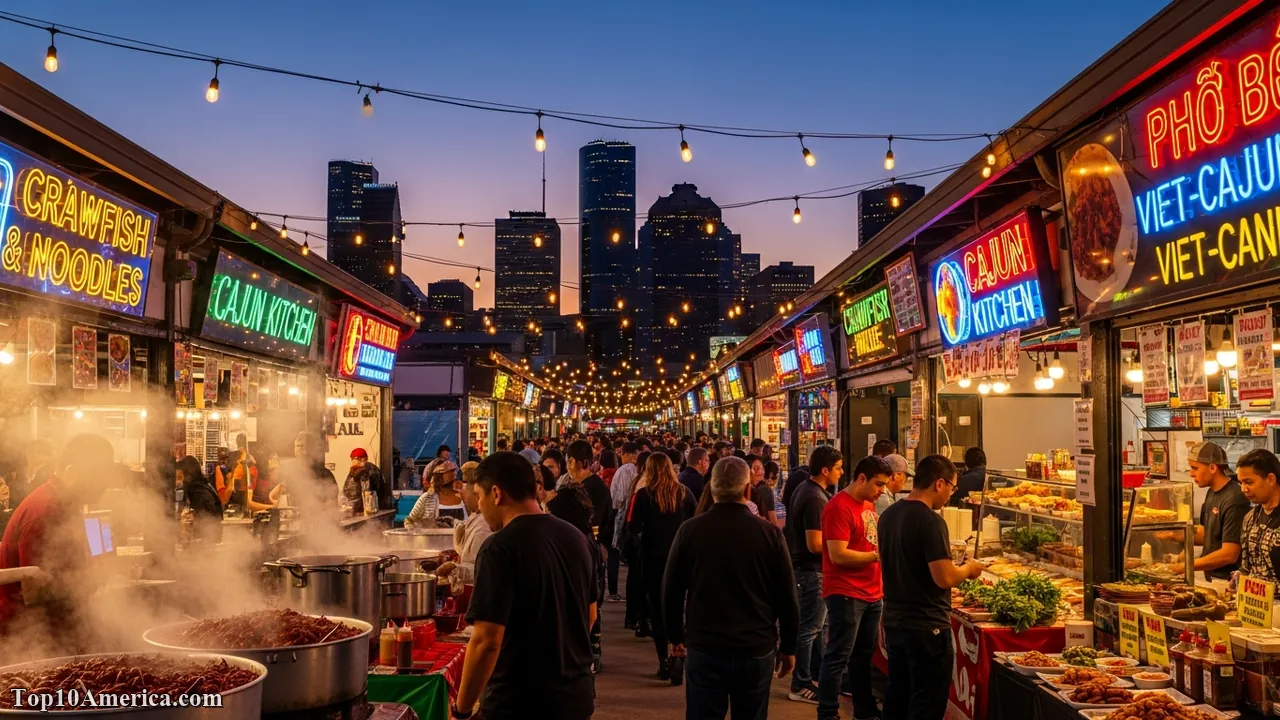
According to census data, Houston has no majority racial group. Top 10 America views Houston as the model for the future demographics of the entire US. The diversity here is dispersed; it is not limited to specific enclaves but is spread across the sprawling suburbs. Whether it is the vibrant Vietnamese community in Alief or the Desi corridor on Hillcroft, Houston embraces its multicultural identity with a distinct lack of pretension.
A key insight is Houston’s reputation as a “welcoming city.” It has historically been a major hub for refugee resettlement, which adds a layer of humanitarian diversity to its economic migration. The result is a city where the fusion cuisine—like Viet-Cajun crawfish—is not a gimmick, but a delicious byproduct of genuine cultural collision.
Key Highlights
- Demographics: No single ethnic group constitutes a majority of the population.
- Growth: The Asian and Hispanic populations have seen explosive growth over the last decade.
- Cuisine: Famous for Viet-Cajun cuisine, a direct result of its unique cultural overlapping.
Top 2. Jersey City
Sitting right across the Hudson River from Manhattan, Jersey City, New Jersey, is often cited as the undisputed champion of cultural diversity. It serves as a microcosm of the world, packing an incredible amount of variety into a relatively small geographic footprint. For several years running, major analytical studies have crowned it the “Most Culturally Diverse City” in the United States.
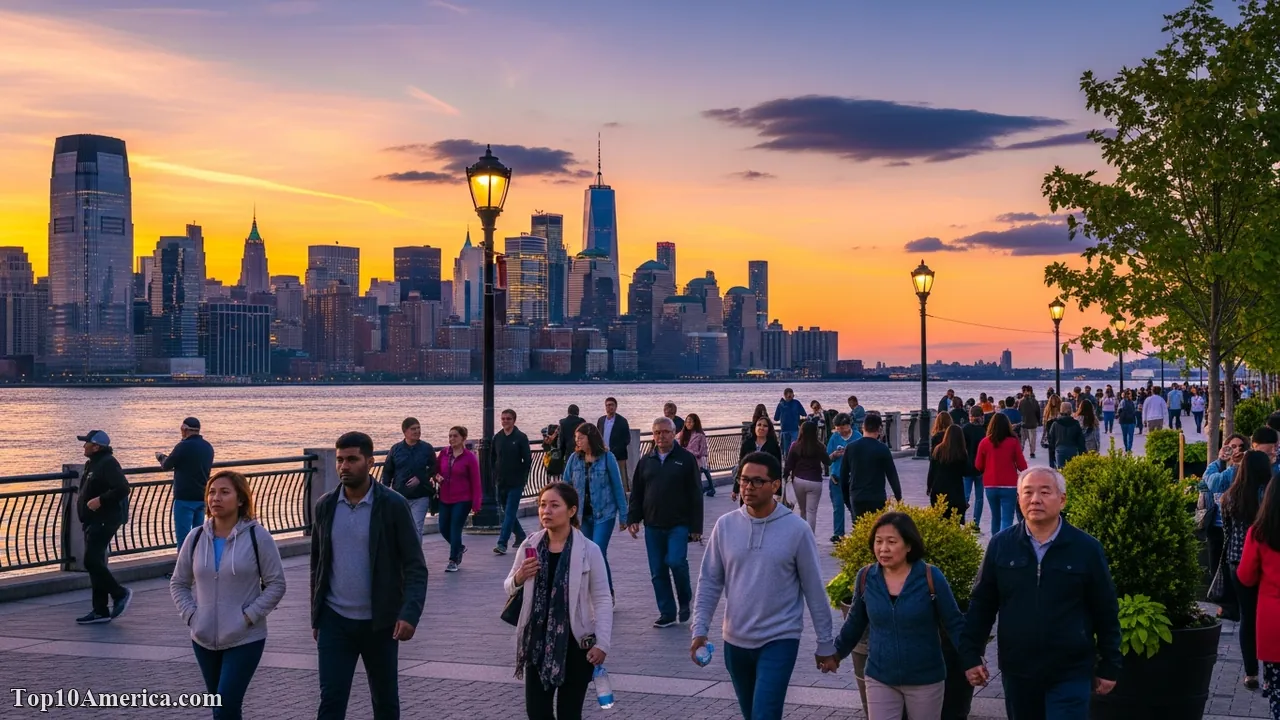
In Top 10 America’s perspective, Jersey City offers the best of both worlds: the cosmopolitan energy of NYC and the community feel of New Jersey. The city scores exceptionally high in “ethno-racial diversity” and “linguistic diversity.” It is a place where luxury high-rises housing global finance workers sit blocks away from historic immigrant neighborhoods that have been the first stop for families for generations.
A unique feature is the city’s “Little India” around Newark Avenue, which is one of the largest and most vibrant Indian shopping districts in North America. But turn the corner, and you are just as likely to find a Filipino bakery or an Egyptian cafe. Jersey City proves that you don’t need to be the biggest city to be the most inclusive.
Key Highlights
- Accolades: Frequently ranked #1 for “Cultural Diversity” by WalletHub.
- Immigration: A massive percentage of the population is foreign-born.
- Proximity: Benefits from the economic engine of NYC while maintaining its own distinct diverse identity.
Top 1. Gaithersburg
Topping our list is the remarkable city of Gaithersburg, Maryland. While it may not have the global fame of New York or Los Angeles, the data is undeniable: Gaithersburg is statistically the most diverse city in the United States. Located in the tech corridor of Montgomery County, it represents the pinnacle of the modern American melting pot, scoring top marks for socioeconomic, cultural, economic, and religious diversity combined.
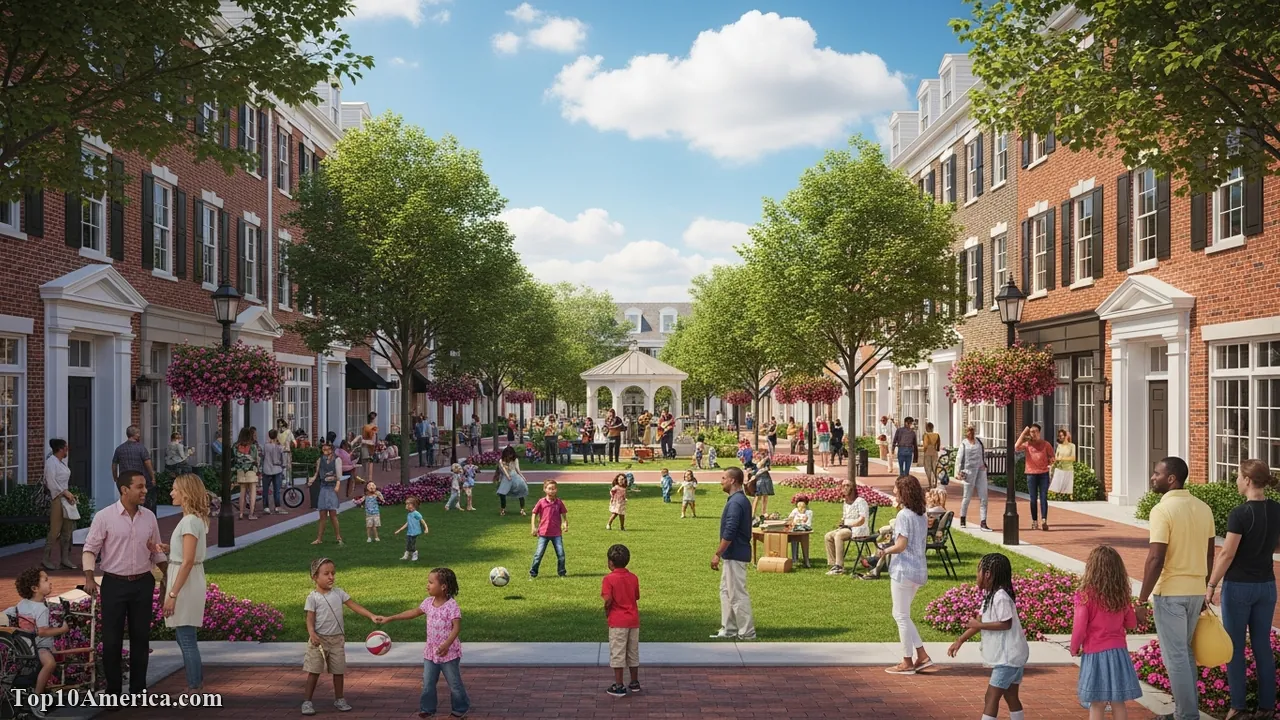
Top 10 America ranks Gaithersburg number one because it embodies “harmonious diversity.” It is not just about having different groups of people; it is about how they live together. The city features a blend of historic charm in Olde Towne and new urbanism in the Kentlands, attracting a population that is almost perfectly split among White, Black, Asian, and Hispanic residents. It is the gold standard for how a community can thrive because of its differences, not in spite of them.
Insider details reveal that Gaithersburg is home to the National Institute of Standards and Technology (NIST), which attracts top-tier scientists from around the world. This intellectual migration has created a community that is highly educated, open-minded, and globally connected. If you want to see what the future of a unified, diverse America looks like in 2026, look no further than Gaithersburg.
Key Highlights
- The Champion: Consistently ranked #1 “Most Diverse City in America” by WalletHub and other indices (2024/2025).
- Balance: possessing the most “balanced” racial and ethnic profile of any US city.
- Community: Known for safe neighborhoods and high-quality public schools that celebrate multiculturalism.
Conclusion
The landscape of the United States is shifting, and these ten cities are leading the charge. From the bustling streets of Jersey City to the balanced neighborhoods of Gaithersburg, these destinations prove that diversity is a strength that drives economic growth, culinary innovation, and cultural richness. They offer a vision of America where boundaries are blurred and community is built on shared experiences rather than shared origins.