As of late 2025 and approaching the monumental 250th anniversary of the United States in 2026, Philadelphia stands as the undisputed cradle of American history and a modern cultural powerhouse. While often overshadowed by its northern neighbor New York, Philadelphia offers a distinct, accessible, and deeply ingrained sense of heritage that few other U.S. cities can match. From the cobblestones of Old City to the “Rocky Steps” overlooking the Parkway, the city is a living museum that doesn’t just display history—it lives it.
At Top 10 America, we believe culture isn’t just about what you see in a glass case; it is about the pulse of the neighborhoods, the flavors of the markets, and the stories embedded in the architecture. Philadelphia’s cultural landscape is currently thriving, with record-breaking summer visitation numbers in 2024 and major preparations underway for the 2026 FIFA World Cup and America250 celebrations. This is a city transforming its industrial past into a vibrant, artistic future.
Our ranking for the top cultural hotspots in Philadelphia combines historical significance with contemporary relevance. We analyze these locations not just as tourist stops, but as pivotal chapters in the American narrative. Whether you are a history buff retracing the steps of the Founding Fathers or an art lover exploring visionary mosaics, this list represents the essential cultural fabric of the City of Brotherly Love.
Overview: Top 10 Best Cultural Hotspots in Philadelphia
| Rank | Cultural Hotspot | Location/Neighborhood | Category |
|---|---|---|---|
| 10 | Philadelphia’s Magic Gardens | South Street | Visionary Art Environment |
| 9 | The Franklin Institute | Logan Square | Science & Innovation |
| 8 | Reading Terminal Market | Center City | Culinary Culture |
| 7 | Eastern State Penitentiary | Fairmount | History & Reform |
| 6 | The Barnes Foundation | Benjamin Franklin Parkway | Impressionist Art |
| 5 | Museum of the American Revolution | Old City | Modern History Museum |
| 4 | Liberty Bell Center | Independence Mall | Historical Symbol |
| 3 | Philadelphia Museum of Art | Fairmount | Fine Art / Pop Culture |
| 2 | Old City District | Old City | Historic District / Nightlife |
| 1 | Independence Hall | Independence Mall | UNESCO World Heritage Site |
Top 10. Philadelphia’s Magic Gardens
Located on the eclectic South Street corridor in Philadelphia, the Magic Gardens is an immersive folk art environment that covers half a city block. Created by mosaic artist Isaiah Zagar, this sprawling labyrinth is constructed from handmade tiles, bottles, bicycle wheels, and mirrors held together by cement. It stands as a testament to the city’s gritty, artistic soul and the transformative power of community art in urban spaces.
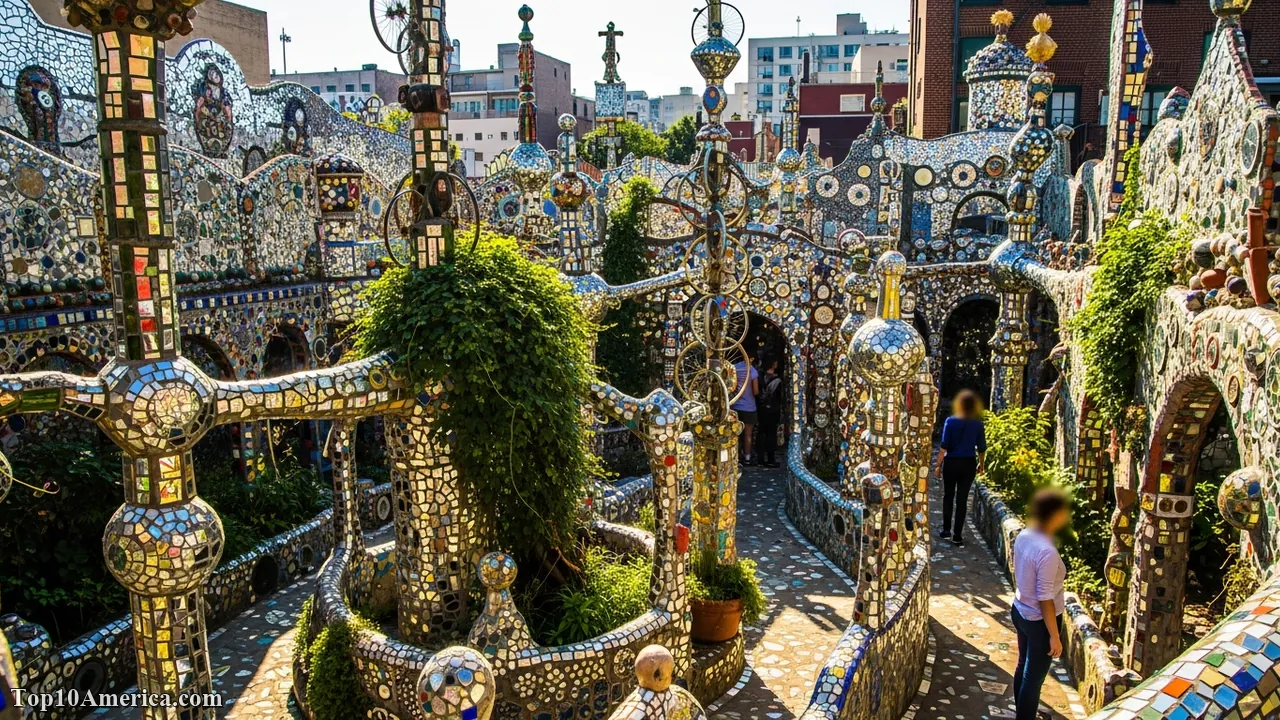
In Top 10 America’s view, this is the most visually stimulating “hidden gem” in the city. While the traditional museums offer polished history, the Magic Gardens offers raw, chaotic beauty. We suggest visiting this spot if you want to understand the modern creative pulse of Philly. It is not just a gallery; it is a physical manifestation of an artist’s obsession and a neighborhood’s revival.
A fascinating insider detail is that Zagar didn’t just build this space; he has mosaicked over 200 walls across the city, but this headquarters is his masterwork. We recommend booking tickets in advance, as the narrow, winding paths of the outdoor sculpture garden have limited capacity and sell out quickly on weekends.
Key Highlights
- Artist: Isaiah Zagar, utilizing non-traditional materials like glass bottles and ceramic shards.
- Size: Spans three city lots with indoor galleries and a massive outdoor labyrinth.
- Status: A nonprofit organization dedicated to preserving community art.
Top 9. The Franklin Institute
Situated in the heart of the Logan Square neighborhood in Pennsylvania, The Franklin Institute is one of the oldest and most premier centers of science education in the United States. Founded in honor of Benjamin Franklin, America’s first scientist, the museum is famous for its massive walk-through heart and the Benjamin Franklin National Memorial located in its rotunda. It serves as a major hub for scientific inquiry in the region.
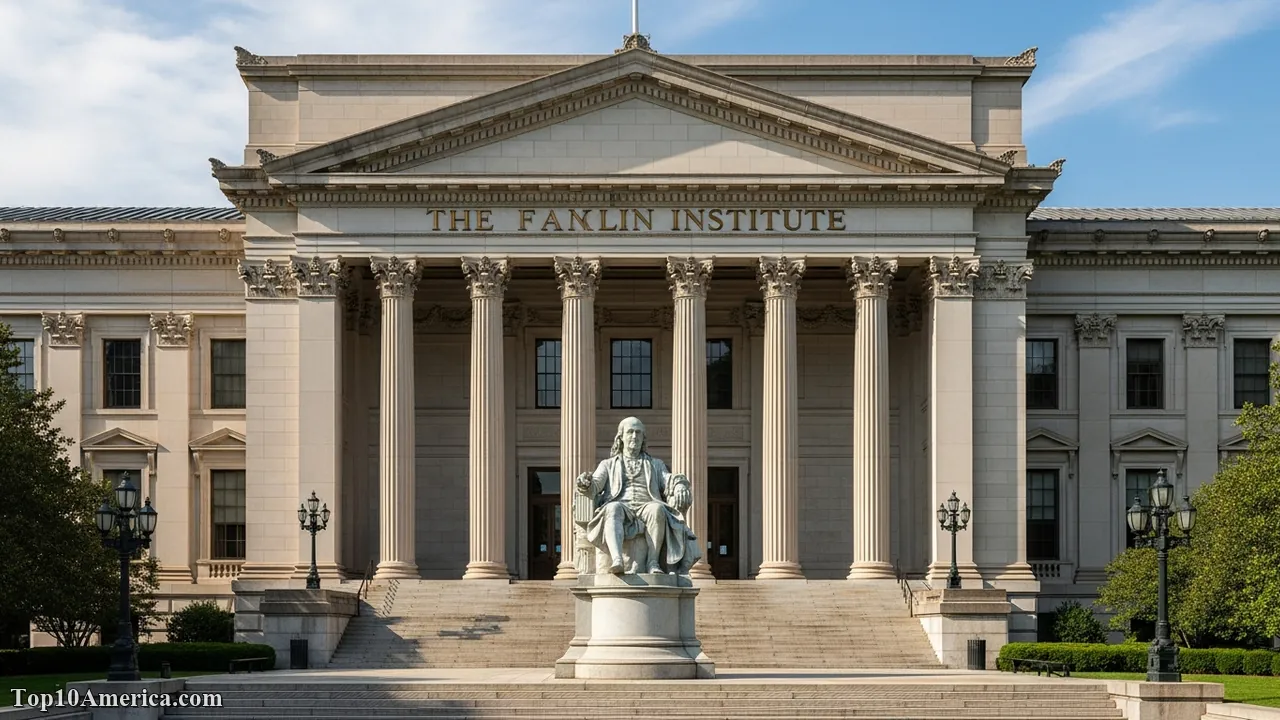
Historical records show that The Franklin Institute was founded in 1824, making it a cornerstone of American scientific advancement for over two centuries. The institute effectively bridges the gap between historical innovation and modern technology, hosting world-class traveling exhibitions that range from Harry Potter to the Vatican. It remains a critical destination for understanding the legacy of American ingenuity.
The giant 20-foot marble statue of Benjamin Franklin in the main hall is actually the official National Memorial to the scientist, one of the few national memorials located inside a private institution. It is a striking place to pause and reflect on the man who helped define the city’s intellectual identity.
Key Highlights
- Established: 1824, one of the oldest science centers in the US.
- Iconic Feature: The Giant Heart, a walk-through exhibit open since 1954.
- Memorial: Houses the Benjamin Franklin National Memorial, a 20-foot marble statue.
Top 8. Reading Terminal Market
Located in Center City Philadelphia, Reading Terminal Market is a bustling indoor food hall that has been operating since 1893. It is housed beneath the tracks of the old Reading Railroad terminal, providing a sensory explosion of smells, sights, and sounds. The market brings together over 80 merchants, including Pennsylvania Dutch bakers, local butchers, and artisan cheesemakers, under one historic roof.
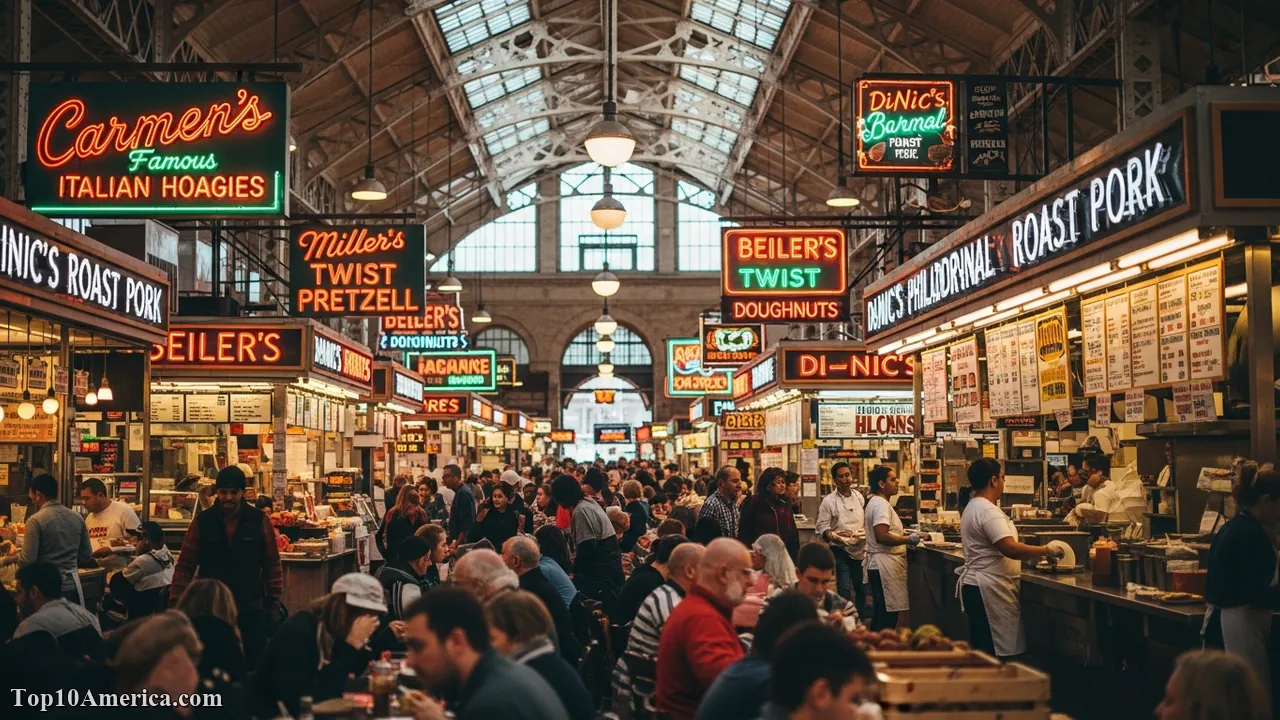
We suggest that no trip to Philly is complete without a meal here. In our opinion, this isn’t just a place to eat; it is the culinary living room of the city where tourists and locals rub elbows. Whether you are looking for a classic Roast Pork sandwich (often considered superior to the cheesesteak by locals) or an apple dumpling, the market offers an authentic taste of the region’s diverse agricultural heritage.
For the best experience, we recommend visiting on a weekday morning to avoid the crushing lunch crowds. Be sure to look for the Pennsylvania Dutch merchants who are typically present Wednesday through Saturday; their fresh pretzels and baked goods are legendary and represent a unique cultural slice of rural Pennsylvania brought to the city.
Key Highlights
- Age: One of America’s oldest and largest public markets, established in 1893.
- Variety: Features over 80 diverse merchants, including Amish specialties.
- Recognition: Frequently voted one of the best public markets in the United States.
Top 7. Eastern State Penitentiary
Located in the Fairmount section of Philadelphia, Eastern State Penitentiary stands as a haunting, castle-like ruin that redefined the global penal system. Opened in 1829, it was the world’s first true “penitentiary,” designed to inspire penitence through separate confinement. Its wagon-wheel floor plan became a model for over 300 prisons worldwide, marking a pivotal moment in architectural and social history.
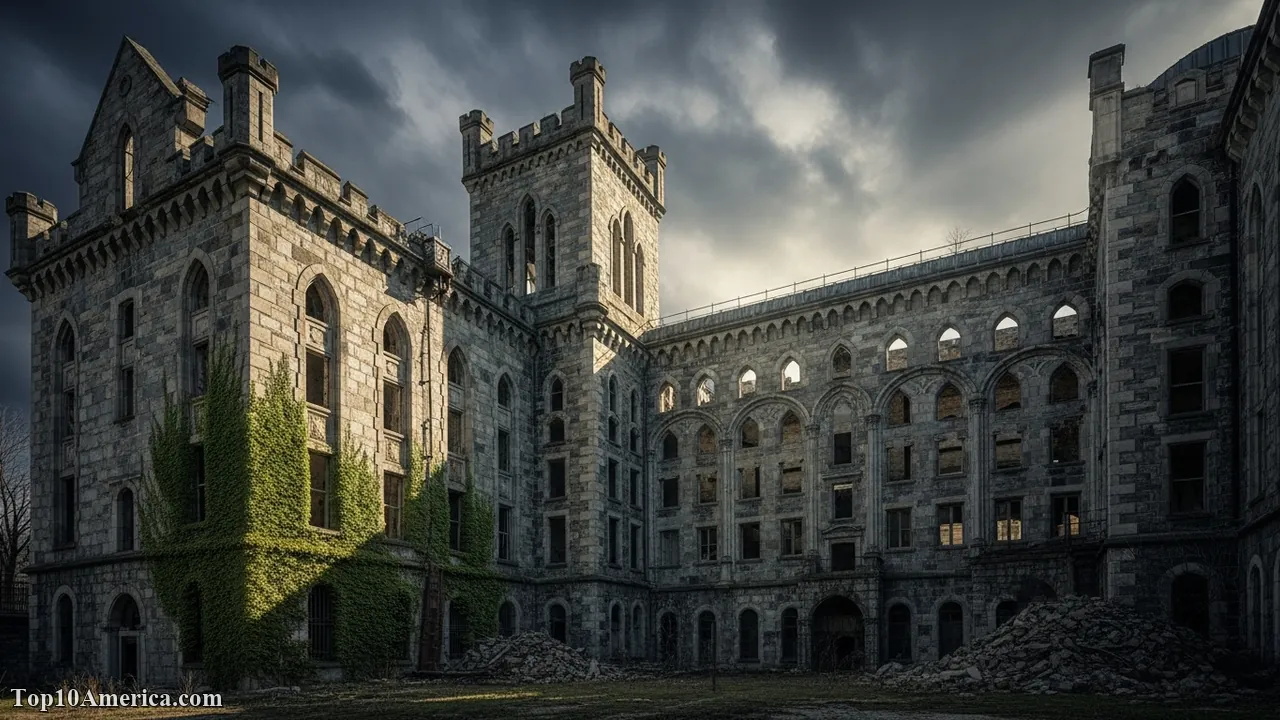
Historical data indicates that this facility once housed famous inmates like “Slick Willie” Sutton and Al Capone, whose luxurious cell is recreated for visitors. The site is maintained in a state of “preserved ruin,” meaning the peeling paint and crumbling skylights are intentional, creating an eerie atmosphere that emphasizes the passage of time and the harsh reality of 19th-century justice.
A striking feature of the tour is the audio guide, which is narrated by actor Steve Buscemi. It provides a gripping narrative that contrasts the noble intentions of the founders with the brutal reality of solitary confinement. The site also hosts contemporary art installations that critically examine modern mass incarceration in the United States.
Key Highlights
- Historical First: The world’s first true penitentiary, operational from 1829 to 1971.
- Famous Inmates: Al Capone and Willie Sutton were imprisoned here.
- Architecture: Neo-Gothic design with a radial floor plan that influenced prison design globally.
Top 6. The Barnes Foundation
Found on the Benjamin Franklin Parkway in Philadelphia, The Barnes Foundation is home to one of the world’s greatest collections of Impressionist, Post-Impressionist, and Early Modern paintings. The collection includes a staggering number of works by Renoir, Cézanne, Matisse, and Picasso. Controversially moved from its original suburban location to this modern downtown facility in 2012, it has become a central pillar of the city’s art scene.
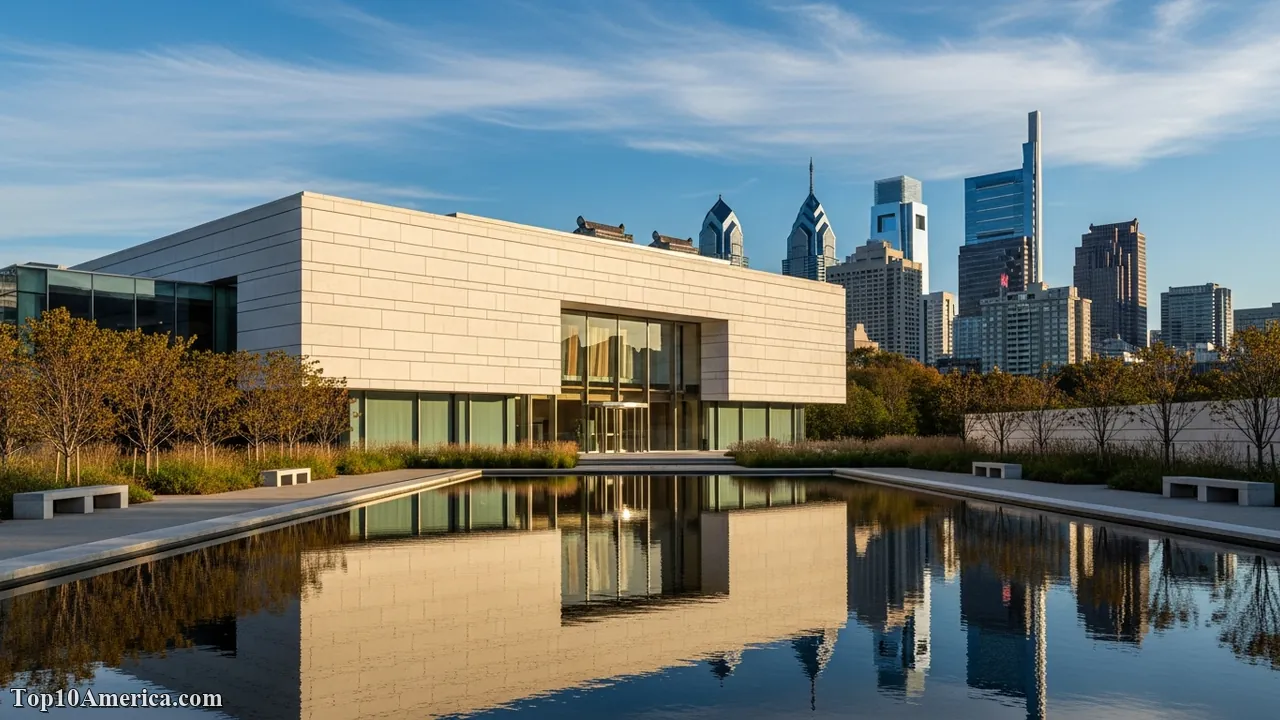
We suggest visiting The Barnes not just for the famous names, but for the unique way the art is displayed. Dr. Albert Barnes arranged his collection in “ensembles,” mixing paintings with metalwork, furniture, and African sculpture based on shape and color rather than chronology. In Top 10 America’s view, this forces you to look at art differently, drawing connections between disparate objects that you might otherwise miss.
A unique detail is that the galleries in the new building replicate the exact dimensions and arrangement of the original Merion location, honoring Barnes’s specific vision. It creates an intimate, almost domestic viewing experience that is entirely distinct from the traditional “white box” museum approach found elsewhere.
Key Highlights
- Collection: Holds 181 Renoirs, 69 Cézannes, and 59 Matisses.
- Valuation: The collection is estimated to be worth nearly $25 billion.
- Display Style: Unique “ensembles” mixing paintings with wrought iron and furniture.
Top 5. Museum of the American Revolution
Located in the historic Old City neighborhood of Philadelphia, just steps from Independence Hall, the Museum of the American Revolution is one of the city’s newest major cultural institutions. Opened in 2017, it tells the comprehensive story of the American struggle for independence. The museum uses immersive storytelling, interactive digital exhibits, and life-cast figures to bring the 18th century to life.
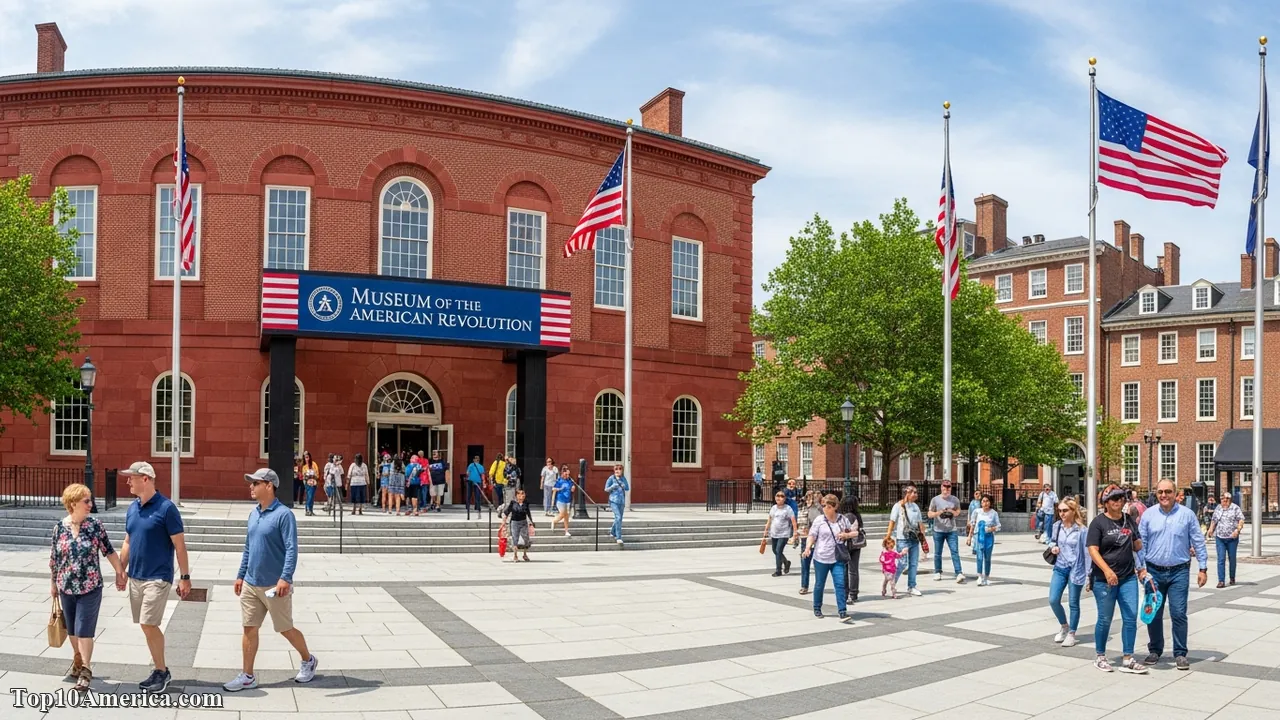
According to museum records, the crown jewel of the collection is General George Washington’s actual headquarters tent, which served as his office and sleeping quarters throughout the war. The presentation of the tent is a dramatic, theater-based experience that underscores the fragility of the American experiment during its earliest days. The museum provides a nuanced view, highlighting the roles of women, Native Americans, and enslaved people in the conflict.
This museum does an excellent job of asking difficult questions about the meaning of “liberty.” It challenges visitors to consider that the Revolution was not just a single event, but an ongoing process. It serves as a perfect modern companion to the traditional historic sites nearby.
Key Highlights
- Opened: April 19, 2017, marking the anniversary of the “Shot Heard ‘Round the World.”
- Artifact: Houses George Washington’s original sleeping and office tent.
- Scope: Covers the Revolution from the roots of conflict to the legacy of the Constitution.
Top 4. Liberty Bell Center
Situated within Independence National Historical Park in Philadelphia, the Liberty Bell Center houses the most famous cracked bell in the world. Originally cast for the Pennsylvania State House (now Independence Hall), the bell became an icon for abolitionists in the 19th century who seized upon its inscription: “Proclaim Liberty Throughout All the Land Unto All the Inhabitants thereof.”
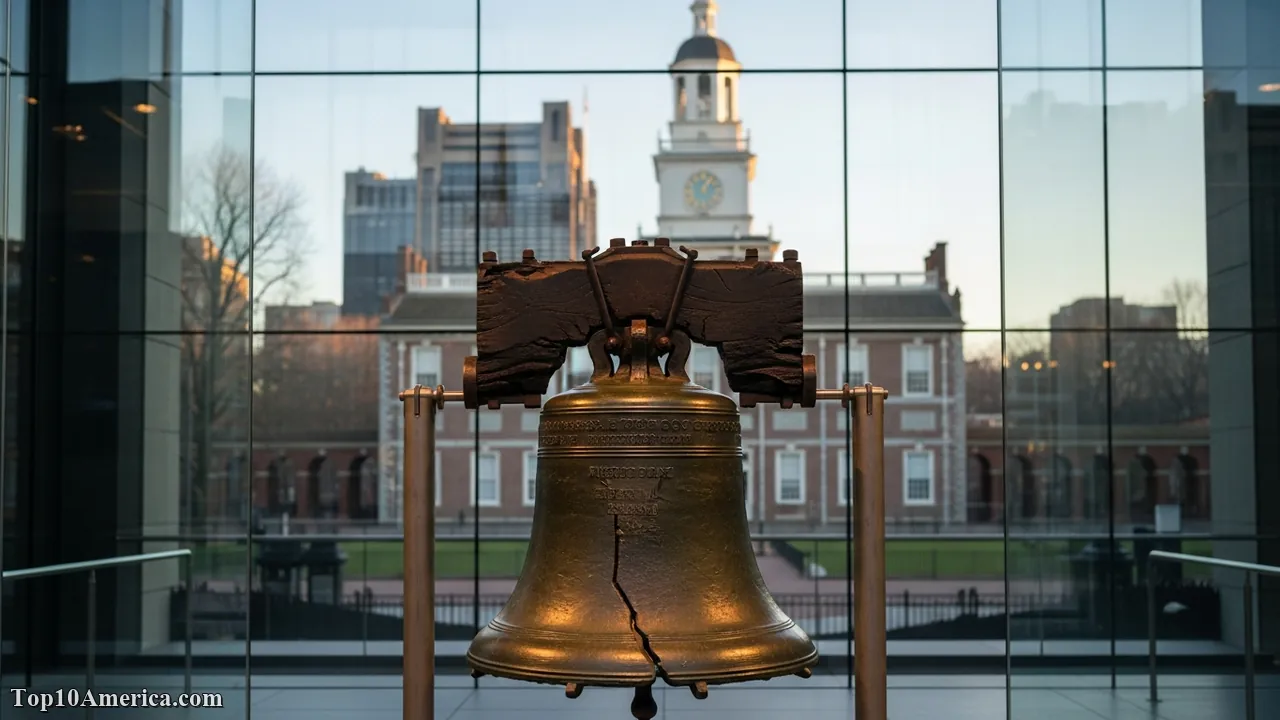
Facts show that the bell weighs 2,080 pounds and is composed of roughly 70% copper. While the famous crack renders it silent, the bell speaks volumes as a symbol of freedom. Visitors can walk through exhibits detailing the bell’s history, from its cracking upon first use to its adoption by the Civil Rights movement, before viewing the artifact itself against the backdrop of Independence Hall.
A lesser-known fact is that the bell was actually tapped seven times on D-Day in 1944 to announce the invasion of Europe, its sound broadcast over the radio. Today, it remains a pilgrimage site for world leaders and activists, representing the enduring fragility and resilience of American democracy.
Key Highlights
- Inscription: Leviticus 25:10 (“Proclaim Liberty…”).
- The Crack: A wide fissure drilled in 1846 to stop a smaller hairline crack.
- Visitors: Attracts over 4 million visitors annually.
Top 3. Philadelphia Museum of Art
Anchoring the northwest end of the Benjamin Franklin Parkway in Philadelphia, this neoclassical giant is one of the largest art museums in the country. While pop culture immortalized its 72 stone steps in the movie Rocky, the building inside is a treasure trove of over 240,000 works spanning 2,000 years of human creativity. From medieval armory to contemporary American sculpture, the scope is breathtaking.
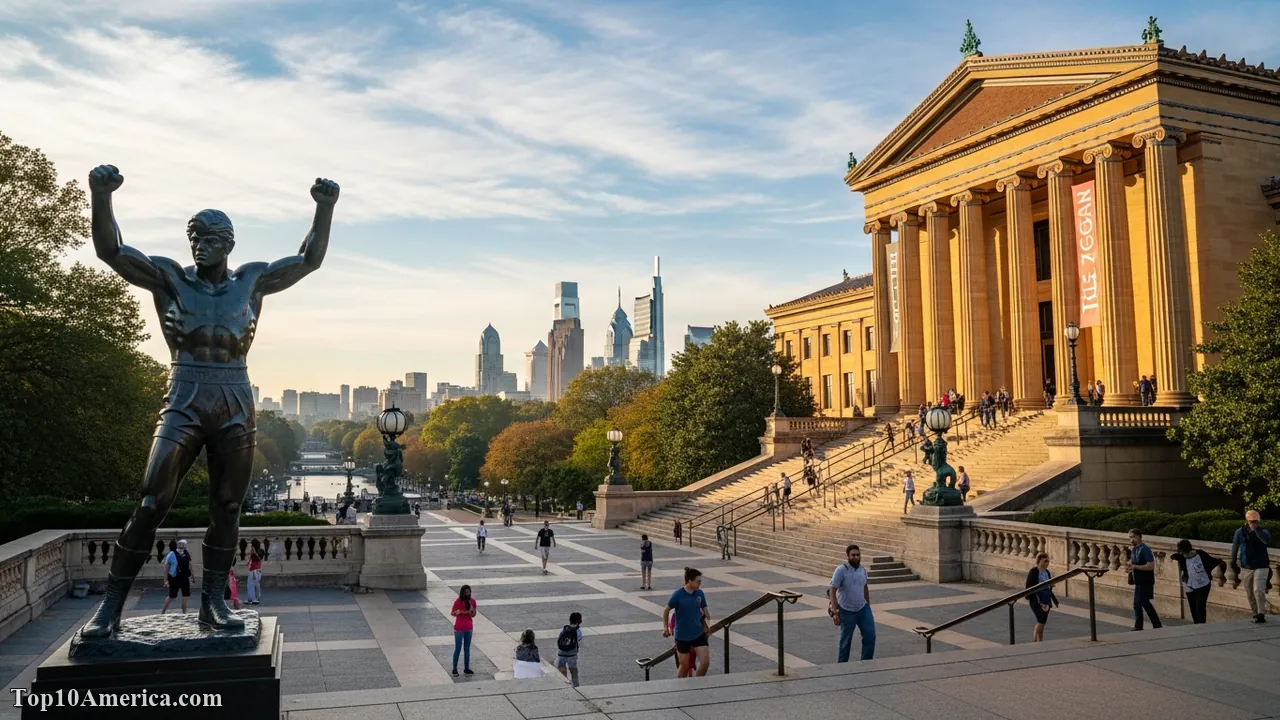
In Top 10 America’s view, this museum defines the city’s visual landscape. We suggest taking the time to explore the “period rooms,” which are actual architectural interiors—like a Japanese tea house or a French cloister—reconstructed inside the museum galleries. It offers a transportive experience that goes beyond simply looking at paintings on a wall.
Locals know that the view from the top of the “Rocky Steps” offers one of the best skylines in the city, looking straight down the Parkway toward City Hall. Whether you run up the steps for the photo op or walk up for the art, the PMA is an essential convergence of high culture and Hollywood lore.
Key Highlights
- Architecture: A massive Greek Revival building opened in 1928.
- Collection: Over 240,000 objects including the world’s largest collection of Marcel Duchamp.
- Pop Culture: Famous for the “Rocky Steps” and statue located at the base.
Top 2. Old City District
Occupying the eastern section of Center City Philadelphia alongside the Delaware River, Old City is often called “America’s most historic square mile,” but it is also a thriving modern cultural hub. This neighborhood seamlessly blends 18th-century charm with 21st-century vitality, hosting independent boutiques, art galleries, and some of the city’s best nightlife amidst cobblestone streets like Elfreth’s Alley, the oldest continuously inhabited residential street in the nation.
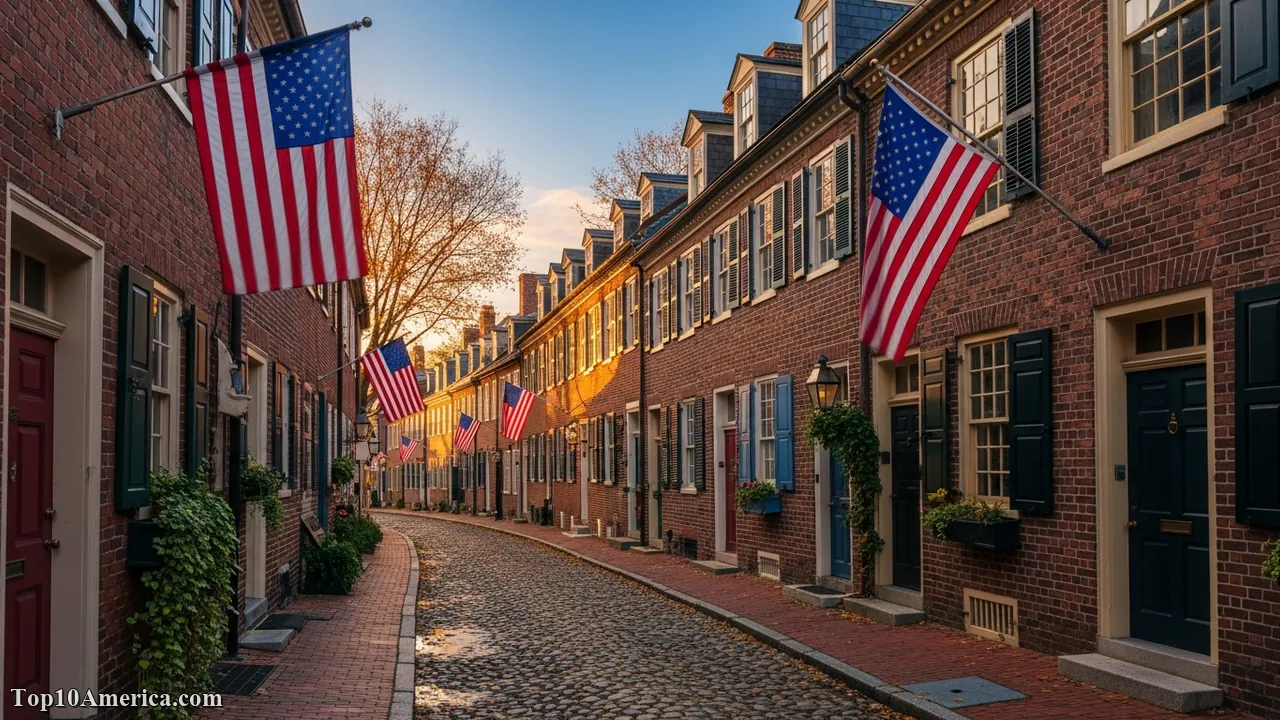
We love Old City because it proves that history doesn’t have to be stuffy. We suggest visiting on the “First Friday” of the month, when galleries open their doors to the public with wine and music, turning the historic streets into a block party. It is a place where you can tour the Betsy Ross House in the afternoon and enjoy a world-class cocktail in a converted warehouse in the evening.
Walking these streets gives you a tangible sense of the scale of the colonial city. The juxtaposition of the modern Ben Franklin Bridge soaring overhead against the brick Georgian architecture creates a unique visual dialogue between the past and present that is quintessentially Philadelphia.
Key Highlights
- Elfreth’s Alley: The nation’s oldest residential street, dating back to 1702.
- Betsy Ross House: The credited birthplace of the American Flag.
- Atmosphere: Hub for art galleries, boutiques, and the monthly “First Friday” art walk.
Top 1. Independence Hall
Located on Chestnut Street in Philadelphia, Independence Hall is the undisputed centerpiece of American history and the top cultural hotspot on our list. It is within these modest brick walls that the two most important documents in US history—the Declaration of Independence and the United States Constitution—were debated and signed. It is a UNESCO World Heritage Site, placing it on par with the Pyramids of Giza and the Great Wall of China in terms of global significance.
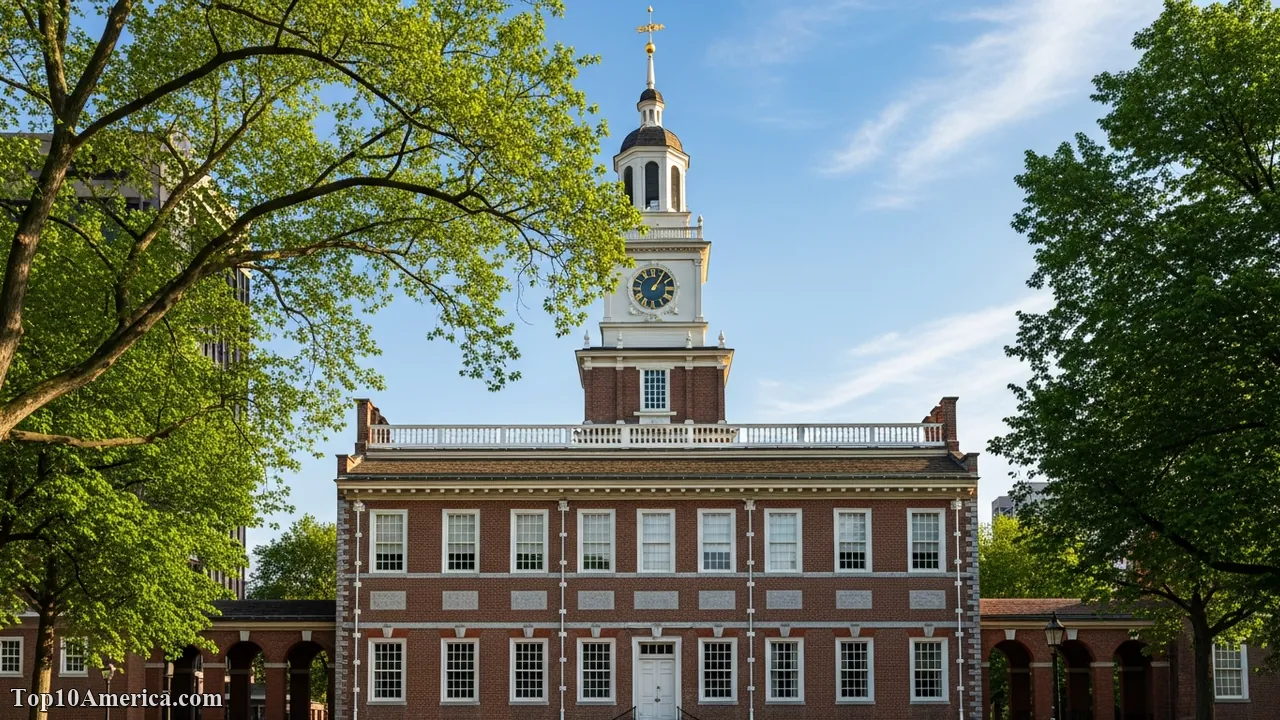
Historical facts confirm that the building was completed in 1753 as the Pennsylvania State House. The guided tour takes you into the Assembly Room, arranged exactly as it was during the Constitutional Convention, with George Washington’s “Rising Sun” chair still at the front of the room. Standing in this space offers a profound connection to the risks taken by the Founding Fathers.
This is not just a building; it is the room where the modern concept of democracy was engineered. The debates that happened here regarding federal power, slavery, and representation still echo in American politics today. For any visitor to the United States, stepping into Independence Hall is the closest one can get to the “Big Bang” of the American nation.
Key Highlights
- Significance: Birthplace of both the Declaration of Independence (1776) and the Constitution (1787).
- Status: Designated a UNESCO World Heritage Site in 1979.
- Original Artifact: Contains the original “Rising Sun” chair used by George Washington.
Conclusion
Philadelphia’s cultural landscape is a dense tapestry where the revolutionary past and the innovative present are constantly intertwined. From the solemn history of Independence Hall to the vibrant, chaotic beauty of the Magic Gardens, the city offers a depth of experience that goes far beyond a textbook. As the city gears up for the 250th anniversary of the nation in 2026, there has never been a better time to explore these streets.