In a nation often scrutinized for its fast-food culture, a distinct collection of American cities is actively rewriting the narrative. These urban centers have evolved into hubs of longevity, prioritizing green infrastructure, farm-fresh nutrition, and active living. At Top 10 America, we believe a healthy city is defined not just by the number of gyms it houses, but by how effortlessly its environment encourages well-being.
As of late 2025, our analysis looks beyond simple obesity statistics. We have synthesized data from recent WalletHub rankings, the ACSM Fitness Index, and Trust for Public Land reports to identify cities that offer a holistic quality of life. From the rugged trails of the Pacific Northwest to the sun-soaked boardwalks of Southern California, these locations prove that geography plays a massive role in personal health.
Whether you are looking to relocate for a lifestyle change or simply seeking a rejuvenating vacation, this list serves as your roadmap. Top 10 America has evaluated these cities based on fitness rates, access to medical care, green space per capita, and the availability of nutritious food. Here is where America feels its best.
Overview: Top 10 Healthiest Cities in the USA
| Rank | City / State | Primary Health Factor |
|---|---|---|
| 1 | San Francisco, California | Food Quality & Walkability |
| 2 | Honolulu, Hawaii | Mental Health & Outdoor Access |
| 3 | Seattle, Washington | Active Lifestyle & Green Space |
| 4 | San Diego, California | Fitness Culture & Climate |
| 5 | Washington, D.C. | Park Access & Public Transit |
| 6 | Salt Lake City, Utah | Recreational Sports & Low Smoking Rates |
| 7 | Portland, Oregon | Nutrition & Bike Infrastructure |
| 8 | Denver, Colorado | Low Obesity & Aerobic Activity |
| 9 | Minneapolis, Minnesota | Park System & Civic Engagement |
| 10 | Irvine, California | Safety & Master-Planned Wellness |
Top 10. Irvine, California
Located in the master-planned heart of Orange County, California, Irvine is often cited as the gold standard for suburban wellness. Unlike older cities that grew organically, Irvine was designed with intention, featuring an extensive network of bicycle paths and parks that connect residential villages. We suggest that families looking for a safety-focused, active community will find Irvine unmatched in its structured approach to healthy living.
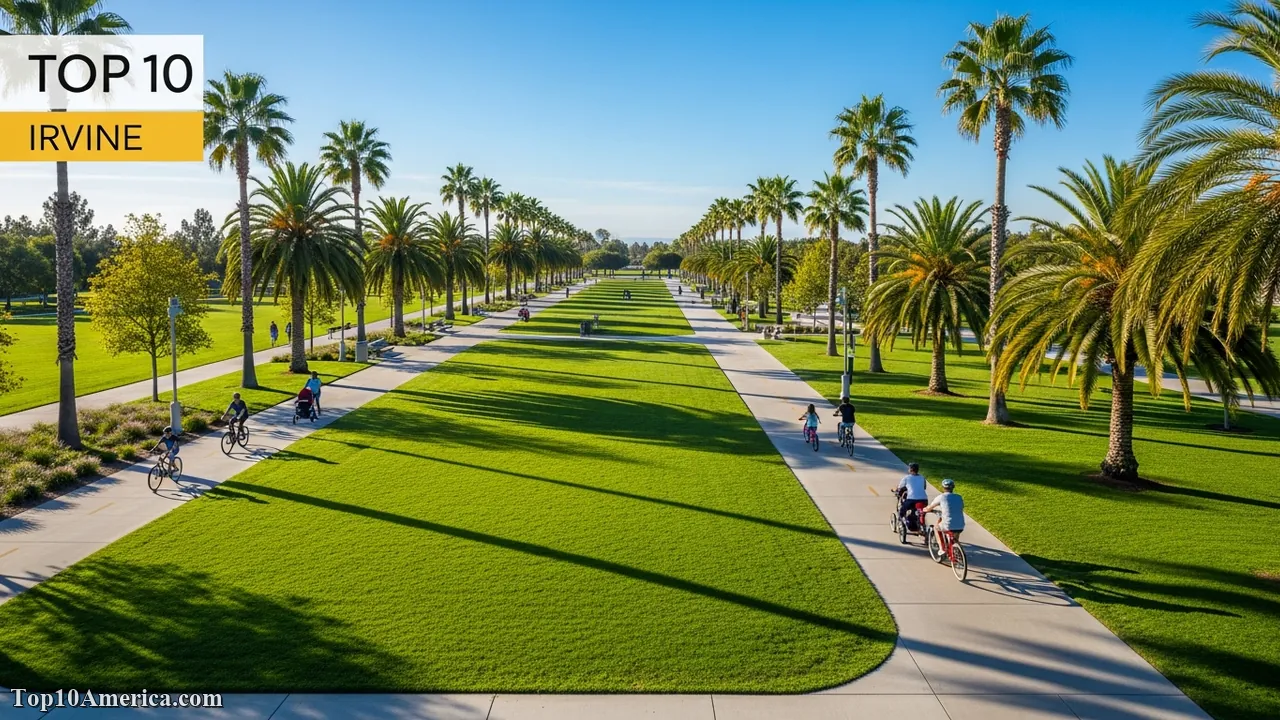
The city consistently ranks high for its exceptionally low crime rates and high life expectancy. Residents here benefit from a “built environment” that discourages sedentary behavior; it is nearly impossible to drive through the city without passing a manicured park or a community athletic field. While it lacks the gritty character of older urban centers, its pristine maintenance encourages residents to stay outside and active year-round.
Insider Note: A unique feature here is the Jeffrey Open Space Trail, a stunning 5-mile corridor that allows you to traverse the city without crossing major streets. It is a favorite for local joggers and cyclists who want an uninterrupted workout.
Key Highlights
- Safety: Consistently ranked as the safest city of its size in America by FBI data.
- Design: Home to over 16,000 acres of parks and dedicated open space.
- Fitness: 94% of residents live within a 10-minute walk of a park.
Top 9. Minneapolis, Minnesota
Despite its reputation for harsh winters, Minneapolis, Minnesota, is a powerhouse of public health. The city’s legendary park system is frequently cited by the Trust for Public Land as one of the best in the nation. We admire the Minnesotan resilience; locals do not hibernate when the temperature drops—they switch from biking to cross-country skiing, utilizing a city infrastructure designed to keep people moving regardless of the weather.

The city’s “Chain of Lakes” provides a natural gym for thousands of residents, offering miles of shoreline paths for running and biking. Medical care is another pillar of the city’s ranking, with the Mayo Clinic nearby and a strong local healthcare network that focuses heavily on preventative care. It stands as proof that a cold climate does not preclude an active, healthy population.
Insider Note: The “Skyway” system covers 9.5 miles of downtown, allowing pedestrians to walk between buildings in climate-controlled comfort during winter—a critical infrastructure hack that keeps step counts high even in January.
Key Highlights
- Park Score: Has ranked #1 or #2 in the Trust for Public Land’s ParkScore Index for years.
- Infrastructure: Over 120 miles of on-street bikeways and 90 miles of off-street paths.
- Healthcare: Consistently low rates of cardiovascular disease compared to the national average.
Top 8. Denver, Colorado
Known as the Mile High City, Denver, Colorado, leverages its altitude and proximity to the Rockies to foster a culture of perpetual motion. Residents here generally view fitness not as a chore, but as a byproduct of their lifestyle. Historical data consistently shows Denver has one of the lowest obesity rates among major US cities, a testament to a culture that values weekend hiking trips over sedentary entertainment.

We suggest that the sunny, dry climate plays a massive role here, encouraging year-round outdoor sports from cycling to climbing. The city has also invested heavily in urban trails, such as the Cherry Creek Trail, which brings the flavor of the mountains into the urban core. It is a city where “happy hour” often involves a trail run rather than just a bar tab.
Insider Note: Be aware of the “altitude adjustment.” Exercising at 5,280 feet burns more calories and requires more hydration, a biological hack that keeps locals lean but can surprise visitors.
Key Highlights
- Obesity Rate: consistently holds one of the lowest adult obesity rates in the US (approx 15-17%).
- Sunlight: Enjoys 300 days of sunshine annually, boosting mental health and Vitamin D.
- Activity: High percentage of residents report engaging in physical activity in the last 30 days.
Top 7. Portland, Oregon
Located in the lush Pacific Northwest, Portland, Oregon, takes a distinct approach to health that centers on nutrition and sustainability. While other cities focus on gym culture, Portland focuses on “farm-to-table” as a standard way of life. We find that the abundance of year-round farmers markets makes high-quality, organic produce accessible to a wider demographic here than in many other American cities.
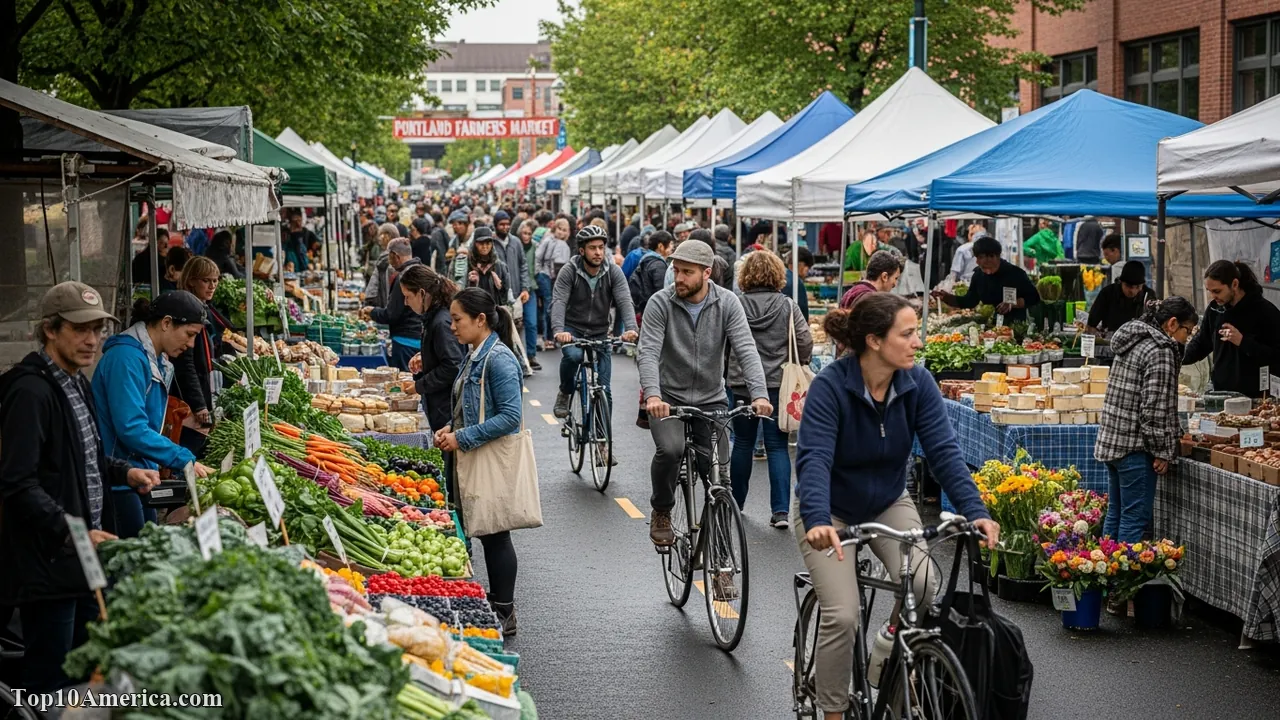
The city is also the bicycle capital of North America. Commuting by bike is normalized here, supported by massive infrastructure investments like the Tilikum Crossing, a bridge that bans cars in favor of transit, pedestrians, and cyclists. This integration of daily exercise into the commute reduces stress and improves cardiovascular health across the population.
Insider Note: The Portland Saturday Market is legendary, but for a true local health kick, visit the PSU Farmers Market on Saturday mornings—it is where the city’s top chefs buy their greens.
Key Highlights
- Cycling: consistently maintains the highest percentage of bike commuters in the US (over 6%).
- Diet: High concentration of vegetarian, vegan, and gluten-friendly dining options per capita.
- Environment: Strict urban growth boundaries preserve nearby farmland and forests.
Top 6. Salt Lake City, Utah
Nestled against the dramatic Wasatch Front, Salt Lake City, Utah, is a hidden gem in national health rankings. The city benefits from a unique demographic factor: it has the lowest smoking rate in the nation, largely influenced by the local culture. We suggest this clean-air lifestyle, combined with world-class outdoor recreation, creates a population with exceptional lung health and cardiovascular endurance.
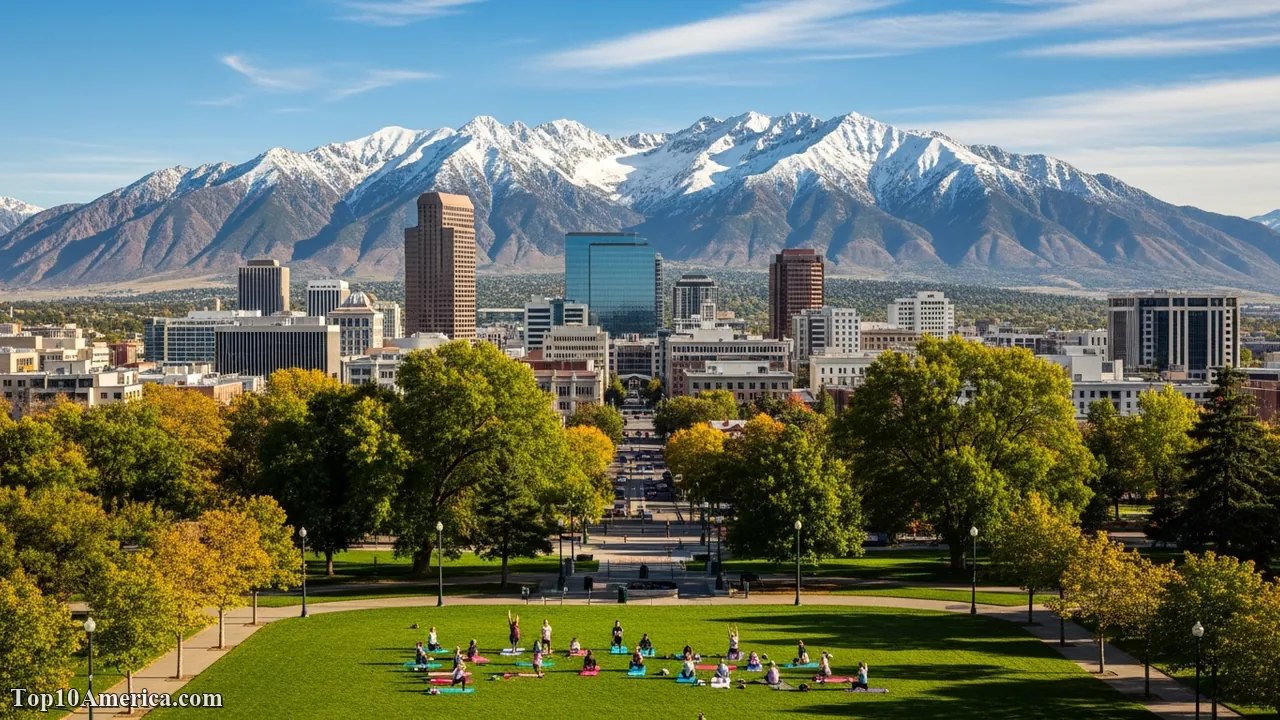
The access to “world-class” recreation is literal here; residents can leave their office downtown and be on a ski lift or a mountain bike trail within 30 minutes. This proximity eliminates the friction between “wanting to exercise” and “doing it.” The city is also rapidly densifying its downtown to be more walkable, moving away from its car-centric past.
Insider Note: Visit “City Creek Canyon” just minutes from the State Capitol. The road is closed to cars on odd-numbered days in the summer, turning it into a paradise for cyclists and walkers.
Key Highlights
- Smoking Rate: consistently the lowest among major US cities (often under 5%).
- Cancer Rates: significantly lower cancer mortality rates compared to the national average.
- Access: Seven world-class ski resorts are located within 45 minutes of the airport.
Top 5. Washington, D.C.
The nation’s capital, Washington, D.C., surprises many who view it solely as a political hub. In reality, it is a powerhouse of fitness and public parks. The Trust for Public Land frequently ranks D.C.’s park system as the best in the nation, noting that 99% of residents live within a 10-minute walk of a park. We observe that the high-stress nature of the city is counterbalanced by a population that aggressively utilizes these spaces for running, rowing, and team sports.
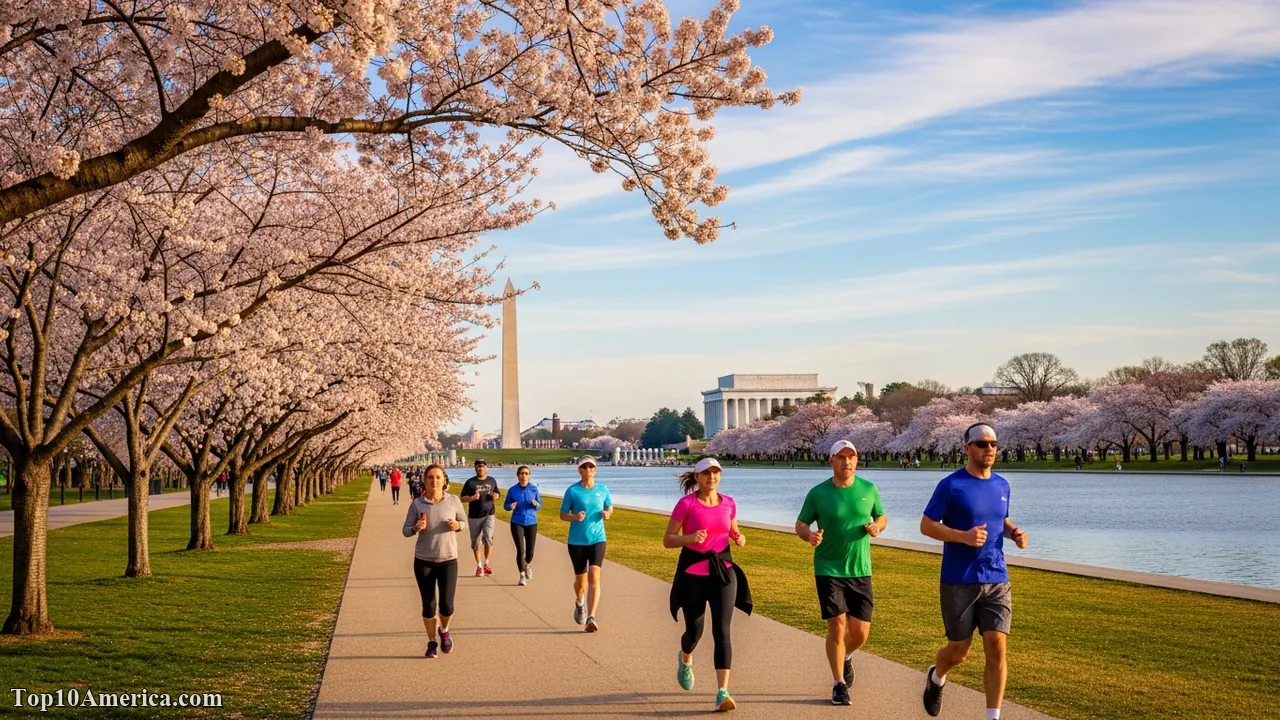
The District also benefits from a high-density, walkable layout designed by Pierre L’Enfant. Residents often walk significant distances for their daily commute, contributing to a lower BMI average than surrounding suburbs. The presence of Rock Creek Park, a massive urban forest bisecting the city, provides a critical “green lung” for mental and physical escape.
Insider Note: The “Exorcist Stairs” in Georgetown are a local fitness cult favorite. You will find locals running these steep, historic steps for high-intensity interval training with a view of the Potomac.
Key Highlights
- Park Access: Ranked #1 park system in the US by Trust for Public Land (2024/2025 metrics).
- Public Transit: High usage of Metro and bus systems reduces sedentary driving time.
- Fitness: consistently ranks in the top 3 of the ACSM American Fitness Index.
Top 4. San Diego, California
If health looks like a lifestyle, San Diego, California, is the poster child. With its temperate Mediterranean climate, “bad weather” is never a valid excuse for skipping a workout. We suggest that San Diego represents the “social fitness” capital of America, where socializing happens on surfboards, hiking trails, or yoga mats rather than inside pubs.
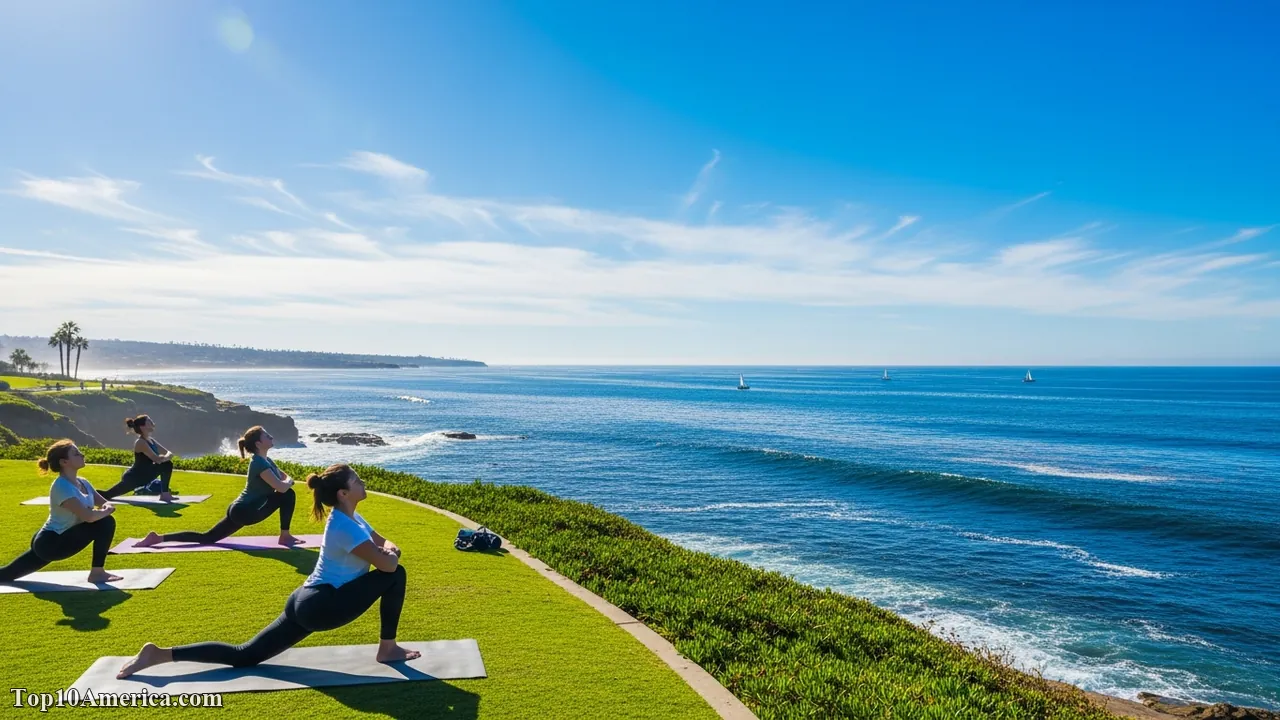
The city ranks exceptionally high in physical activity rates and self-reported mental health. The layout of the city, from the cliffs of La Jolla to the trails of Balboa Park, encourages movement. Furthermore, the local diet is heavily influenced by fresh seafood and produce from the nearby Central Valley, making healthy eating the path of least resistance.
Insider Note: For a quintessential San Diego workout, head to the “Potato Chip Rock” hike at Mount Woodson. It is a rigorous uphill battle that rewards you with one of the most Instagram-famous views in the state.
Key Highlights
- Weather: Average daily temperature of 70°F encourages year-round outdoor activity.
- Fitness: Top-tier ranking for number of fitness centers and yoga studios per capita.
- Mental Health: Consistently scores high on “emotional well-being” indices due to sunlight and lifestyle.
Top 3. Seattle, Washington
Surrounded by water, mountains, and evergreen forests, Seattle, Washington, integrates nature into urban life better than perhaps any other major metropolis. Despite the grey skies, Seattleites are fiercely active, with one of the highest percentages of residents who hike and run regularly. We believe the “outdoor gear” aesthetic here isn’t a fashion statement; it’s a utility for a population that spends its weekends in the Cascades or Olympics.

Data shows that Seattle excels in “healthy behaviors.” The smoking rate is incredibly low, and the city purchases more books and utilizes more libraries per capita than most, pointing to a high prioritization of mental health. The city’s topography—hilly and water-bound—forces a level of physical exertion simply to navigate neighborhoods like Queen Anne or Capitol Hill.
Insider Note: Discovery Park offers 534 acres of tidal beaches and forest right in the city. It is the perfect place to disconnect from the tech-heavy economy of the region without leaving city limits.
Key Highlights
- Activity: Ranked #1 for residents who participate in outdoor recreation (hiking/kayaking).
- Longevity: consistently ranks in the top 10 for life expectancy among US cities.
- Food: Pike Place Market serves as a central hub for fresh, local seafood and produce year-round.
Top 2. Honolulu, Hawaii
Honolulu, Hawaii, offers a compelling argument that environment dictates health. As the urban center of a state that consistently boasts the highest life expectancy in the US, Honolulu benefits from the “Aloha Spirit”—a cultural emphasis on community connection and stress reduction. We suggest that the ocean is the world’s best gym; swimming, surfing, and paddling are lifelong activities here for residents from age 5 to 85.

The diet here also plays a major role, with a heavy emphasis on fresh fish (poke) and Asian-influenced vegetable dishes. While the cost of living is high, the “cost of leisure” is low—nature is free. The air quality in Honolulu is arguably the best of any major American city, thanks to the persistent trade winds that sweep pollution away.
Insider Note: While Waikiki is for tourists, locals head to Ala Moana Beach Park for “Magic Island” loops—a flat, paved path perfect for sunset runs with ocean breezes.
Key Highlights
- Life Expectancy: Hawaii consistently leads the nation, with residents living well into their 80s.
- Air Quality: consistently ranked #1 for cleanest air by the American Lung Association.
- Mental Health: Lowest rates of depression and self-reported stress in the country.
Top 1. San Francisco, California
Leading our list for 2026 is San Francisco, California. Despite its urban challenges, the data remains undeniable: San Francisco residents are statistically the healthiest in the nation. We attribute this to a “perfect storm” of factors: a walk-everywhere layout, a ban on fast-food proliferation in many neighborhoods, and a cultural obsession with high-quality, organic food.

WalletHub and other indices repeatedly rank San Francisco #1 because of its incredibly low obesity rates (often below 15%) and high access to nutritious food. The city’s geography is a natural StairMaster; daily life involves navigating steep hills that keep cardiovascular health high by default. Furthermore, the proximity to the Bay Area’s agricultural bounty means that “eating local” is the standard, not a luxury.
Insider Note: The “Crosstown Trail” is a recent addition—a 17-mile route connecting the city diagonally from Candlestick Point to Lands End. It showcases the city’s hidden greenbelts and stairways, proving you can hike all day without leaving the city.
Key Highlights
- Obesity: Consistently has the lowest obesity rate of any major US city.
- Food Access: #1 ranking for access to healthy food and grocery stores per square mile.
- Walkability: Ranked the 2nd most walkable city in the US (after NYC) but with better air quality.
Conclusion
From the hills of San Francisco to the parklands of Minneapolis, the healthiest cities in America share a common thread: they make healthy choices the easy choices. These cities have invested in the infrastructure of well-being, proving that health is as much about where you live as how you live. Whether it is through world-class bike lanes, accessible mountain trails, or community-focused urban planning, these top 10 destinations are leading the charge into a healthier 2026.