As of late 2025, the holiday season in the United States remains a vibrant tapestry of ancient customs and modern American inventions. From the snowy avenues of New York City to the warm, light-filled streets of small-town North Carolina, Christmas in America is defined by a unique blend of commercial spectacle and deeply held family rituals. While global traditions influence our holidays, the United States has cultivated a distinct set of practices that have become synonymous with the season itself.
At Top 10 America, we believe that understanding these traditions requires looking beyond the surface. It is not enough to know what we do; we want to explore where these customs thrive and why they resonate so deeply across the fifty states. Our list combines verified participation statistics with cultural analysis to bring you the definitive ranking of American holiday practices.
In the following guide, we rank the ten most significant traditions based on popularity, historical impact, and cultural relevance. Whether it is a practice born from the Great Depression or a modern phenomenon from Georgia, each entry represents a piece of the American holiday spirit.
Overview: Top 10 Most Popular Christmas Traditions in the USA
| Rank | Tradition | Location / Origin Connection | Category |
|---|---|---|---|
| 1 | Decorating the Christmas Tree | New York, NY (Rockefeller Center) | Decoration |
| 2 | Viewing Christmas Lights | McAdenville, NC (Christmas Town USA) | Activity |
| 3 | Gift Giving & Shopping | New York, NY (Fifth Avenue) | Commerce |
| 4 | Leaving Cookies for Santa | Nationwide (Great Depression Era Roots) | Food & Family |
| 5 | Watching Christmas Movies | Hollywood, CA (Production Hub) | Entertainment |
| 6 | Hanging Stockings | Manhattan, NY (Clement Clarke Moore’s Home) | Literature / Decor |
| 7 | Sending Holiday Cards | Kansas City, MO (Hallmark HQ) | Social |
| 8 | The Elf on the Shelf | Atlanta, GA (Lumistella Co. HQ) | Modern Tradition |
| 9 | Building Gingerbread Houses | Asheville, NC (National Competition) | Culinary Arts |
| 10 | Secret Santa Exchange | Kansas City, MO (Larry Stewart Origin) | Charity / Social |
Top 10. Secret Santa Exchange
While gift exchanges are universal, the specific “Secret Santa” format has a profound connection to Kansas City, Missouri. This tradition is spiritually anchored to the legacy of Larry Stewart, a businessman known as “Kansas City’s Secret Santa,” who spent decades anonymously handing out $100 bills to strangers during the holidays. His philanthropy popularized the concept of anonymous giving across the American Midwest and beyond.
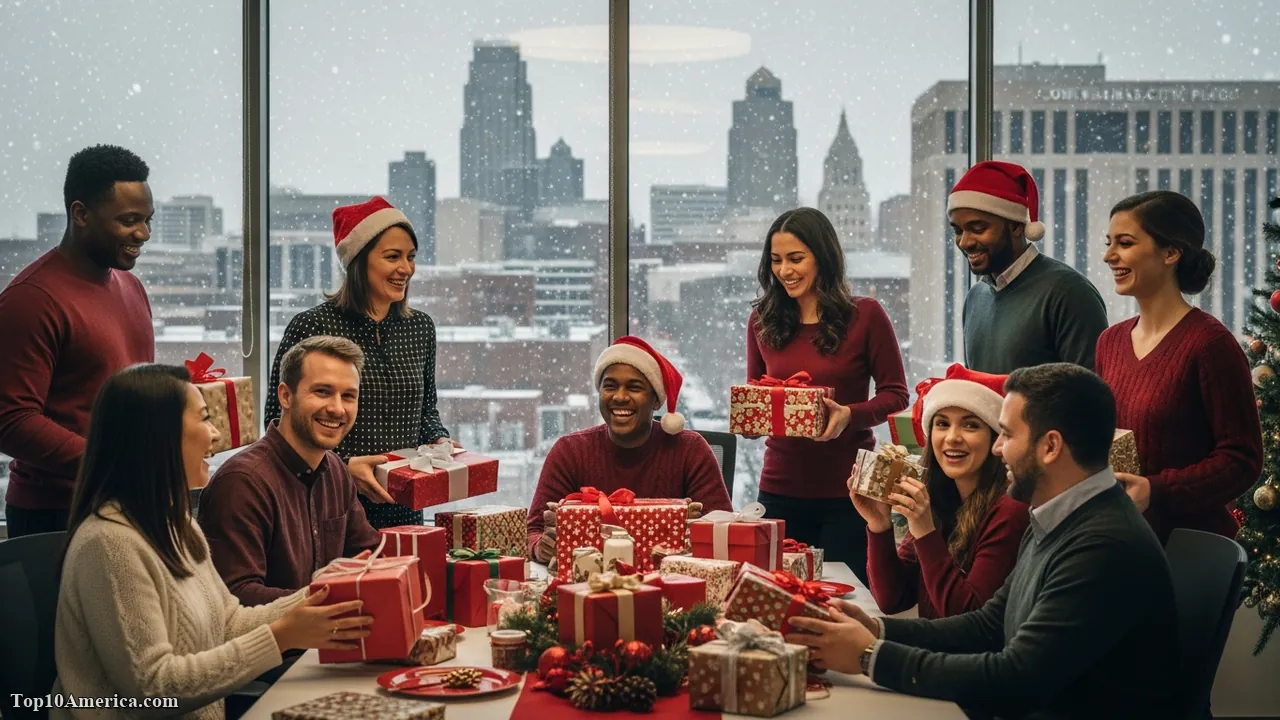
In Top 10 America’s view, this tradition captures the American ideal of decentralized generosity. We suggest organizing a Secret Santa exchange not just as a way to trade trinkets, but as a method to build community cohesion in workplaces and extended families. The mystery element adds a layer of playful intrigue that distinguishes it from standard gift-giving.
Historically, the formalized game we play today—drawing names from a hat—evolved alongside these acts of charity. A fascinating insider detail is that Larry Stewart kept his identity hidden for over 25 years, only revealing it shortly before his death in 2007 to inspire others to continue the chain of kindness.
Key Highlights
- Origin Figure: Larry Stewart, the “Secret Santa” of Kansas City (gave away ~$1.3M).
- Average Spend: Most office exchanges set a limit between $20 and $25.
- Participation: Popular in over 60% of American workplaces.
Top 9. Building Gingerbread Houses
This edible architecture tradition finds its modern American capital in Asheville, North Carolina, home to the official National Gingerbread House Competition at the Omni Grove Park Inn. While the roots of gingerbread are European, the competitive spectacle of building elaborate sugar structures is a distinctly American evolution of the craft.
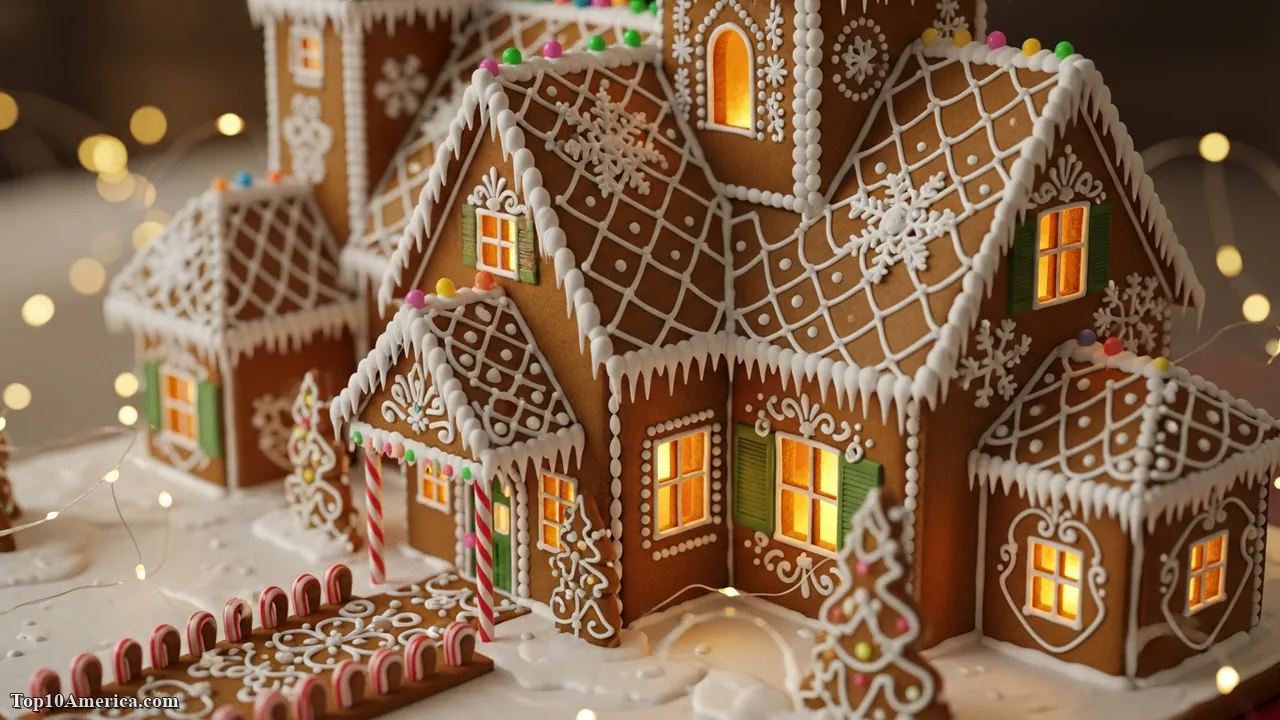
We suggest that families looking to elevate this tradition look beyond simple kits and attempt to bake their own structural gingerbread. In our perspective, the joy lies in the creative failure—collapsed roofs and messy icing are as much a part of the memory as the perfect houses. It is a tactile, messy, and delicious way to engage children in holiday artistry.
The competition in Asheville began modestly in 1992 but has since grown into a massive event featured on national television. A fun fact for visitors: the contest entries are judged on strictly edible criteria, meaning every shingle, window, and snowman must be made of food.
Key Highlights
- Top Location: Omni Grove Park Inn, Asheville, NC.
- Criteria: Entries must be at least 75% gingerbread.
- Event Timing: Displays typically run from mid-November through early January.
Top 8. The Elf on the Shelf
A modern phenomenon that has rapidly become a staple, the “Elf on the Shelf” originated in Atlanta, Georgia. Created by Chanda Bell and her mother Carol Aebersold in 2005, this tradition involves a scout elf who watches children by day and reports to Santa by night. The Lumistella Company, headquartered in Atlanta, now manages millions of these “adoptions” worldwide.
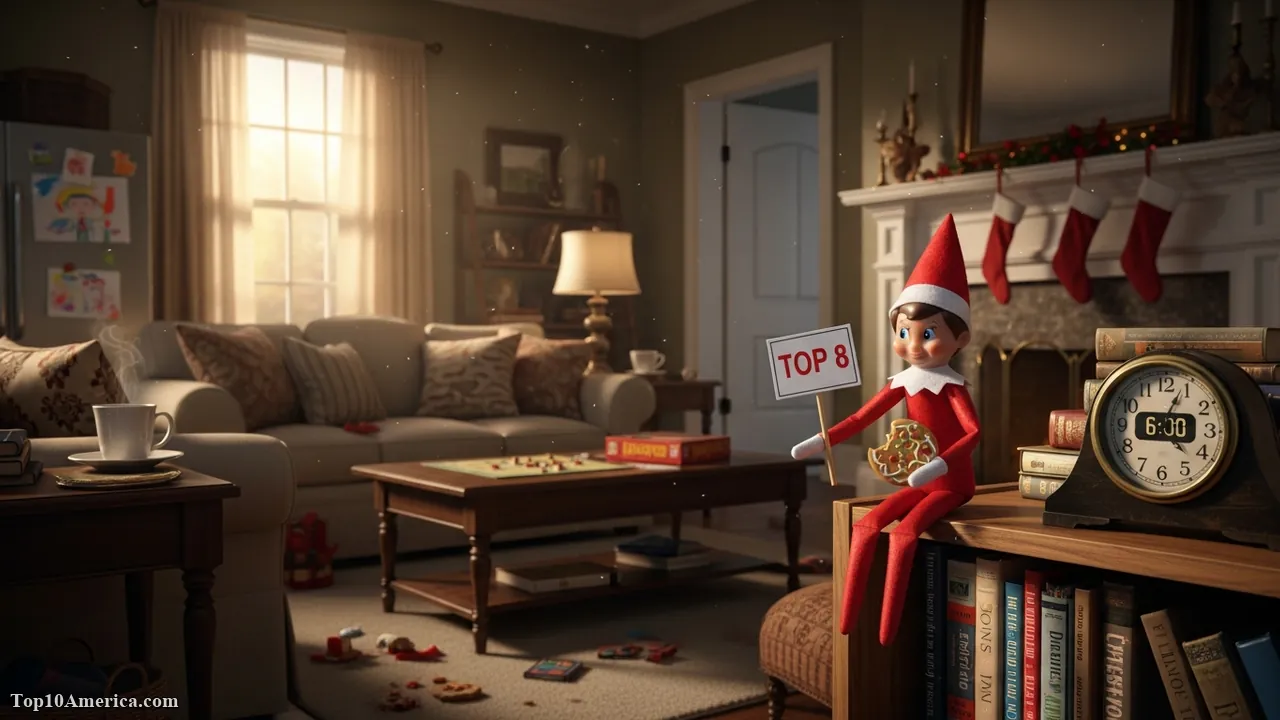
From our analytical perspective, this is a masterclass in modern folklore creation. The brilliance of the tradition lies in its interactivity; parents move the elf every night, creating a month-long game of hide-and-seek. It effectively bridges the gap between the intangible concept of Santa Claus and the physical reality of the child’s home.
An interesting detail for parents is the strict rule that children must not touch the elf, lest it lose its magic. This “hands-off” rule was a clever design choice by the creators to keep the dolls pristine and add an aura of reverence to the object.
Key Highlights
- Origin Date: Published in 2005 in Georgia.
- Sales Stats: Over 25 million elves adopted globally.
- Social Media: #ElfontheShelf has billions of views on platforms like TikTok.
Top 7. Sending Holiday Cards
The custom of mailing holiday greetings is deeply entrenched in the operations of Hallmark Cards, based in Kansas City, Missouri. Since the early 20th century, this American company has defined how the nation communicates sentiment, transforming a Victorian practice into a massive annual industry. Kansas City remains the creative heartbeat of this paper-based tradition.
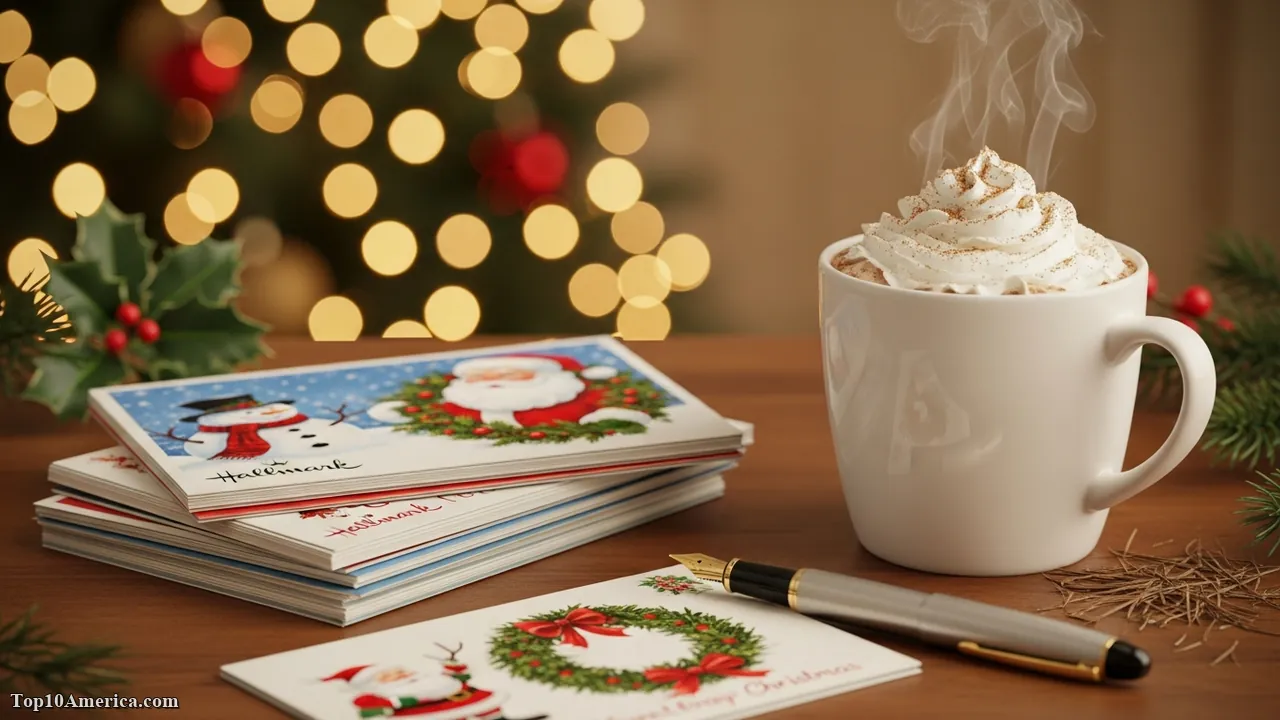
According to industry statistics, Americans still send over a billion holiday cards annually, defying the digital age. Historical records show that Joyce Hall, the founder of Hallmark, recognized that people wanted more privacy than a postcard offered, leading to the popularity of the greeting card in an envelope.
We recommend keeping this tradition alive by including a handwritten note. In an era of instant text messages, the physical act of sealing an envelope and applying a stamp carries a weight of intention that digital formats simply cannot replicate.
Key Highlights
- Volume: Approx. 1.3 billion cards sent annually in the US.
- Key Location: Hallmark Visitors Center, Kansas City, MO.
- Peak Season: The weeks immediately following Thanksgiving.
Top 6. Hanging Stockings
The imagery of stockings hung by the chimney is cemented in American culture through the poem “A Visit from St. Nicholas,” written by Clement Clarke Moore in the Chelsea neighborhood of Manhattan, New York. Moore’s 1822 verse transformed the obscure European custom of drying socks into a central feature of the American Christmas Eve.
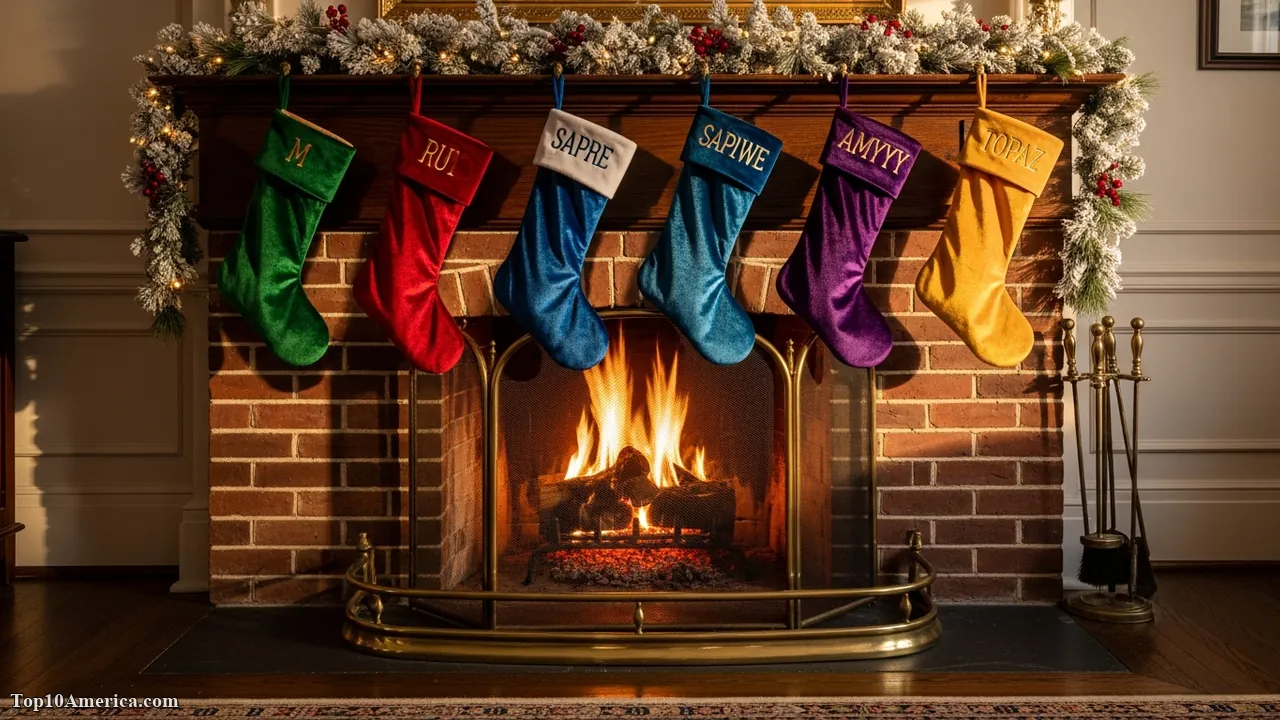
In Top 10 America’s view, the stocking represents the intimacy of the holiday. While the tree is for “big” gifts often meant to be shared or displayed, the stocking is personal—filled with small delights, fruits, and candies that are meant for the individual. We suggest personalizing stockings for every family member, including pets, to ensure everyone feels included in the morning ritual.
A historical reflection reveals that the “stocking” was originally a practical necessity. Legend has it that St. Nicholas threw gold coins down a chimney, which landed in stockings drying by the fire. Today, these are often elaborate, embroidered decorations rather than actual footwear.
Key Highlights
- Literary Source: “A Visit from St. Nicholas” (1822).
- Historic Site: Chelsea Square, New York, NY.
- Fillers: Traditional items include oranges (representing gold) and candy canes.
Top 5. Watching Christmas Movies
The canon of Christmas cinema is largely produced and defined by the studios in Hollywood, California. From “It’s a Wonderful Life” to “Home Alone” and the modern influx of Hallmark movies, American holiday culture is inextricably linked to the screen. For many families, the season does not truly begin until they have watched their specific favorite film.

We suggest curating a mix of classics and modern favorites. Films like “Elf” and “National Lampoon’s Christmas Vacation” have transcended entertainment to become a shared language of quotes and references. The shared viewing experience provides a reliable, low-stress way for families to bond during the often-hectic holiday break.
A fun insider fact is that many of the most iconic “snowy” Christmas movies were filmed on sunny backlots in Los Angeles using artificial snow. The magic of Hollywood convinces us every year that a white Christmas is the standard, even in warmer climates.
Key Highlights
- Top Film: “Home Alone” remains one of the highest-grossing Christmas movies.
- Industry Hub: Los Angeles, CA.
- Trend: 69% of Americans report watching holiday movies as a tradition.
Top 4. Leaving Cookies for Santa
This sweet tradition, practiced Nationwide, gained its current foothold in American culture during the Great Depression. Historical analysis suggests that parents in the 1930s encouraged children to leave snacks for Santa and his reindeer as a lesson in gratitude and sharing, even during times of severe economic hardship.
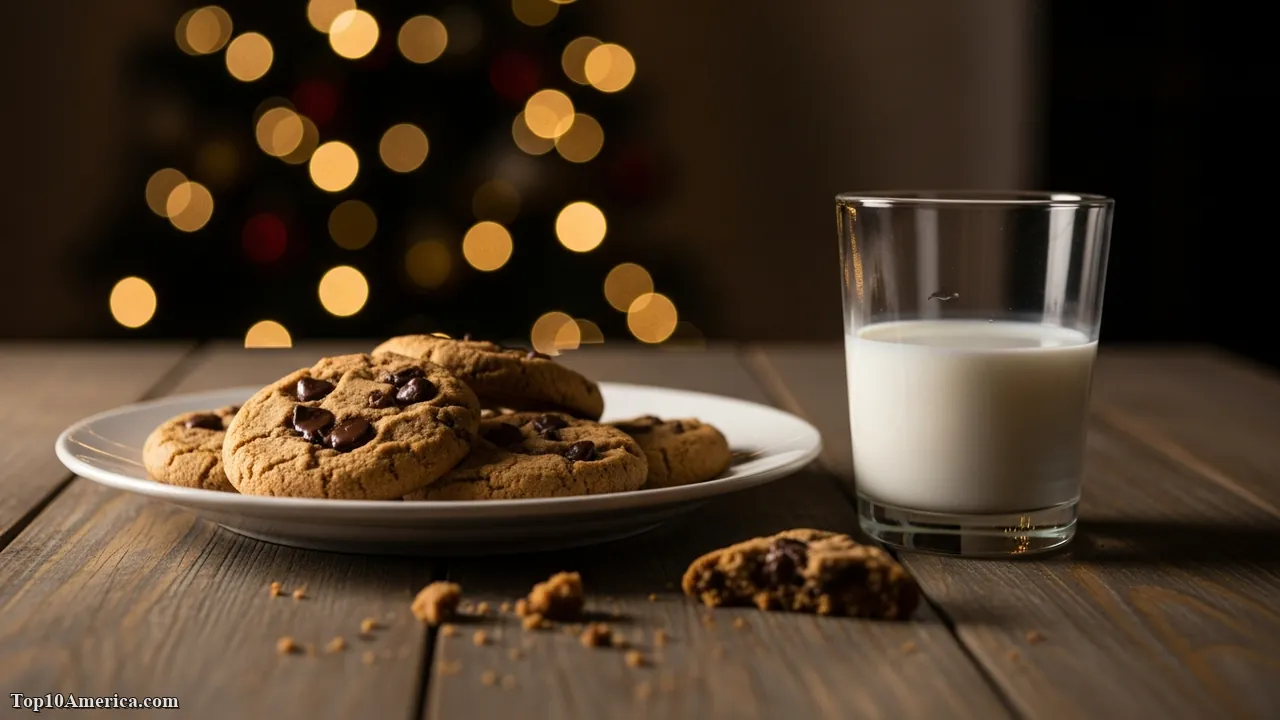
Top 10 America views this as one of the most poignant traditions. It shifts the child’s focus from “receiving” to “giving.” We suggest baking these cookies from scratch on Christmas Eve; the smell of baking is a powerful sensory anchor for holiday memories. Whether it is classic chocolate chip or decorated sugar cookies, the effort matters more than the culinary perfection.
Did you know that the specific snack varies by region? In some households, carrots are left for the reindeer, while in others, a glass of whiskey or eggnog accompanies the cookies for Santa, a nod to earlier, colder winter nights.
Key Highlights
- Key Era: Popularized during the 1930s (Great Depression).
- Participation: Practiced by millions of households with young children.
- Lesson: Teaches the value of giving and gratitude.
Top 3. Gift Giving & Shopping
The commercial powerhouse of the American Christmas is symbolized by Fifth Avenue in New York City, specifically the window displays of stores like Saks and Bergdorf Goodman. While gift-giving is a global practice, the American version—driven by Black Friday and the “shopping season”—is a unique economic phenomenon.
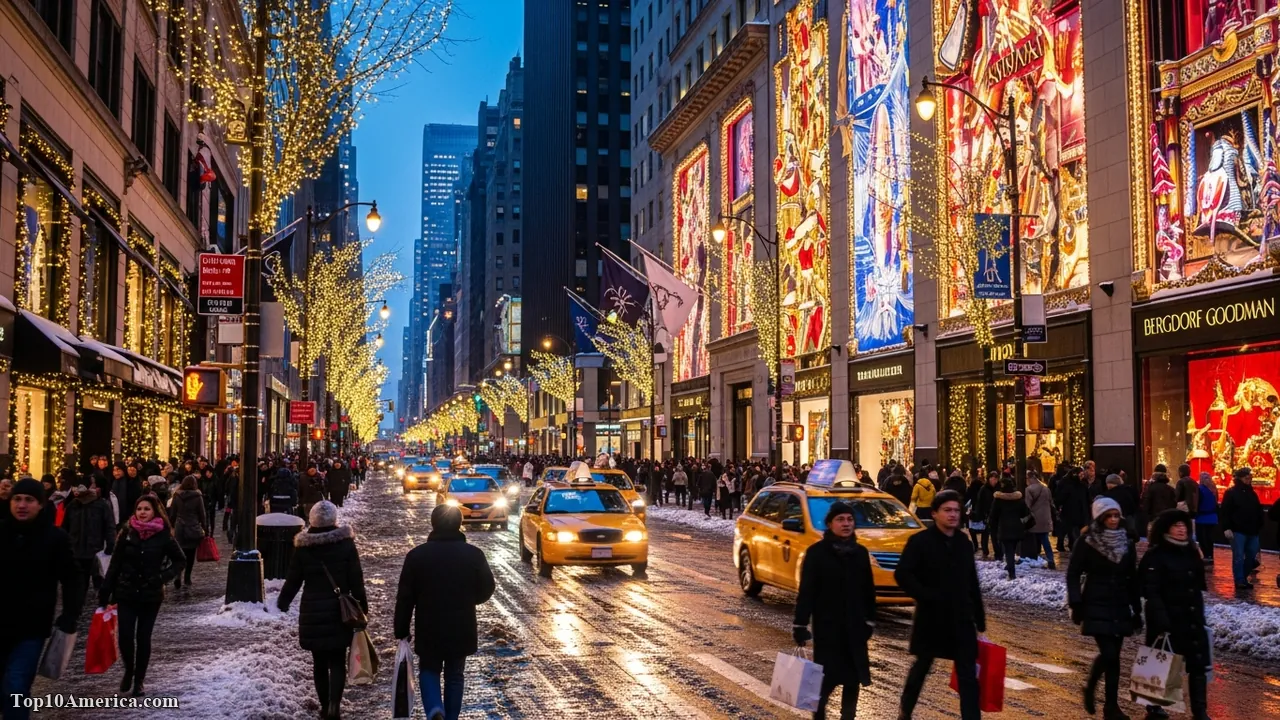
Facts show that the average American plans to spend over $900 on holiday gifts in 2025. This exchange is not merely material; it is a social contract of appreciation. The hustle of the mall, the strategy of online sales, and the wrapping of boxes are all ritualized parts of the process.
A specific detail to note is the rise of “Cyber Monday,” which has now rivaled Black Friday in importance. However, the physical experience of walking past elaborate department store windows in major cities remains a quintessential part of the American holiday aesthetic.
Key Highlights
- Iconic Hub: Fifth Avenue, New York, NY.
- Economy: Holiday sales account for up to 30% of annual retail revenue.
- Timing: Shopping now frequently begins before Thanksgiving.
Top 2. Viewing Christmas Lights
No place in America embodies the tradition of holiday illumination quite like McAdenville, North Carolina, known officially as “Christmas Town USA.” Since 1956, this small town has transformed every December, attracting hundreds of thousands of vehicles to drive through its glowing streets. It represents the pinnacle of the American love affair with electric holiday displays.
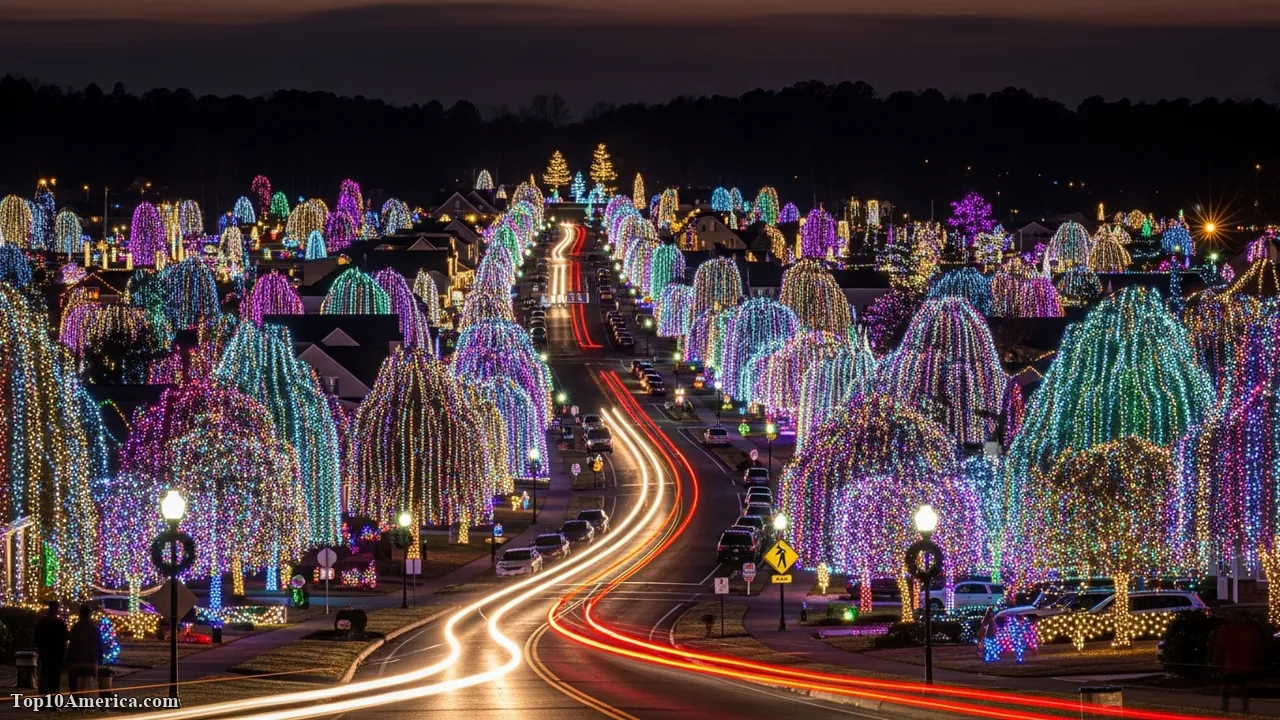
We suggest that viewing lights is the most accessible and democratic of all traditions. It requires no ticket and no purchase—simply a walk or a drive. Whether it is the professional displays of a botanical garden or the enthusiastic, chaotic lights of a suburban neighborhood, this activity literally brightens the darkest days of the year.
According to town records, McAdenville’s tradition started with just nine trees. Today, over 375 trees are lit, and the town’s population of under 1,000 welcomes over 600,000 visitors annually, proving the enduring pull of a simple light in the dark.
Key Highlights
- Top Location: McAdenville, NC (Christmas Town USA).
- Visitor Count: ~600,000 vehicles per year in McAdenville.
- Technology: LED lights have revolutionized displays since the 2000s.
Top 1. Decorating the Christmas Tree
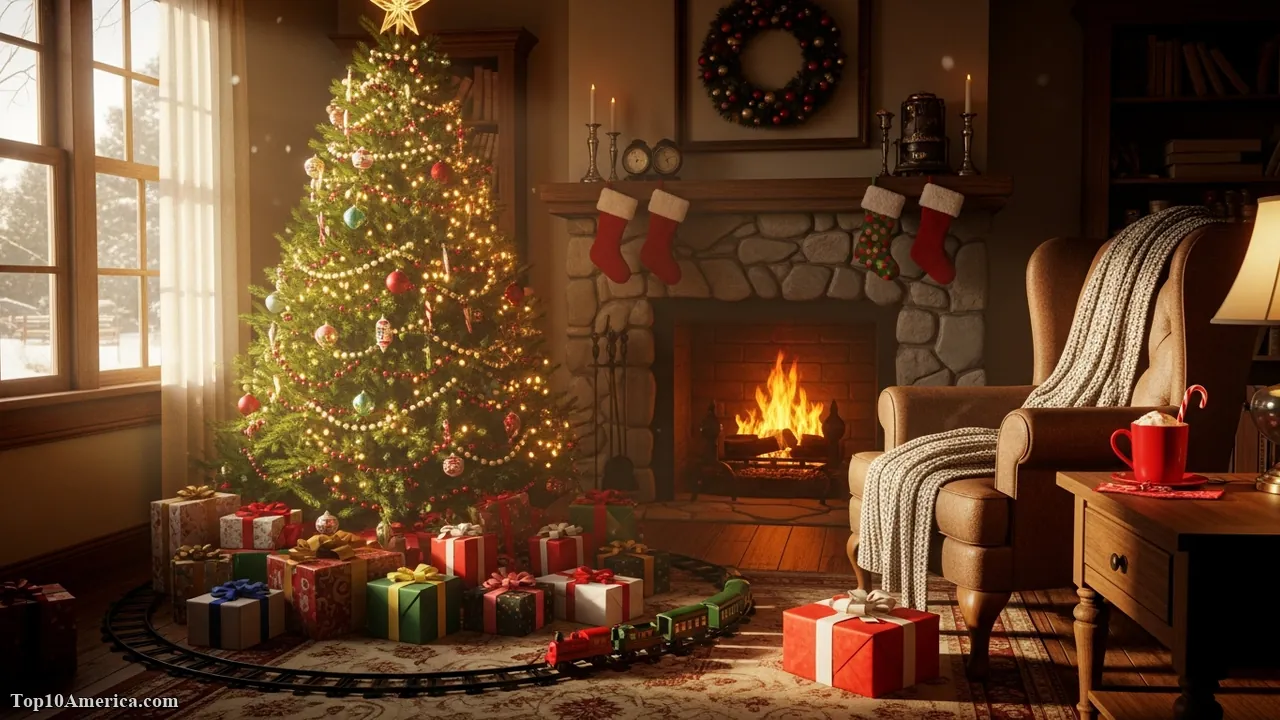
The undisputed king of American holiday traditions is the Christmas Tree, with its national icon standing tall at Rockefeller Center in New York, New York. While the tradition has German roots, the American custom of the “community tree” and the elaborate home decoration party is the centerpiece of the season. Statistics indicate that nearly 80% of American households display a tree.
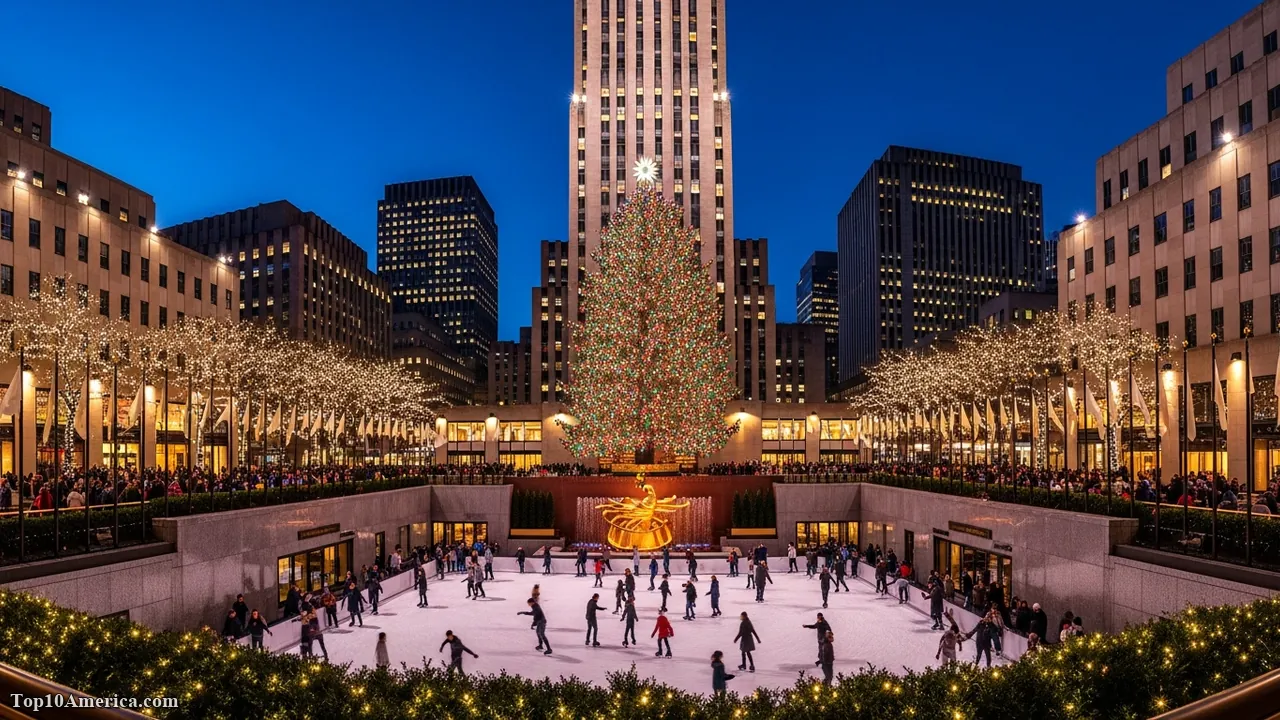
Top 10 America recognizes this as the anchor of the home. The tree is where the family gathers, where photos are taken, and where the season’s memories are physically hung branch by branch. We suggest buying a real tree from a local farm if possible; the scent of pine is, for many, the true scent of Christmas.
The Rockefeller Center tree tradition officially began in 1933, though construction workers put up a smaller, unlit tree on the site during the Depression in 1931. Today, the lighting of this tree is a televised national event that signals the official start of the holiday season for the entire country.
Key Highlights
- National Icon: Rockefeller Center, New York, NY.
- Participation: ~94 million households display a tree.
- Preference: Artificial trees are used by roughly 77% of households (for convenience), though real trees remain culturally idealized.
Conclusion
From the towering spruce at Rockefeller Center to the quiet act of moving an elf on a shelf in a suburban living room, these traditions form the backbone of the American experience. They connect us to our history, our communities, and our families. At Top 10 America, we see these rankings not just as a list of activities, but as a map of American joy.
Which of these traditions holds the most special place in your home, or is there a unique local custom in your state that we should know about?